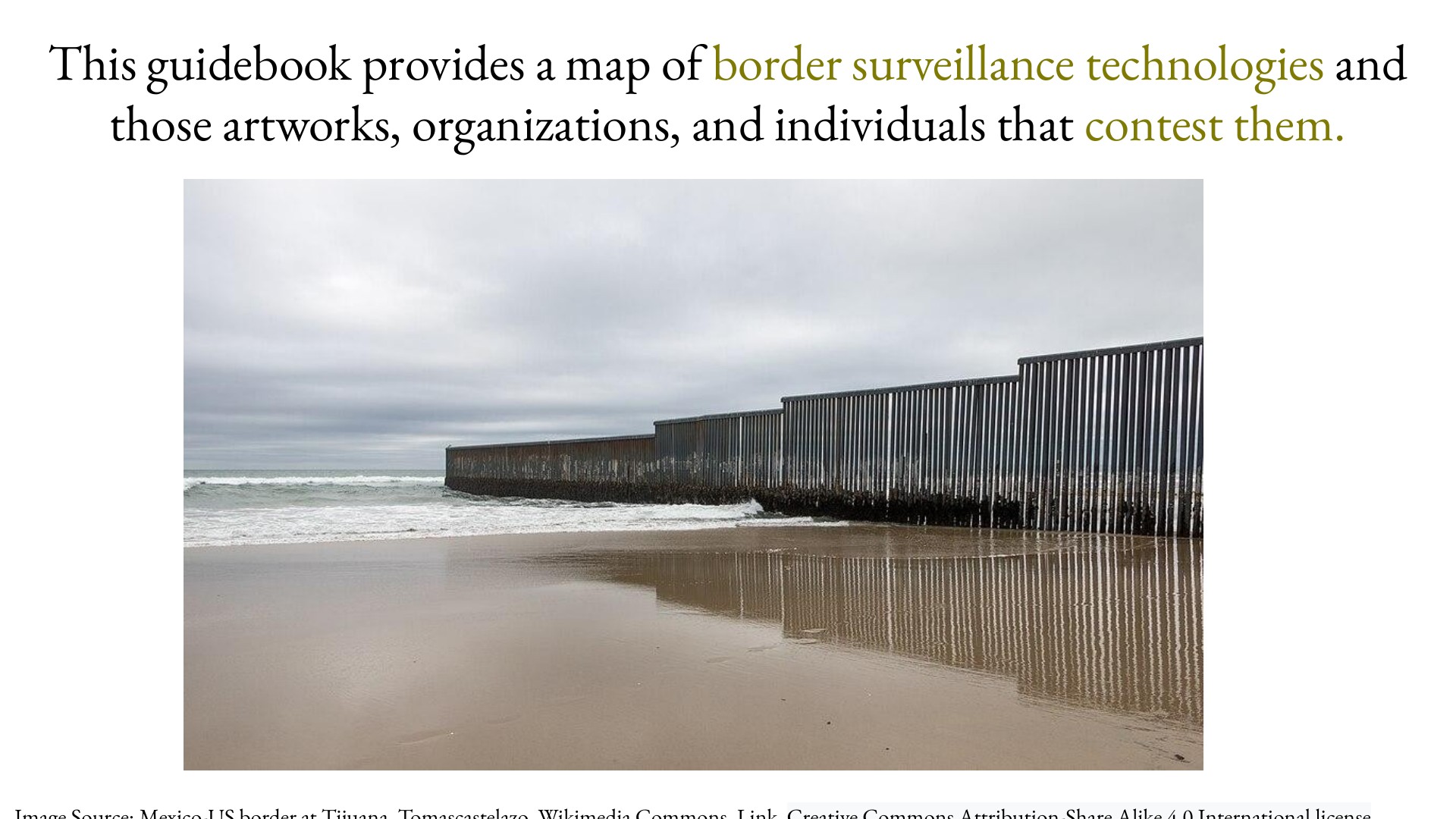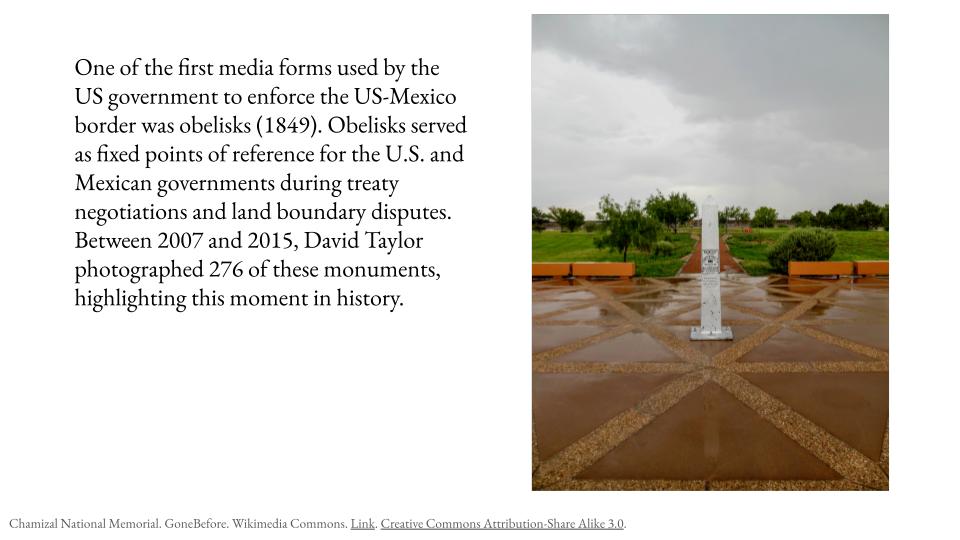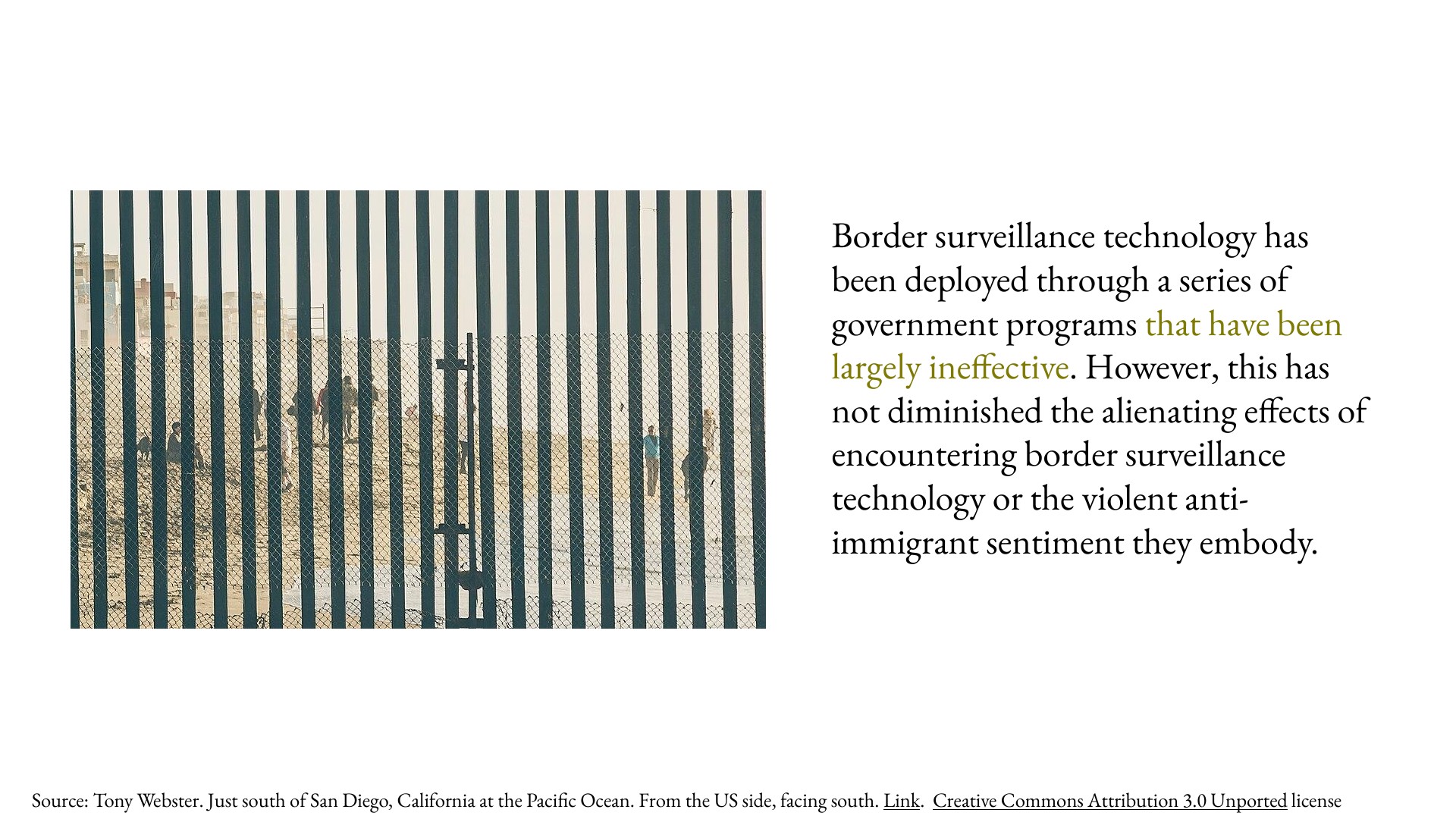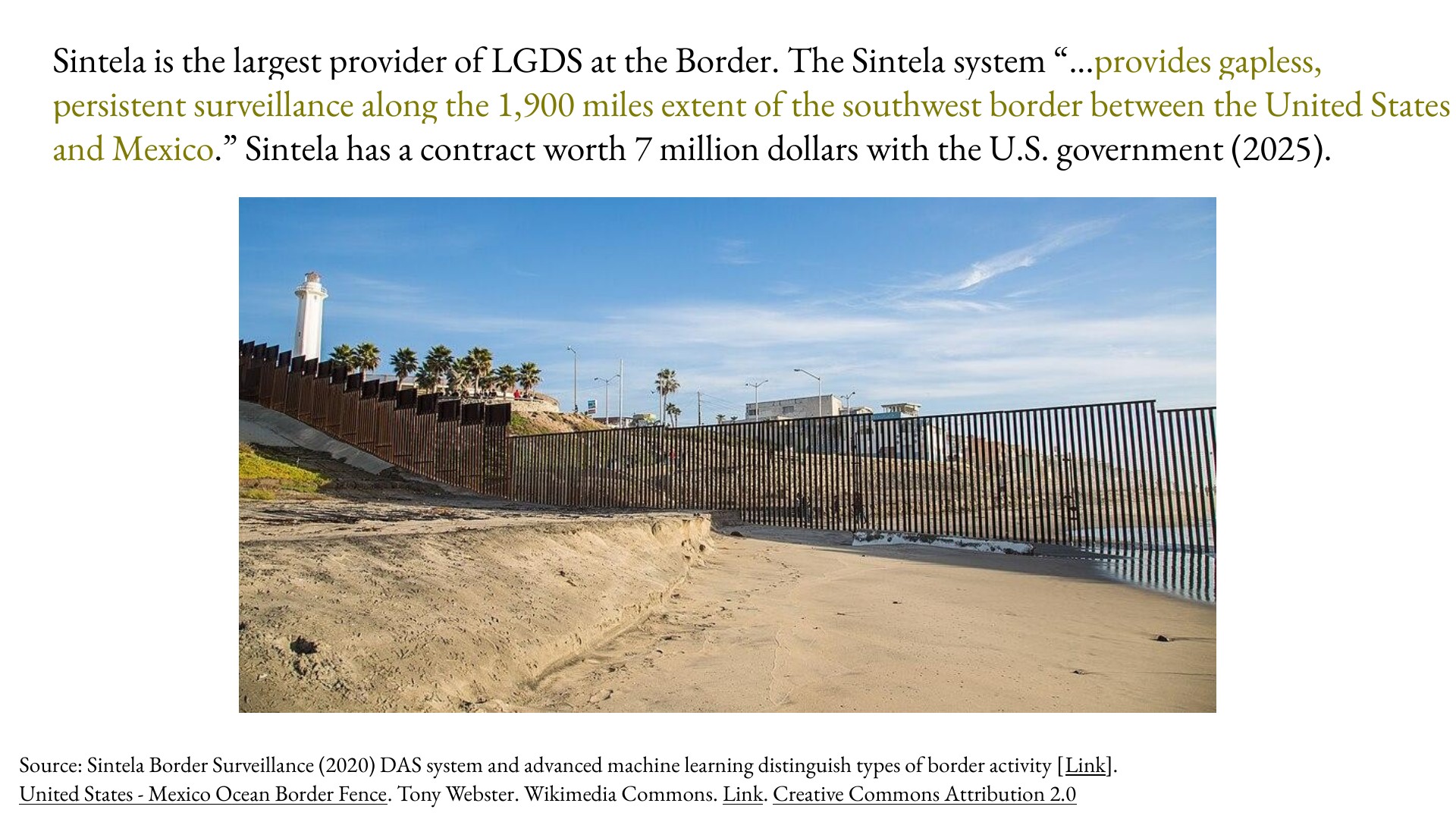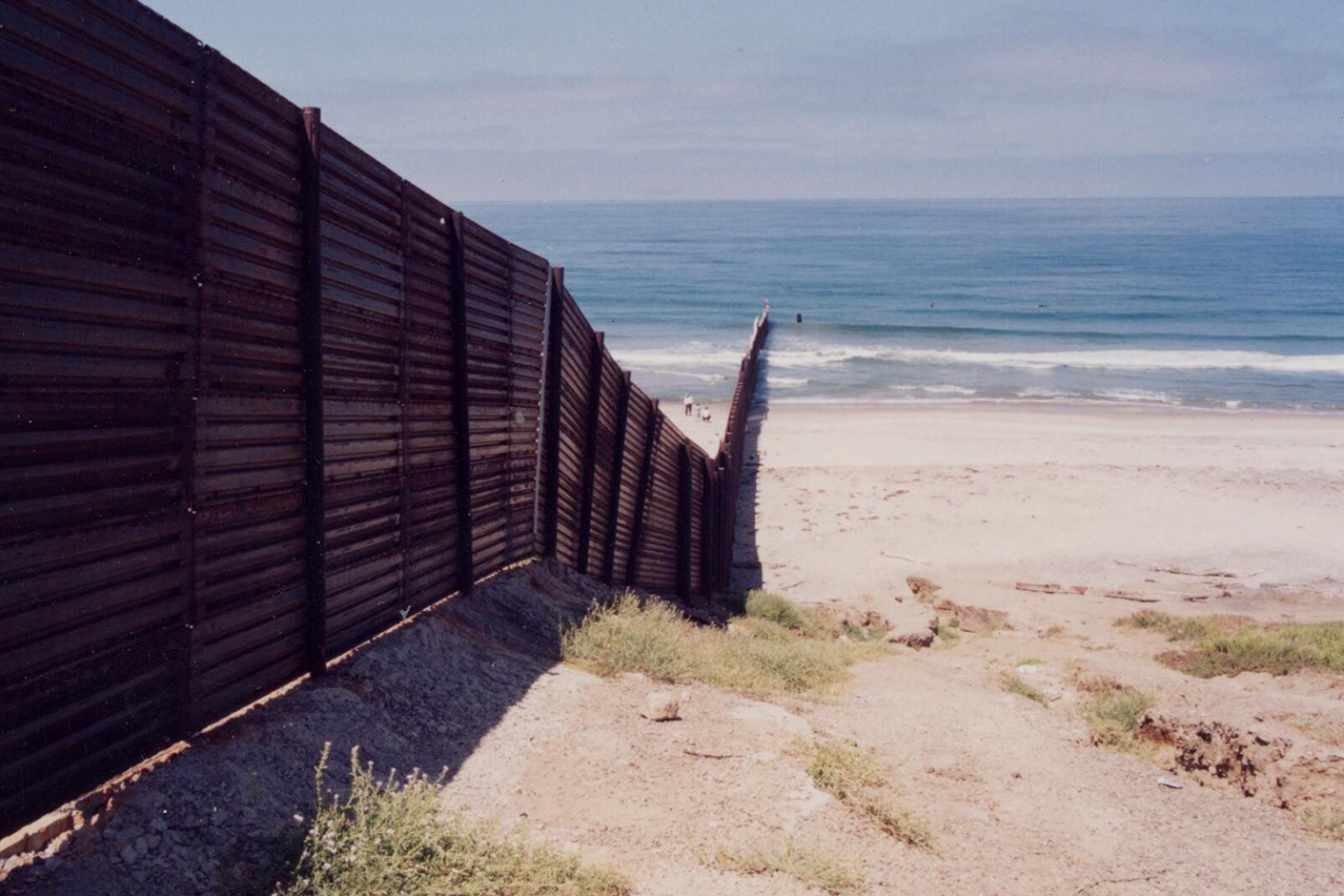
A photograph of the US-Mexico border wall extending from a sandy beach into the Pacific ocean.

Contested Digital Borders from Juárez to Guizhou

by Isadora Bratton-Benfield, Xuewei (Sylvia) Luo, Martina Wu

In this two-part slide series, the authors present original research on how digital infrastructure is configured in relation to national borders. A Typology of US-Mexico Border Surveillance and its Counter-Imaginaries by Isadora Bratton-Benfield and Crosscurrents at the US and China Digital Border by Isadora Bratton-Benfield, Martina Wu, and Xuewei (Sylvia) Luo, are available to view and download below.

A Typology of US-Mexico Border Surveillance and its Counter-Imaginaries | Download PDF
By Isadora Bratton-Benfield

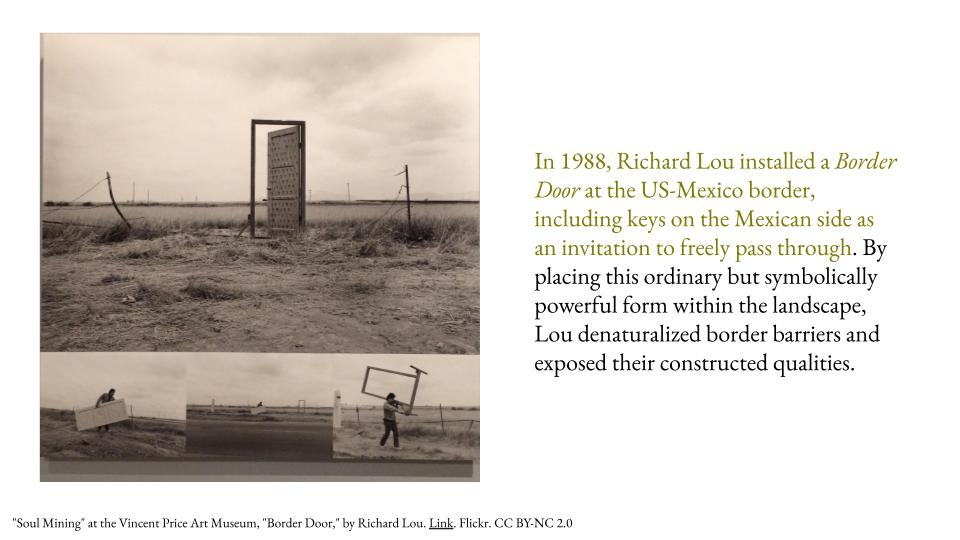
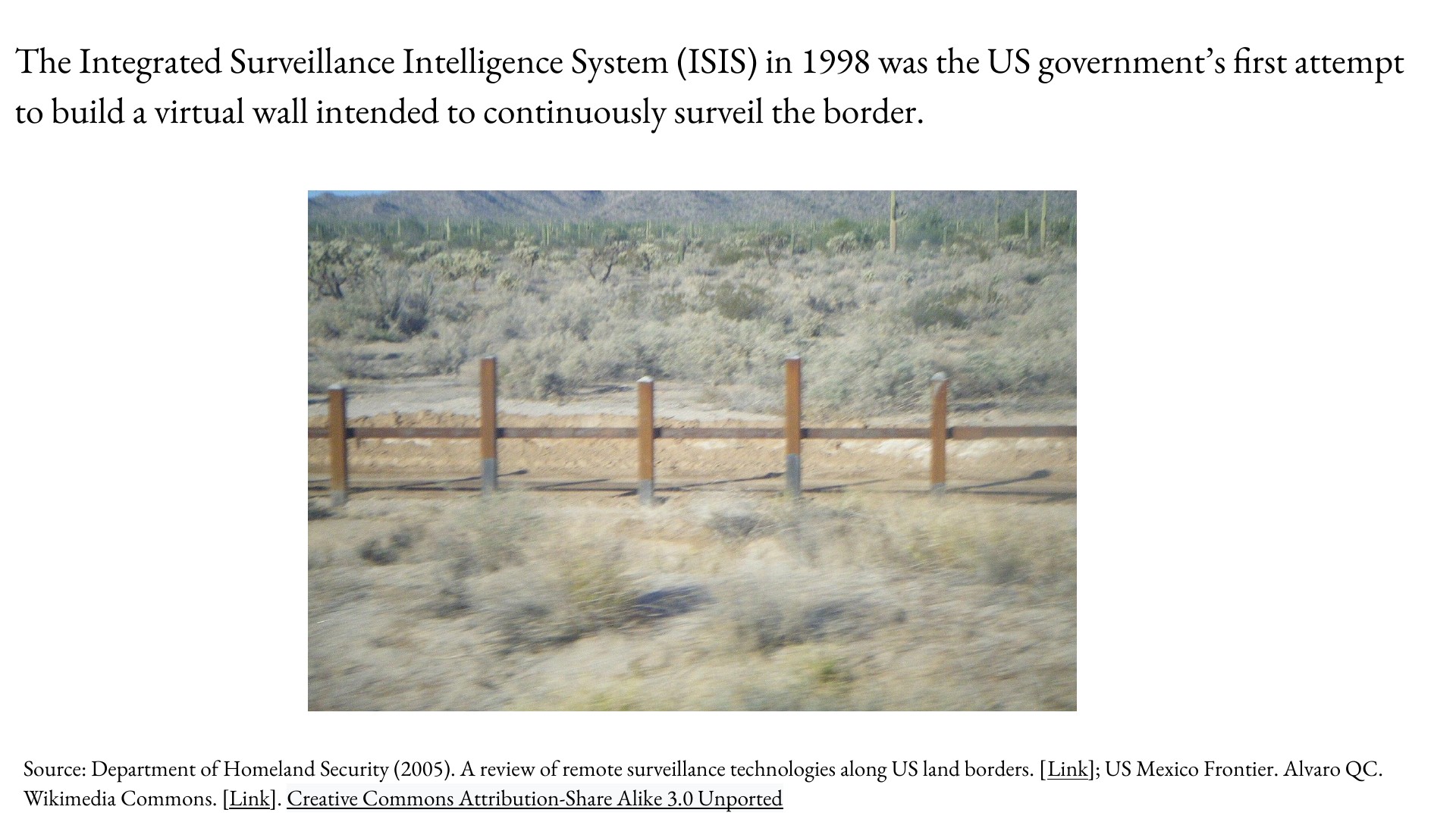
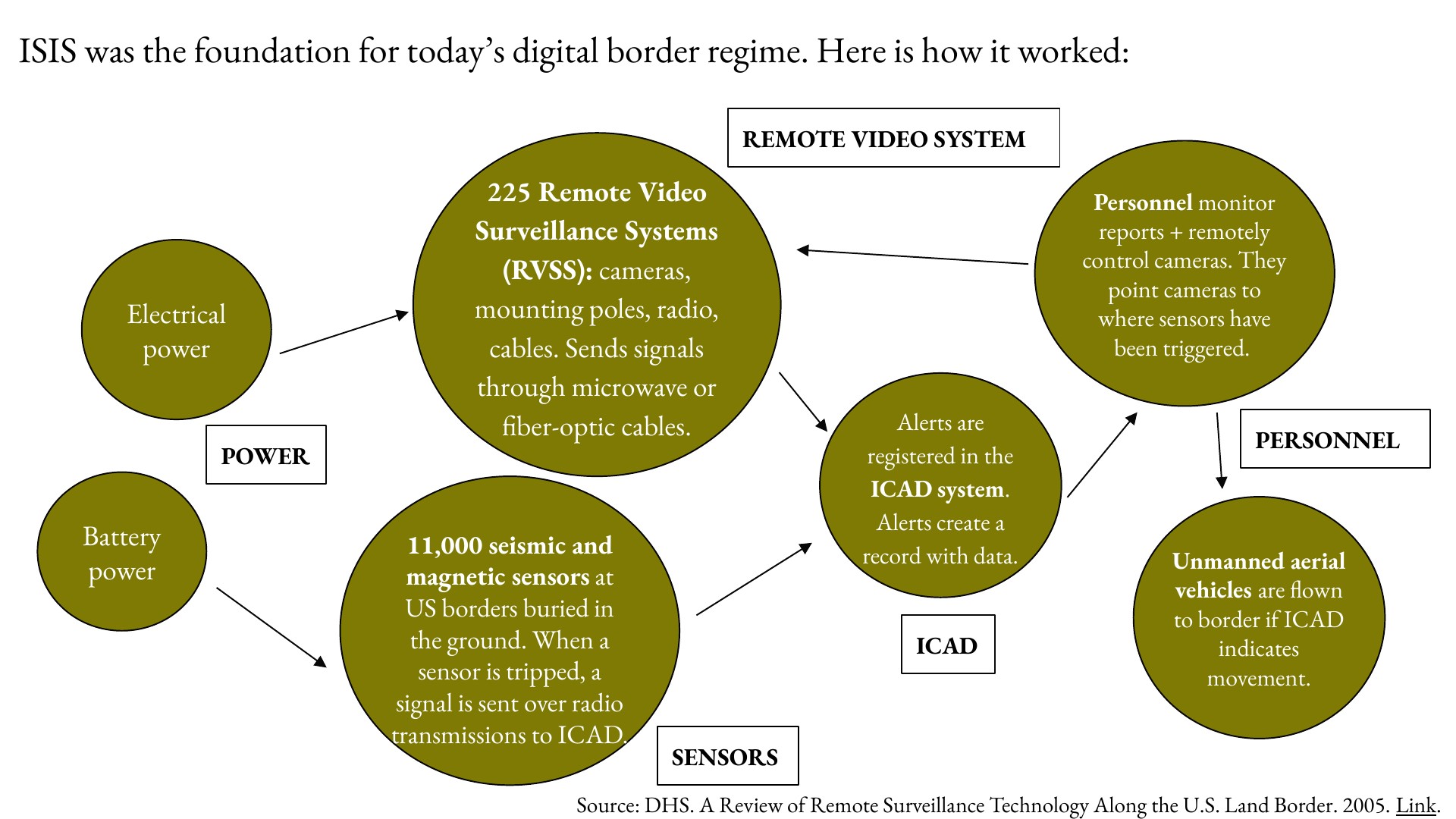
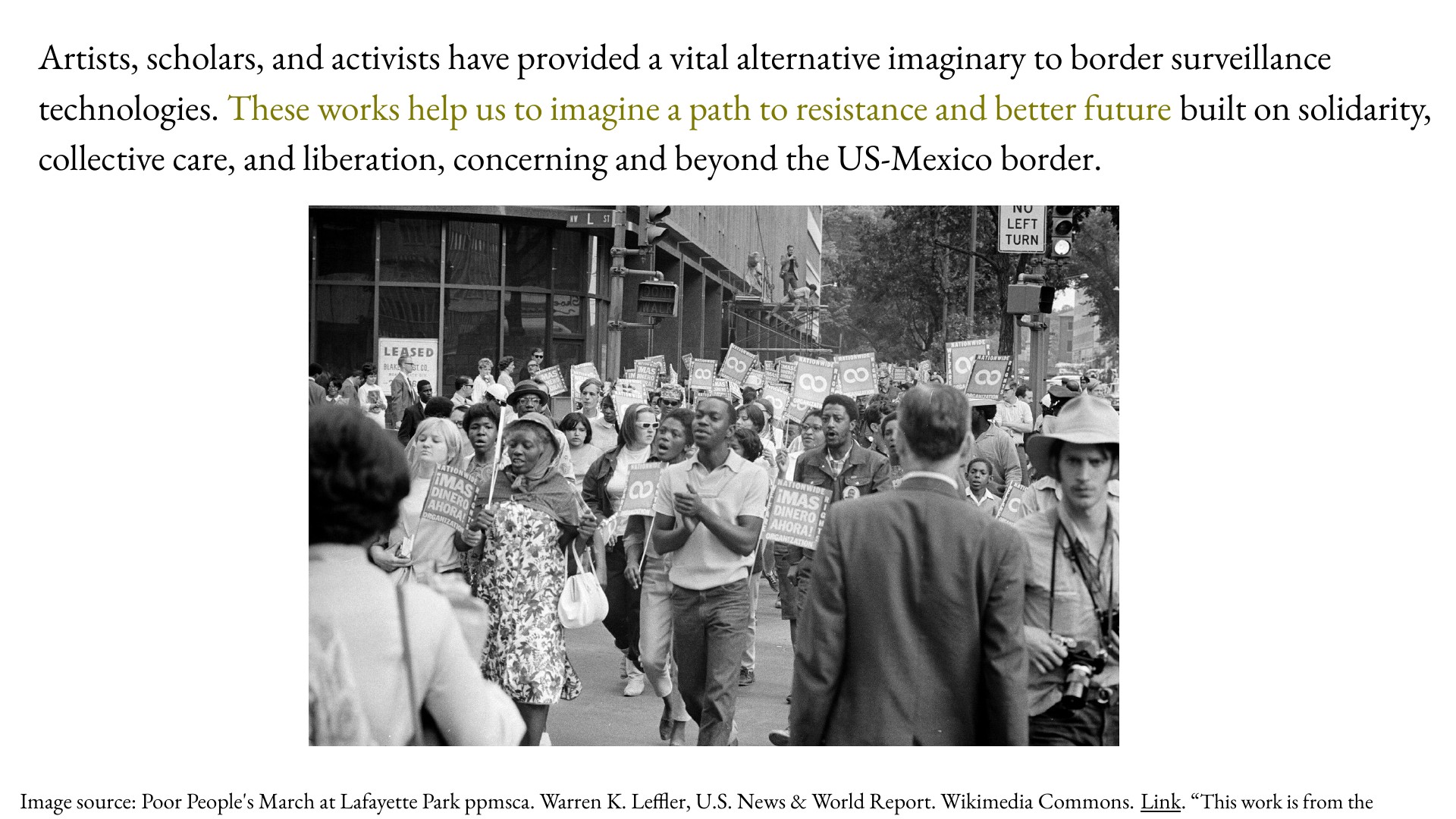
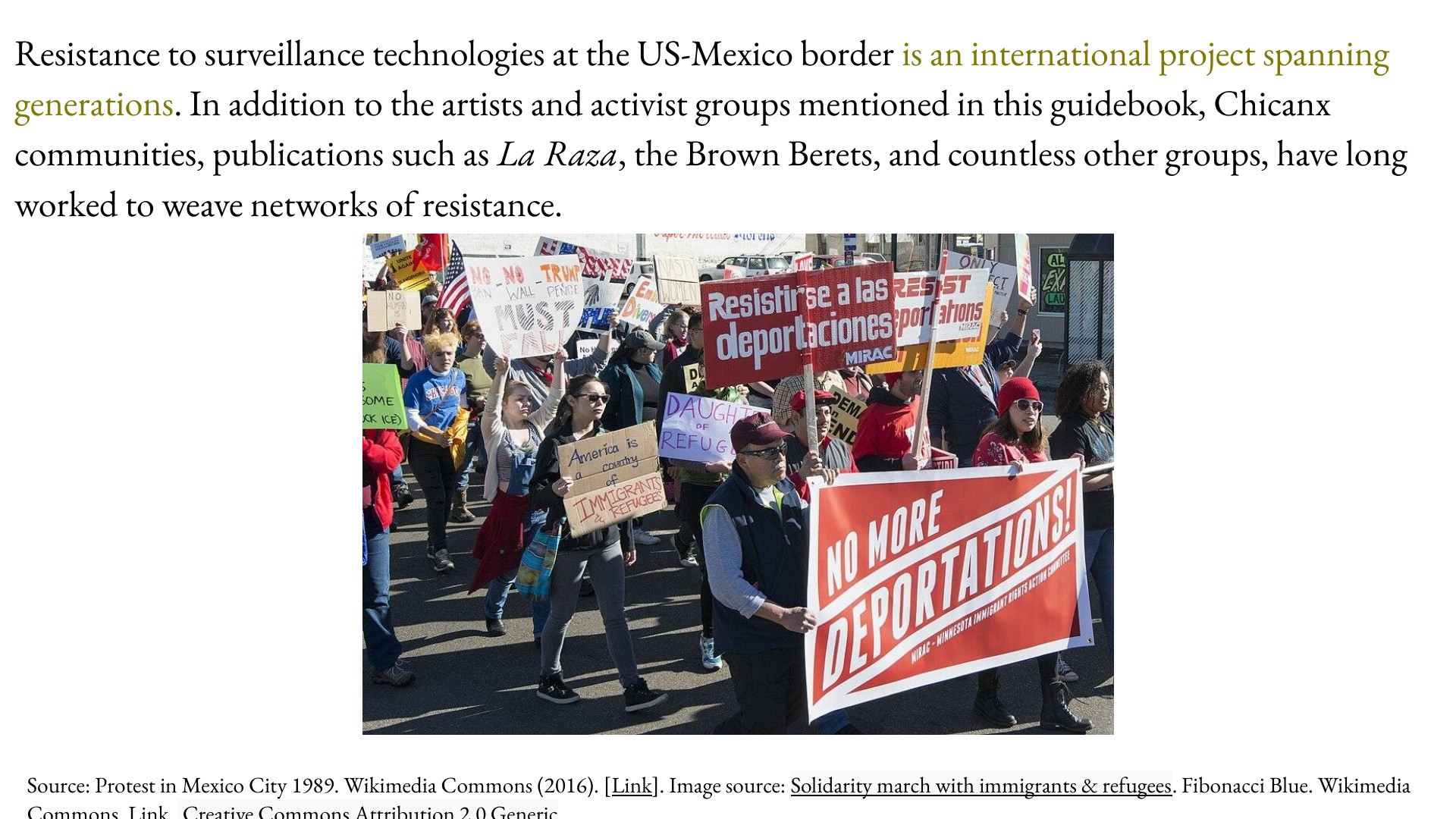
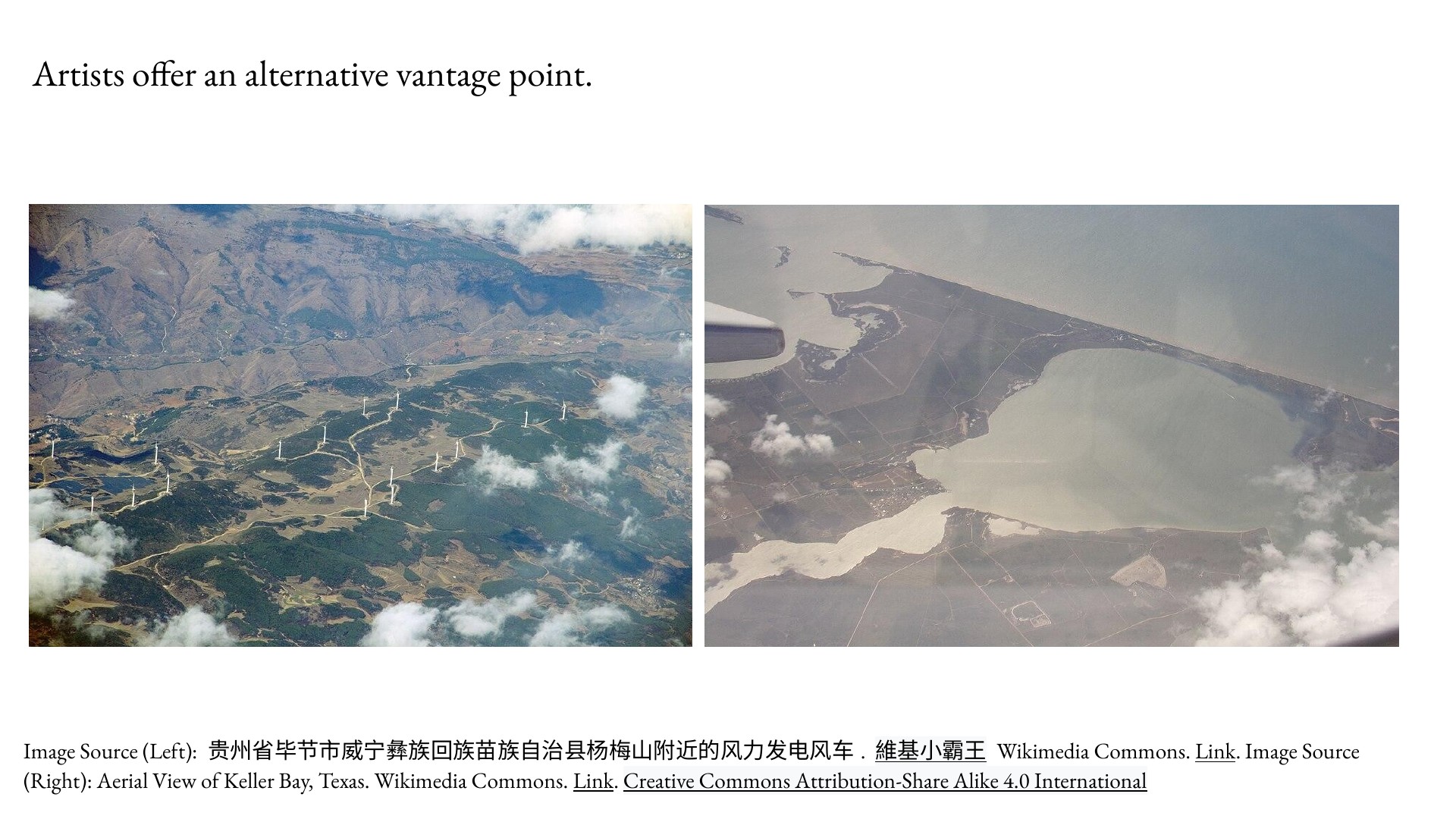
While the technologies used for surveillance at the US-Mexico border may appear impenetrable, artists and activists offer vital counter-imaginaries and forms of resistance. This typology gathers works that counter or turn the camera lens back onto the surveillance apparatus that operates underground, on terrestrial land, and in the sky. The author prompts audiences to consider how uses of technology sustain violence and policing in this geography, and to reflect upon how border surveillance technologies contribute to an illusion of sovereignty – one that is not insurmountable, but contested and crossed through.
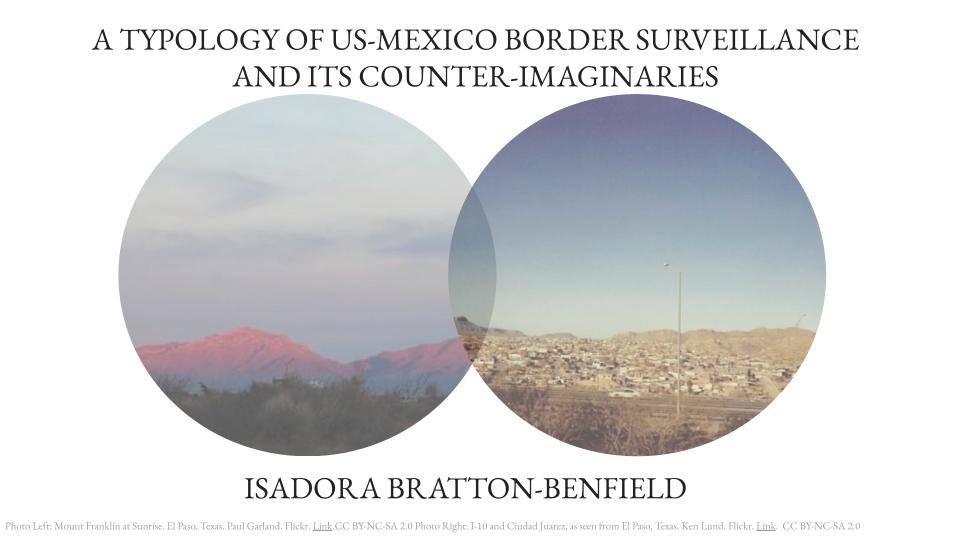
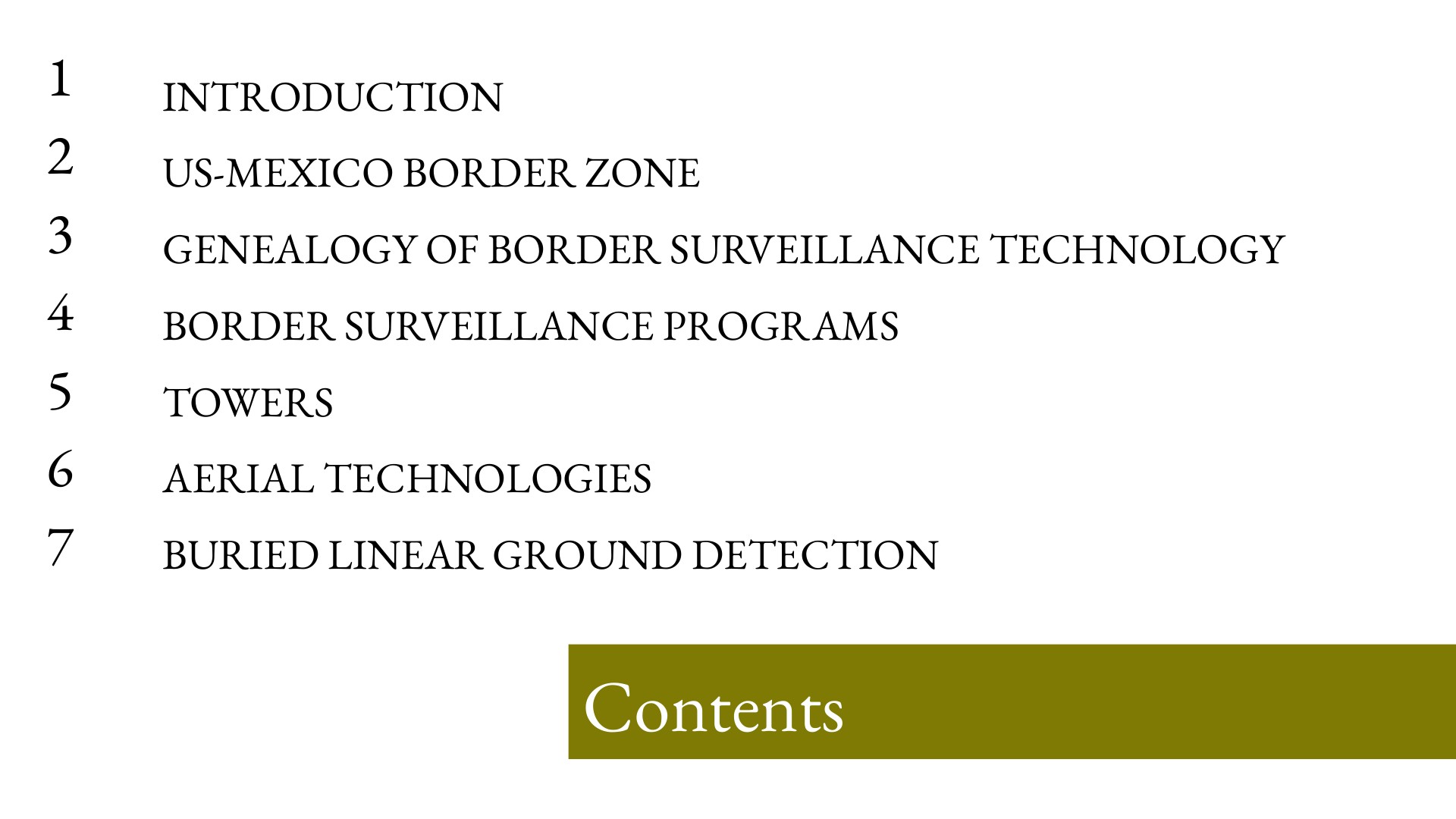
Table of contents: 1. Introduction; 2. US-Mexico Border Zone; 3. Genealogy of Border Surveillance Technology; 4. Border Surveillance Programs; 5. Towers; 6. Aerial Technologies; 7. Buried Linear Ground Detection. An olive-green label at the lower right reads
Section title on a solid olive-green background:
Text:
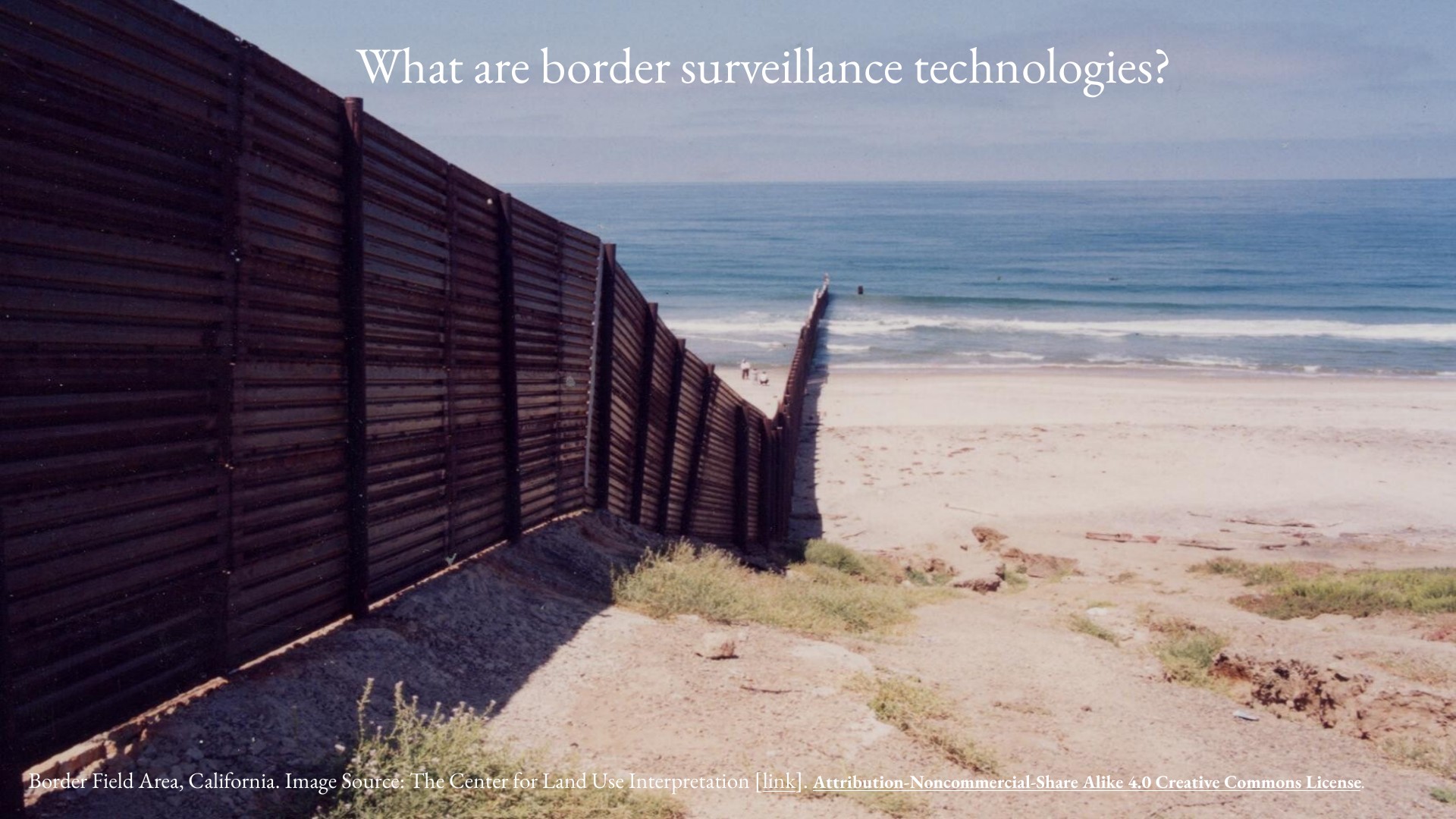
Photo of a tall, rust-brown border fence stretching across a sandy beach into the Pacific Ocean at Border Field, California. Overlaid text asks:
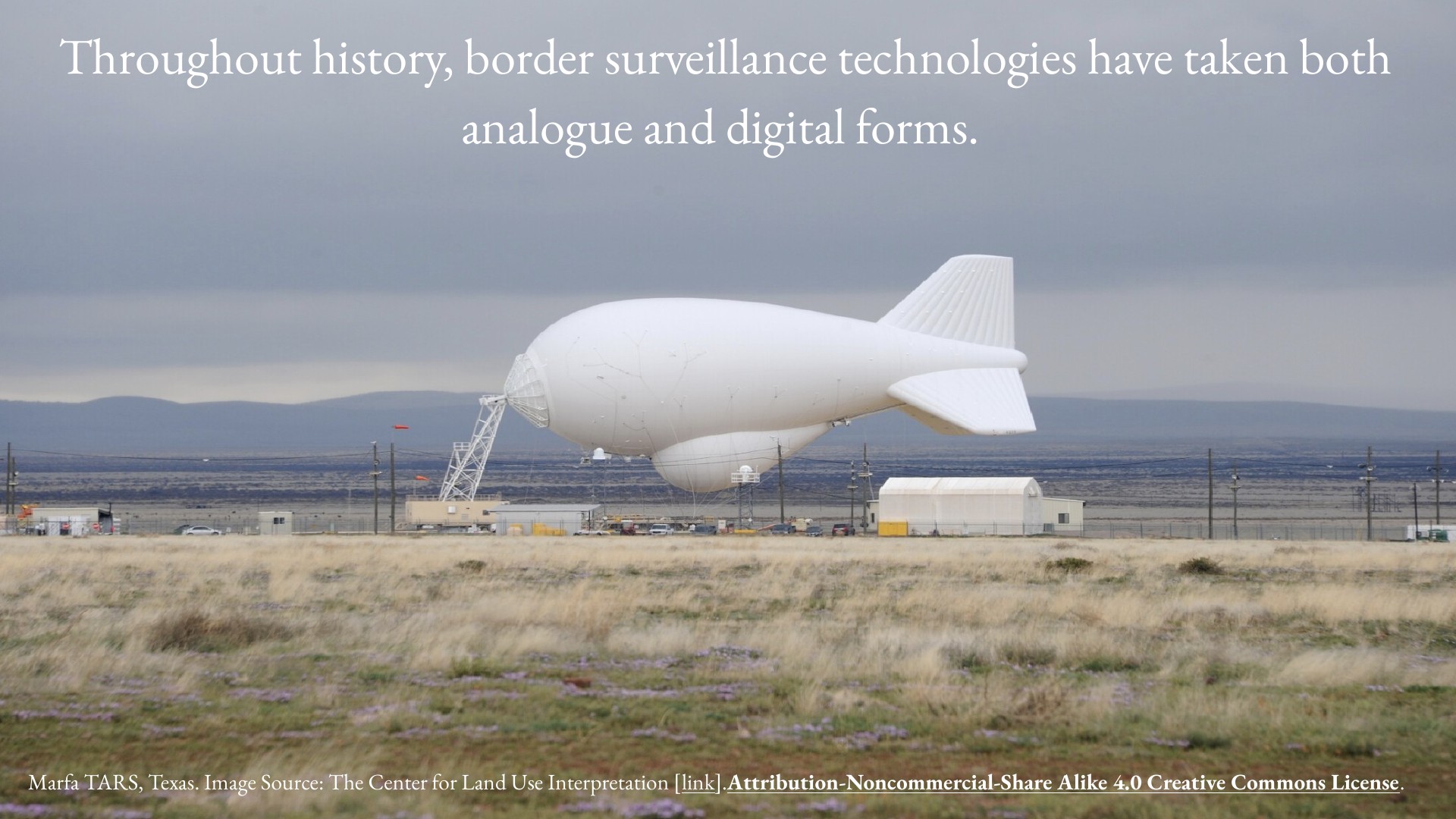
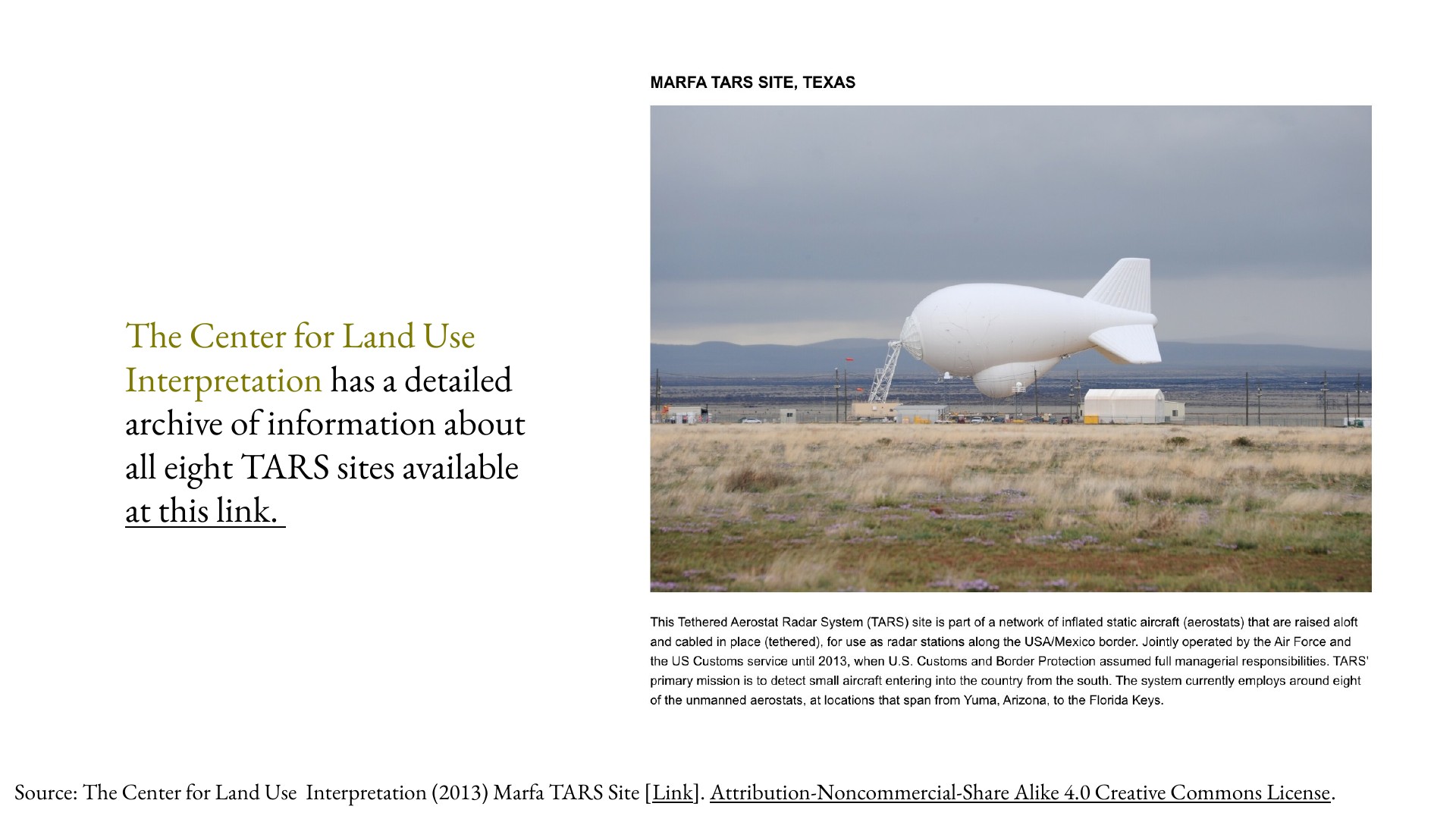
Photo of a large white tethered surveillance blimp (aerostat) on the ground beside its mooring station in open grassland at the Marfa TARS site in Texas. Overlaid text:
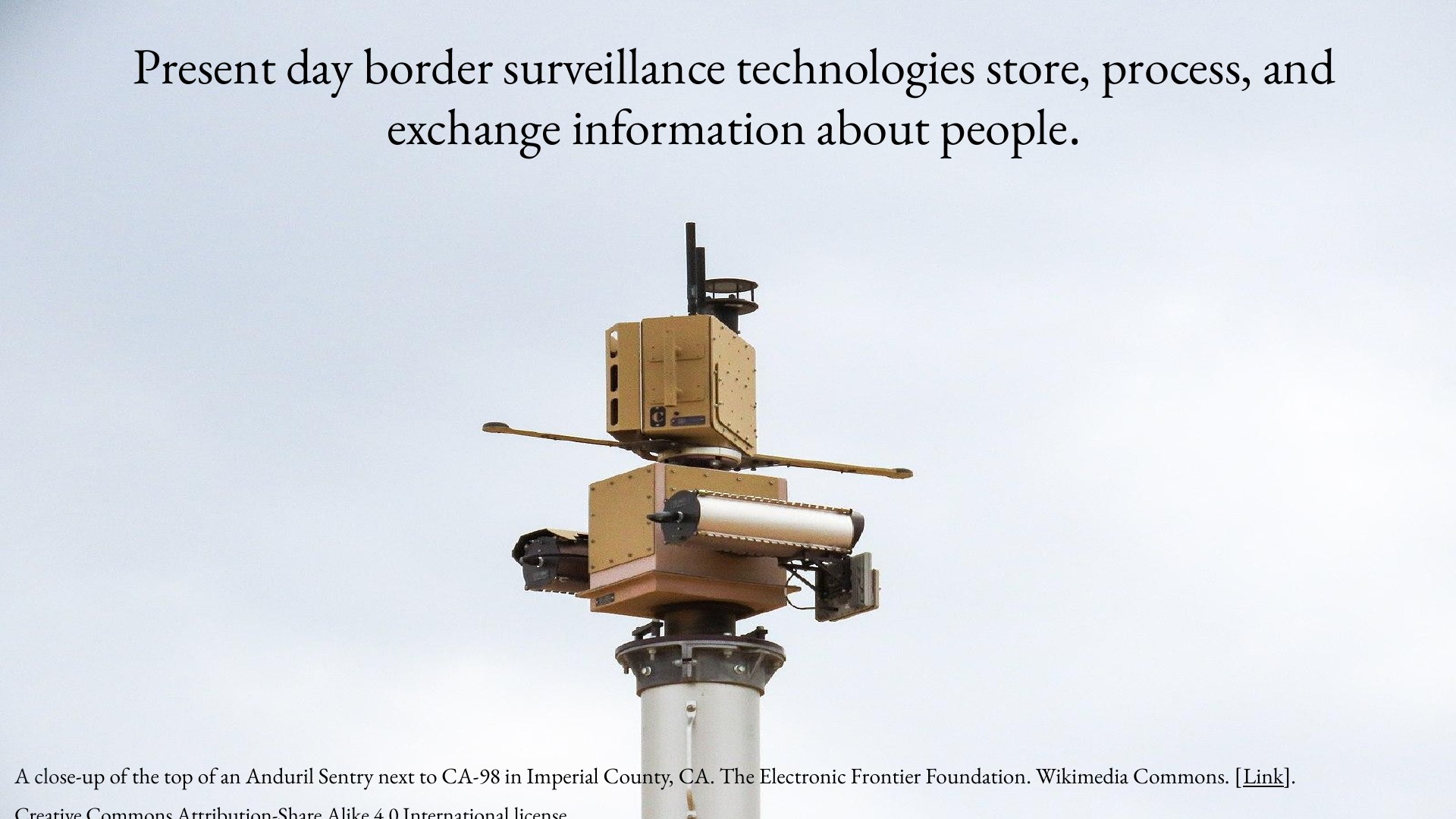
Photo of the top of an Anduril Sentry surveillance tower, a tan, boxy camera and sensor unit on a pole, against a pale sky beside Highway 98 in Imperial County, California. Text:
Text:
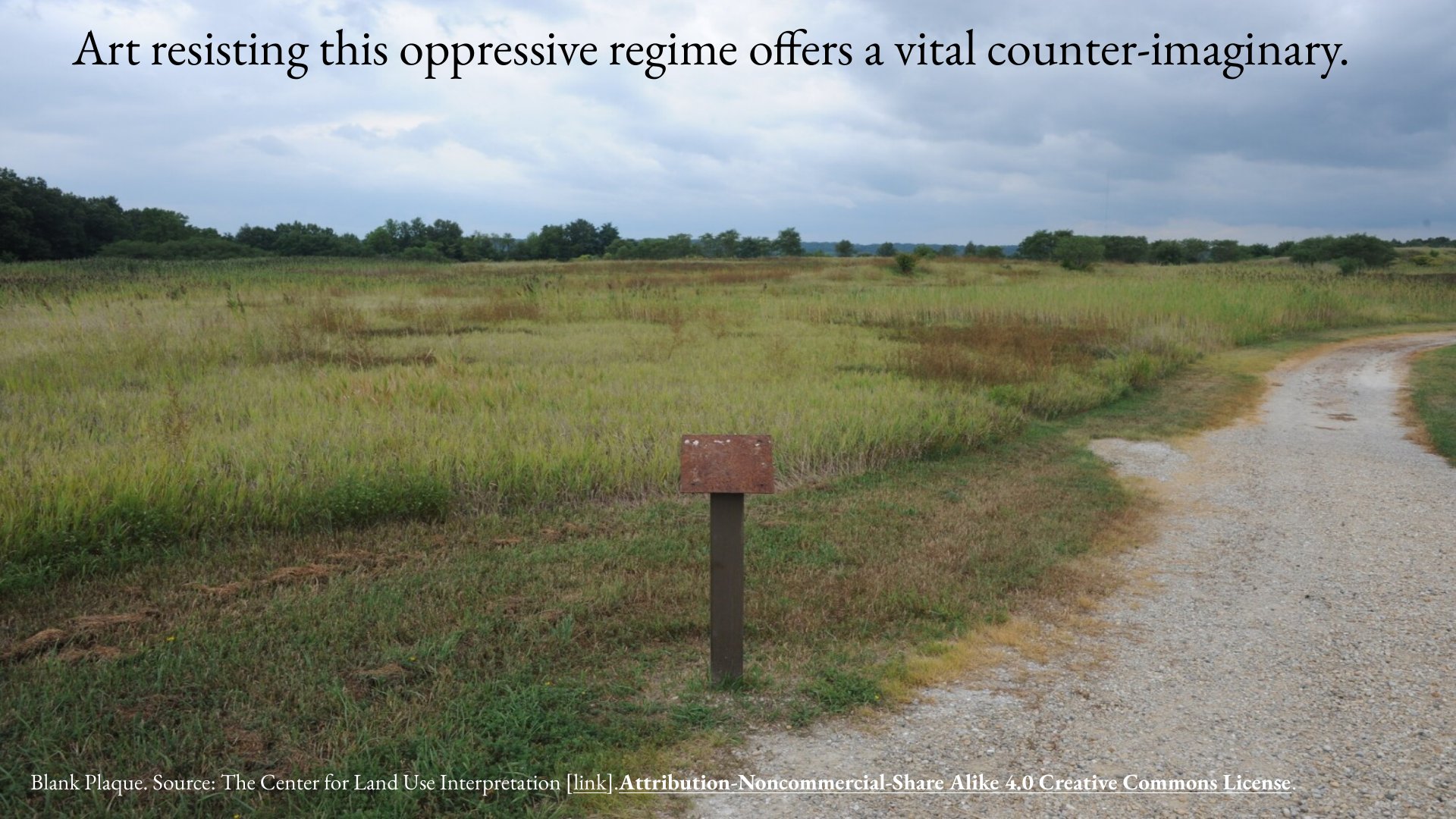
Photo of a grassy field and a gravel path with a small blank plaque on a post. Overlaid text:
Heading:
Section title on a solid olive-green background:
Text:
Text:
Text:
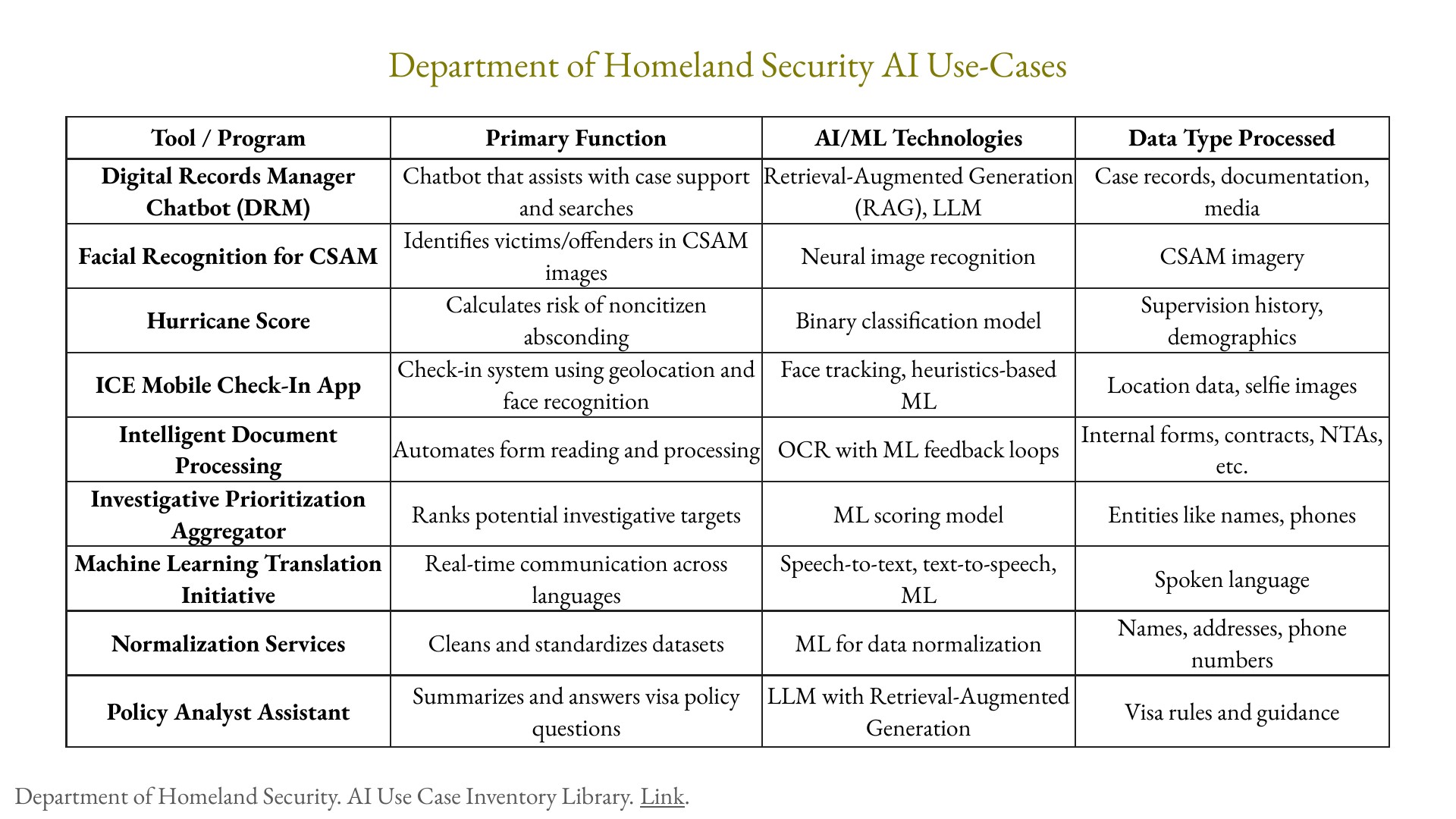
Table titled
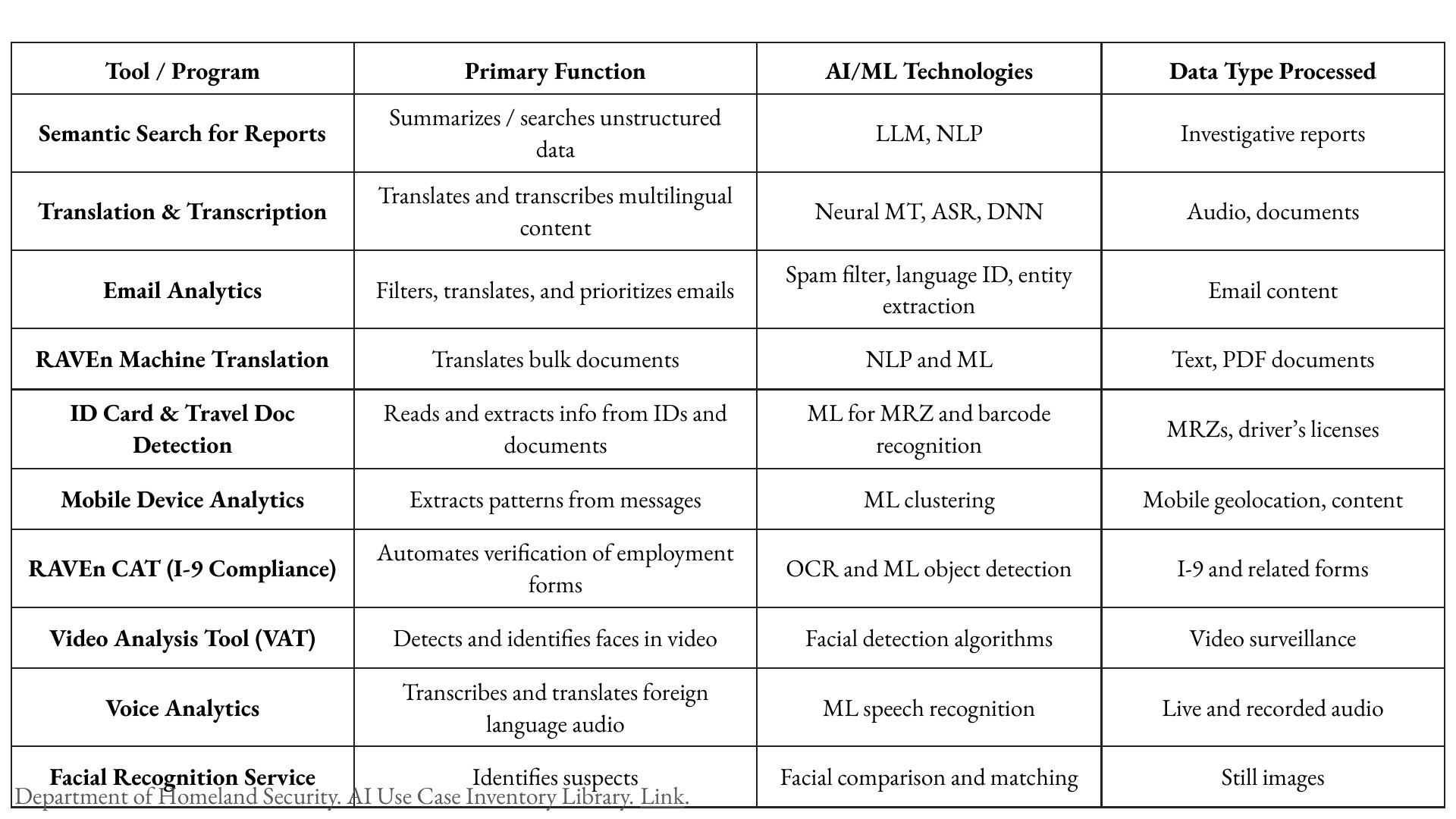
Continuation of the table of Department of Homeland Security AI use cases, with columns for tool or program, primary function, AI/ML technologies, and data type processed. Semantic Search for Reports: summarizes and searches unstructured data; LLM, NLP; investigative reports. Translation and Transcription: translates and transcribes multilingual content; neural machine translation, speech recognition, deep neural networks; audio, documents. Email Analytics: filters, translates, and prioritizes emails; spam filter, language ID, entity extraction; email content. RAVEn Machine Translation: translates bulk documents; NLP and ML; text, PDF documents. ID Card and Travel Doc Detection: reads and extracts information from IDs and documents; ML for MRZ and barcode recognition; MRZs, driver's licenses. Mobile Device Analytics: extracts patterns from messages; ML clustering; mobile geolocation, content. RAVEn CAT (I-9 Compliance): automates verification of employment forms; OCR and ML object detection; I-9 and related forms. Video Analysis Tool (VAT): detects and identifies faces in video; facial detection algorithms; video surveillance. Voice Analytics: transcribes and translates foreign-language audio; ML speech recognition; live and recorded audio. Facial Recognition Service: identifies suspects; facial comparison and matching; still images.
Text:
Section title on a solid olive-green background:
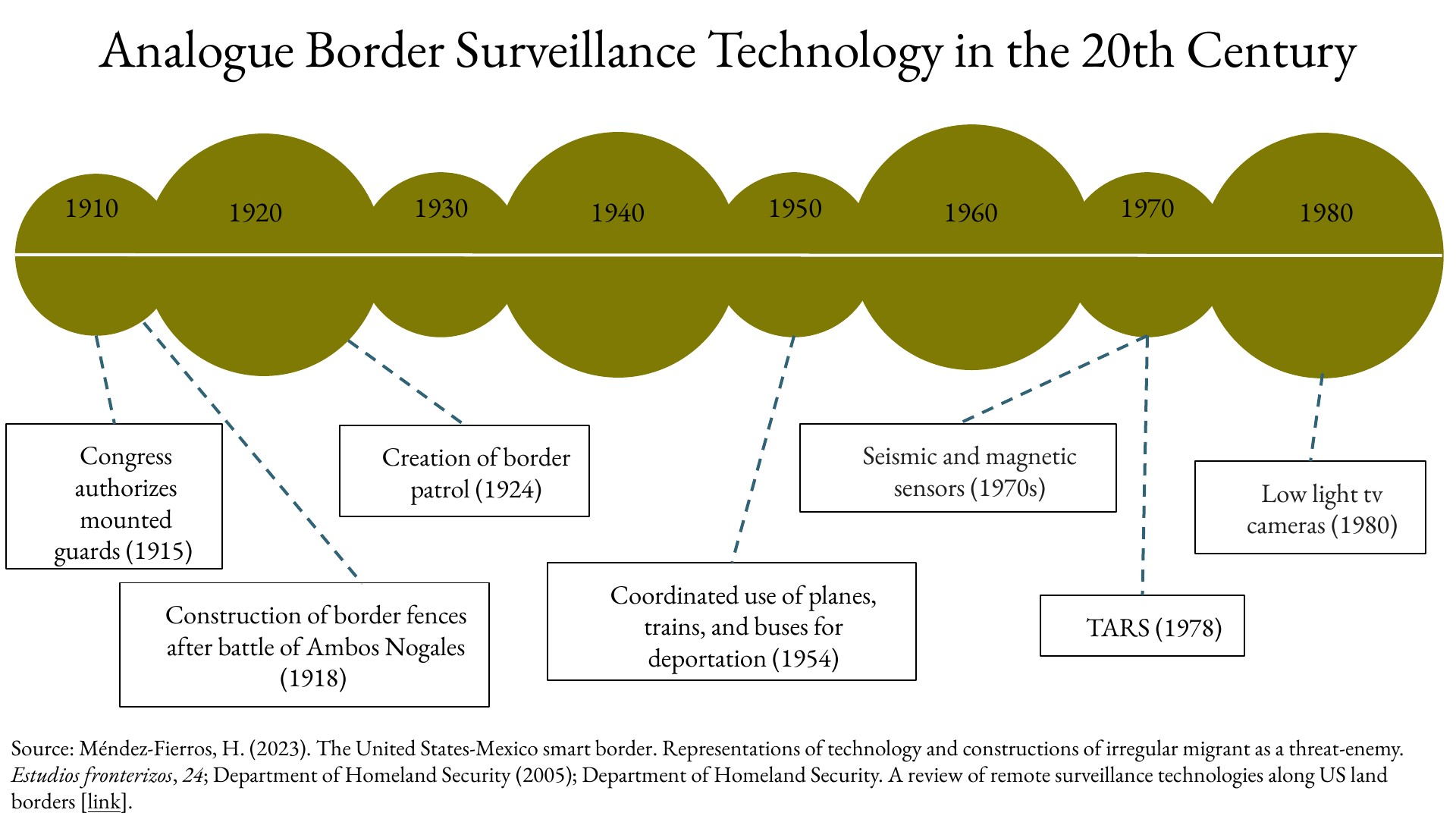
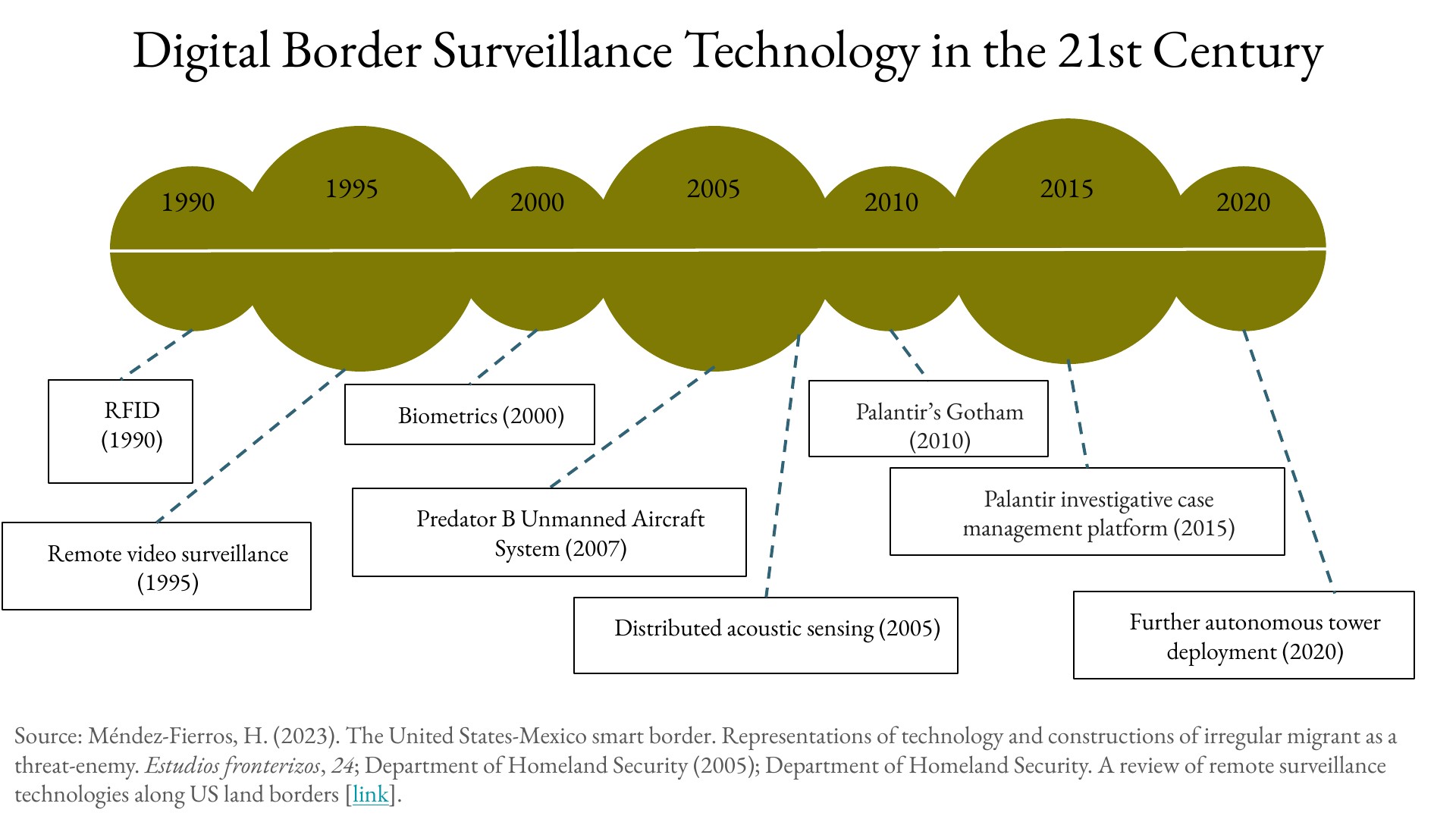
Timeline titled
Text:
Heading:
Timeline titled
Text:
Table titled
Text:
Section title on a solid olive-green background:
Text:
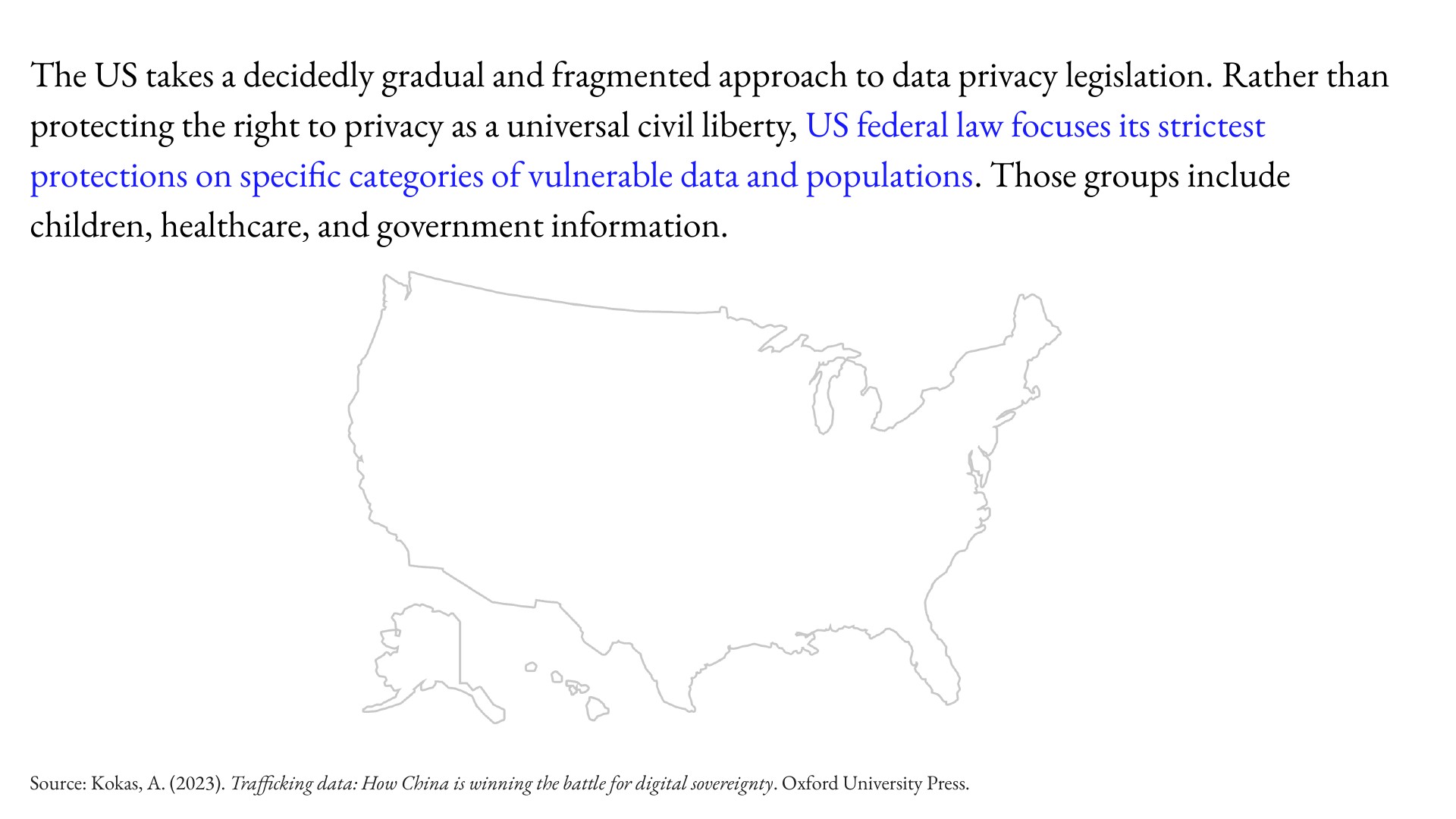
Text:
Diagram titled
Text:
Text:
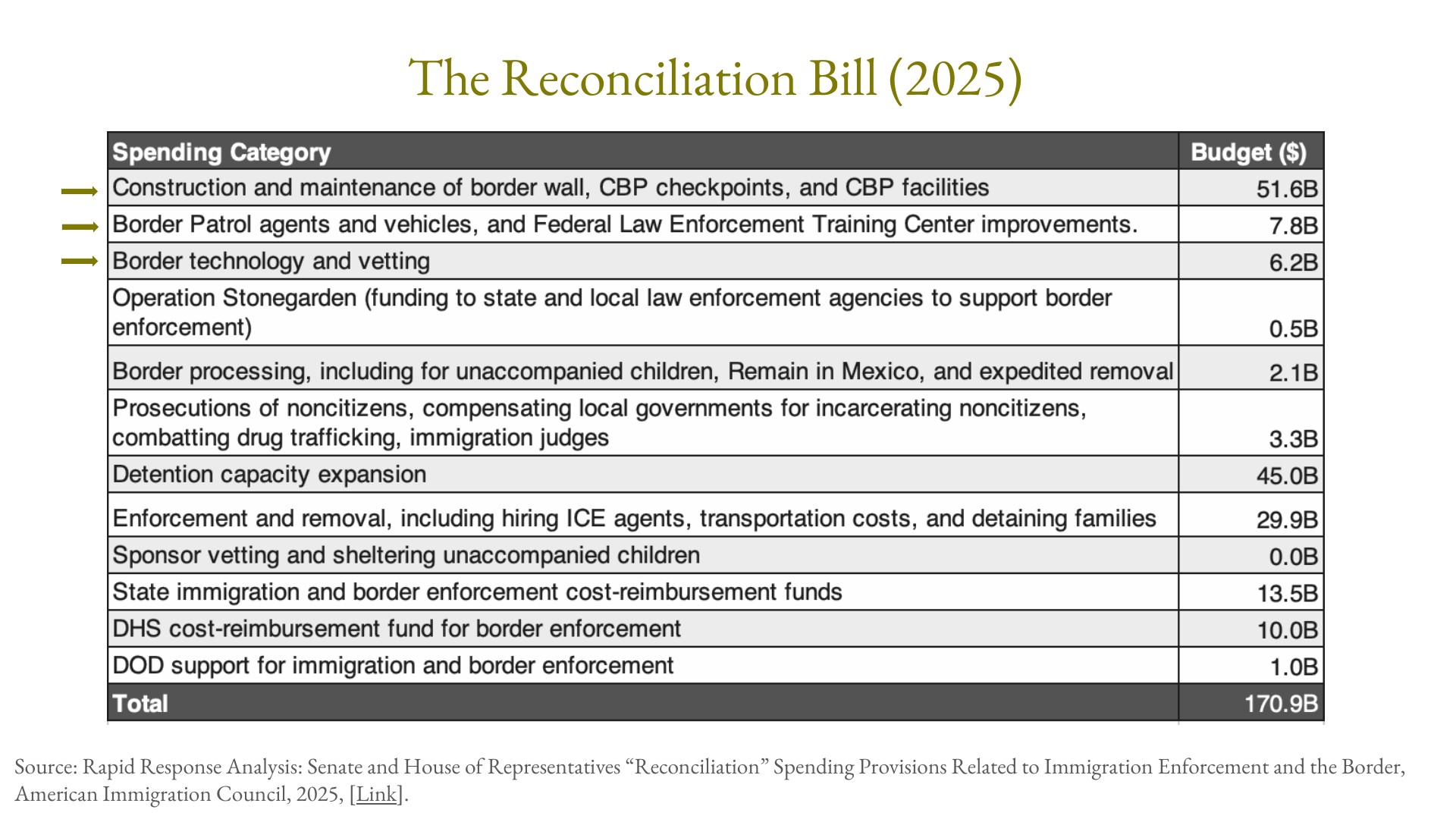
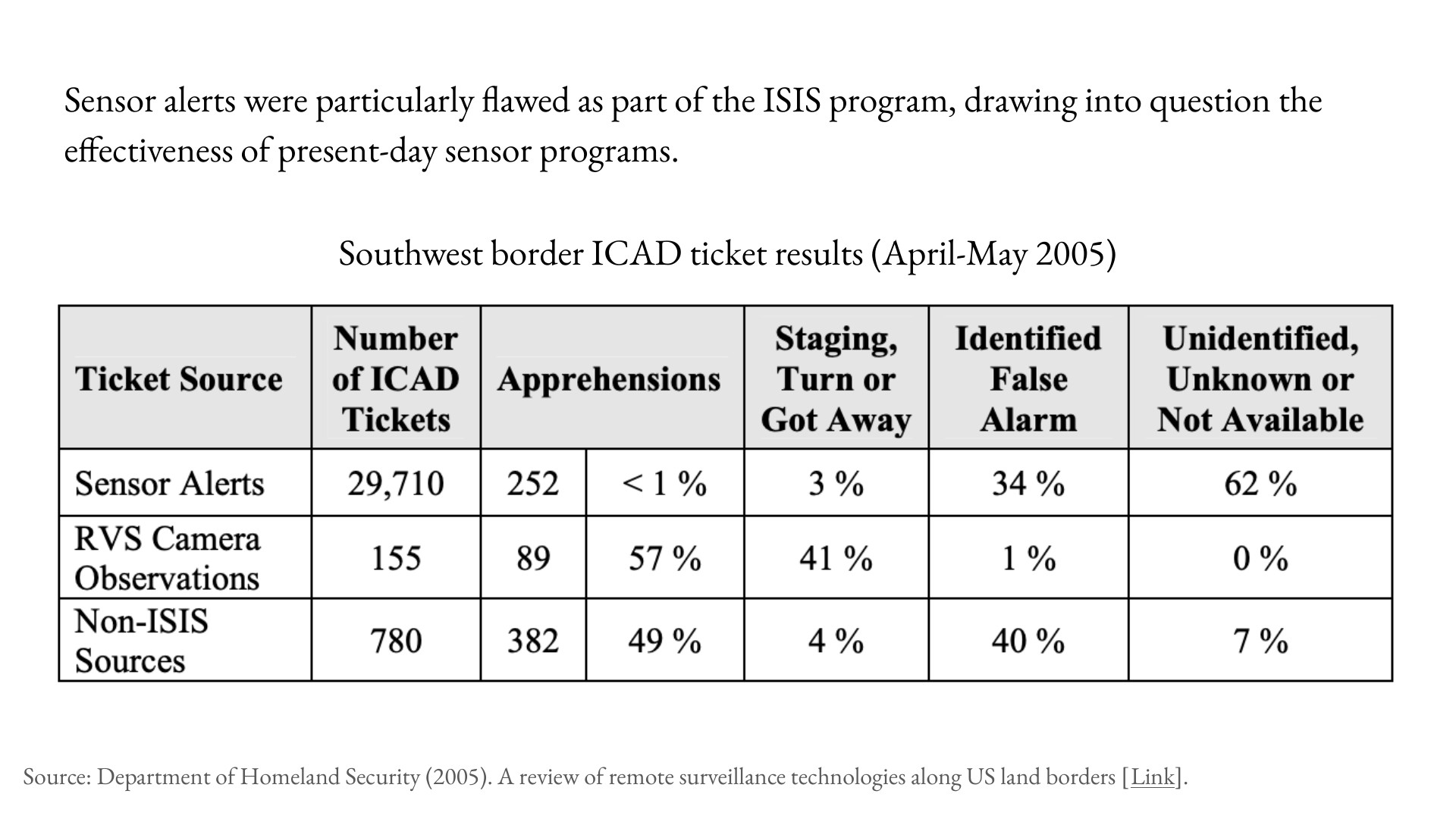
Table titled
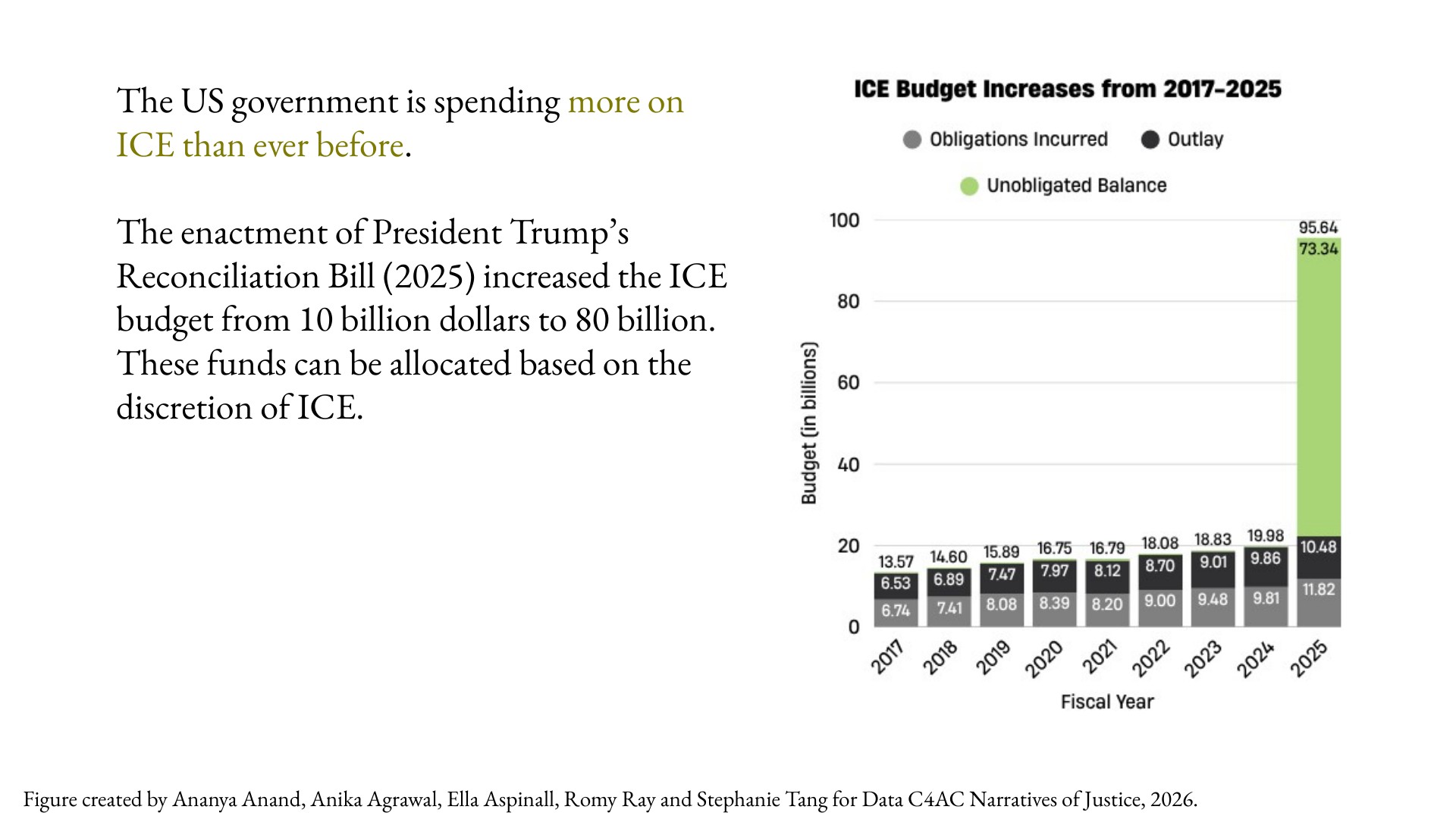
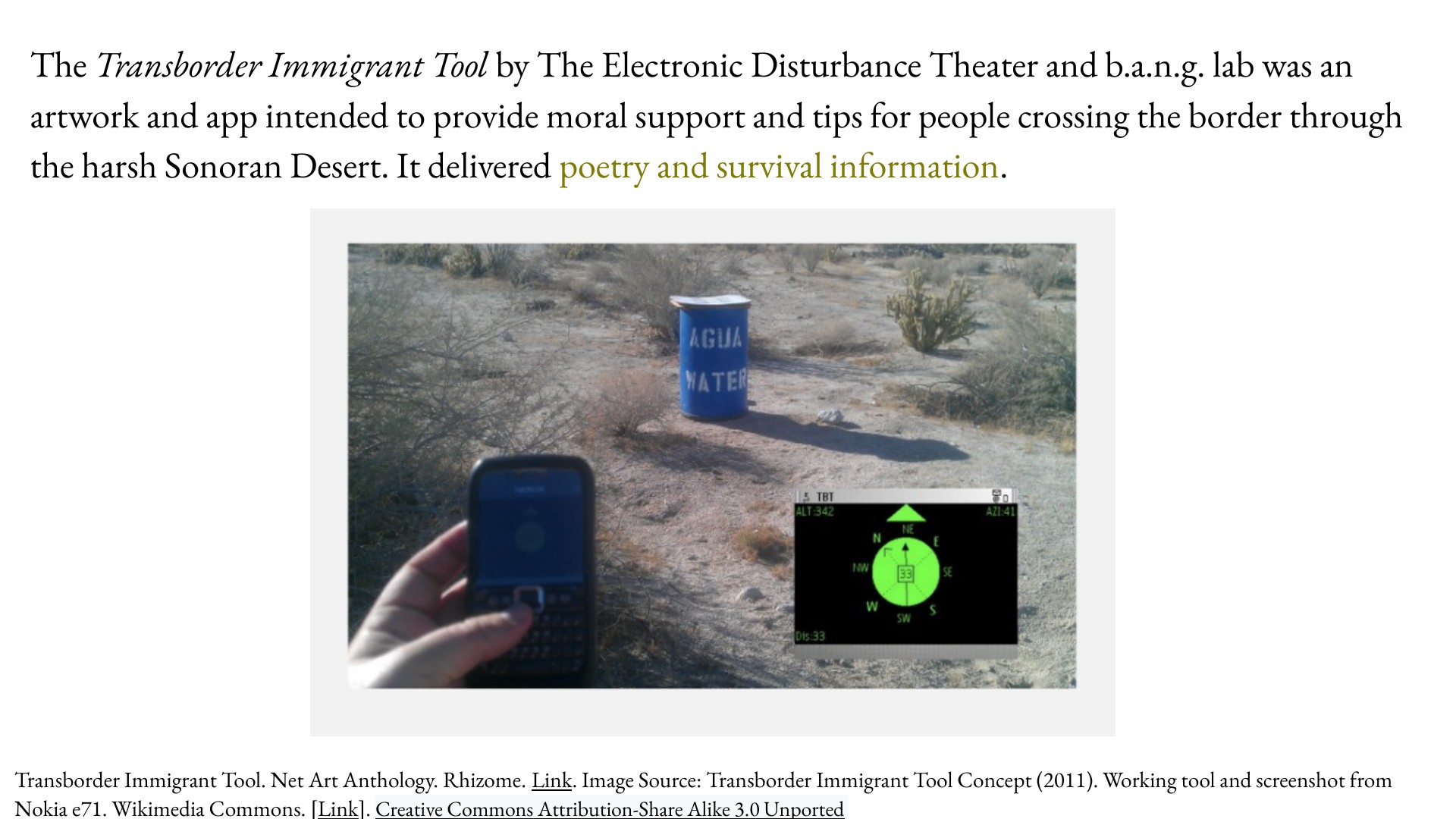
Text:
Section title on a solid olive-green background:
Text:
Text:
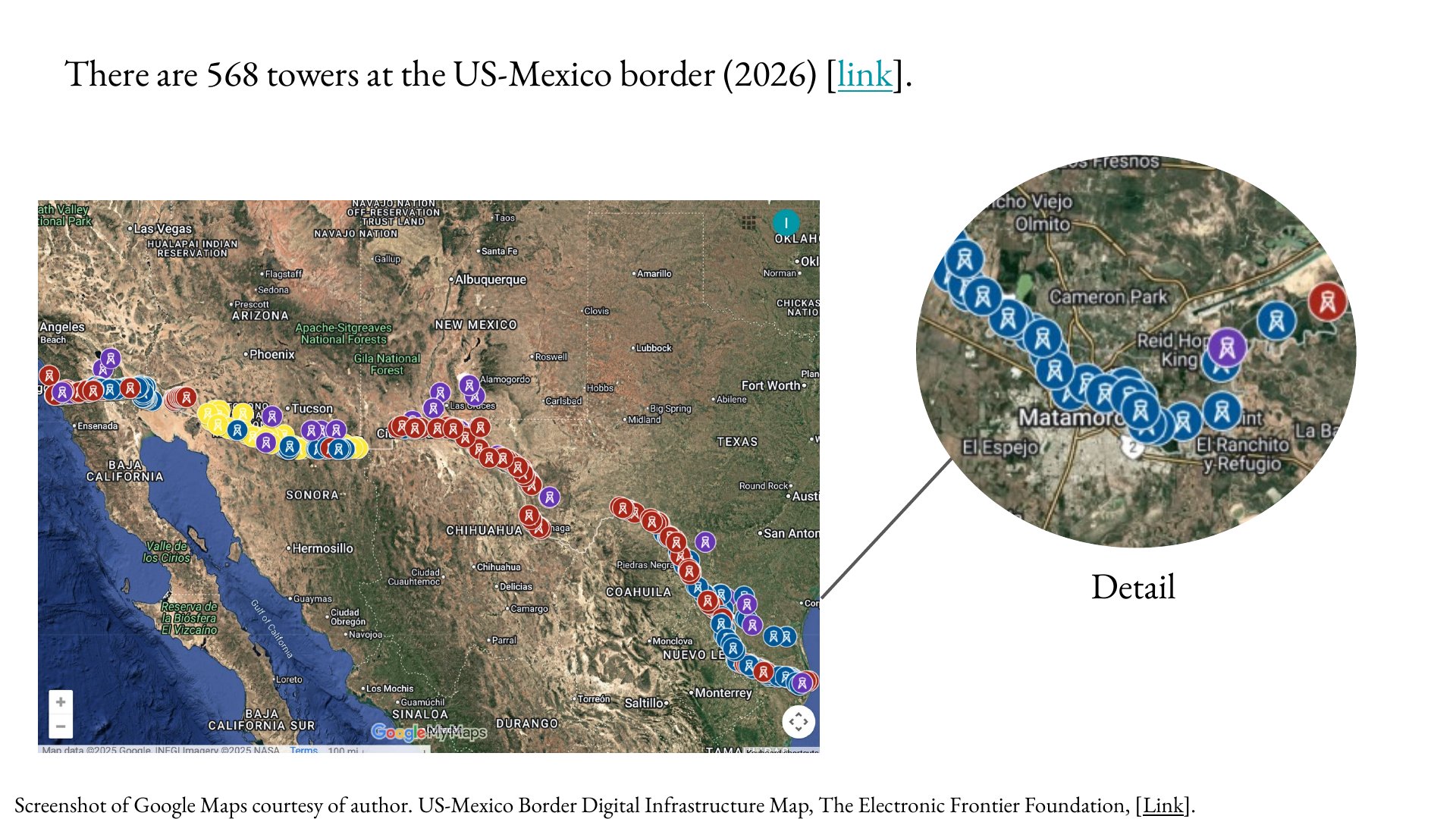
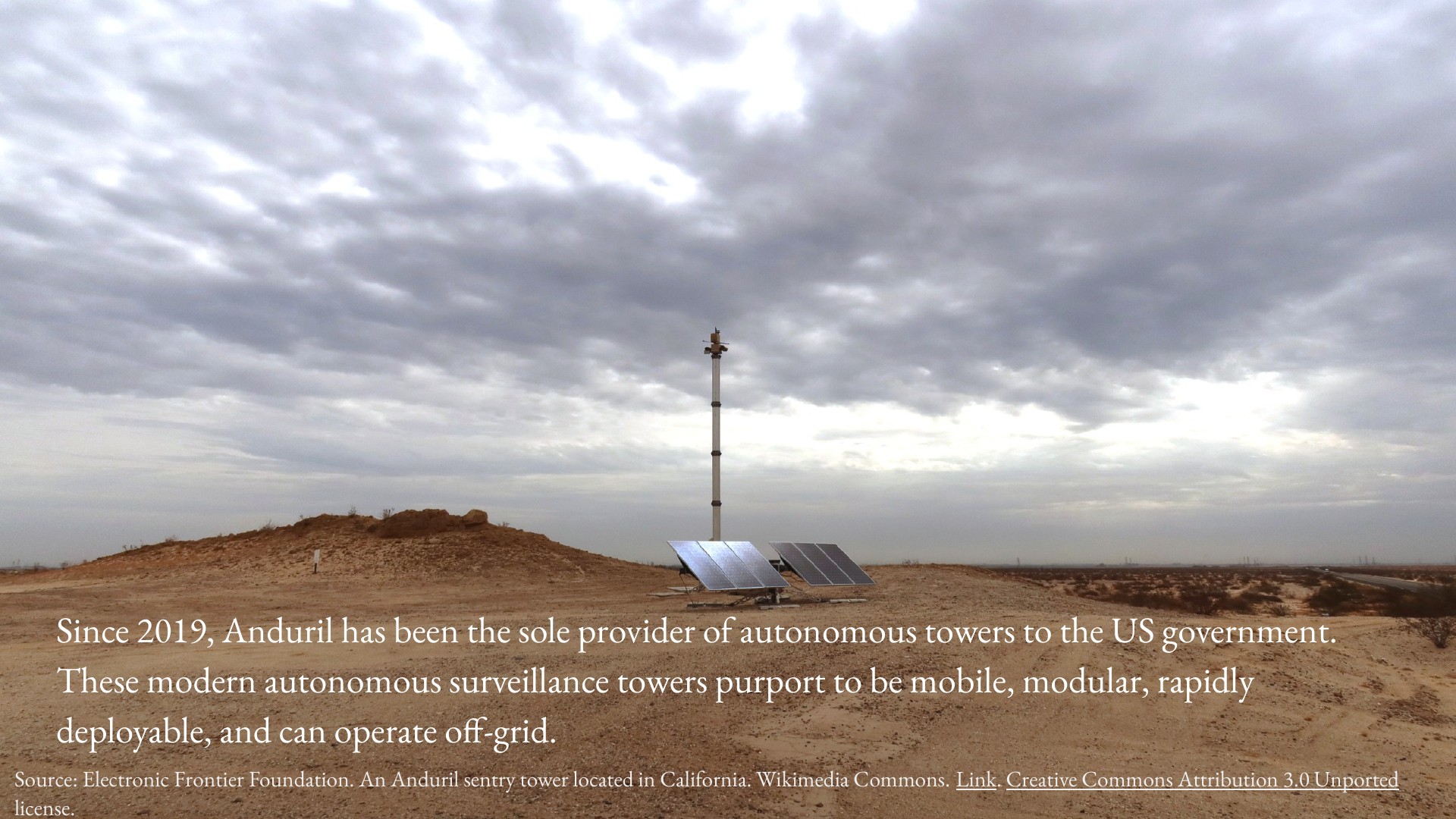
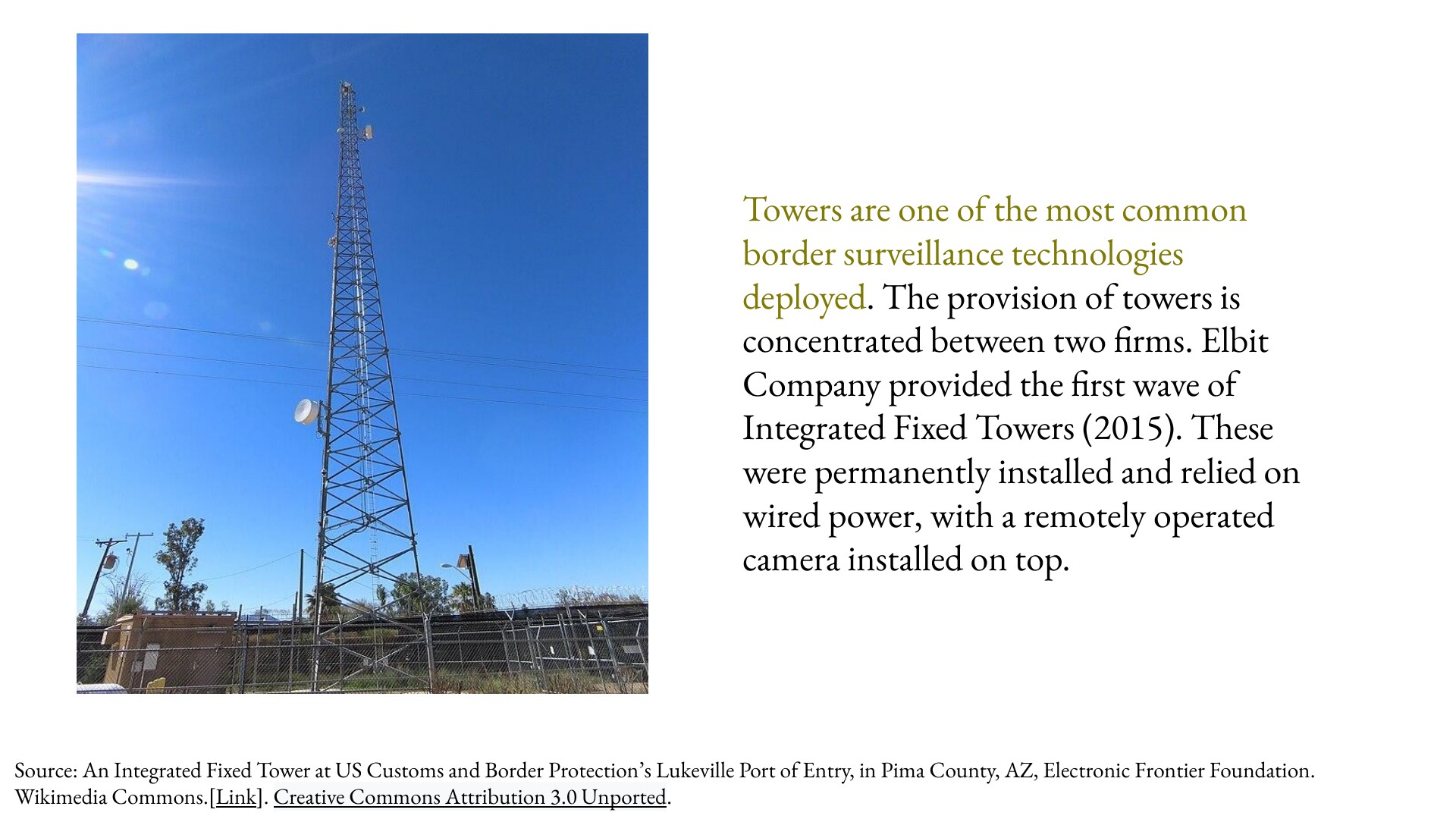
Photo of an Anduril sentry tower, a slender pole with solar panels at its base, on a dirt rise under a dramatic cloudy sky in California. Overlaid text:
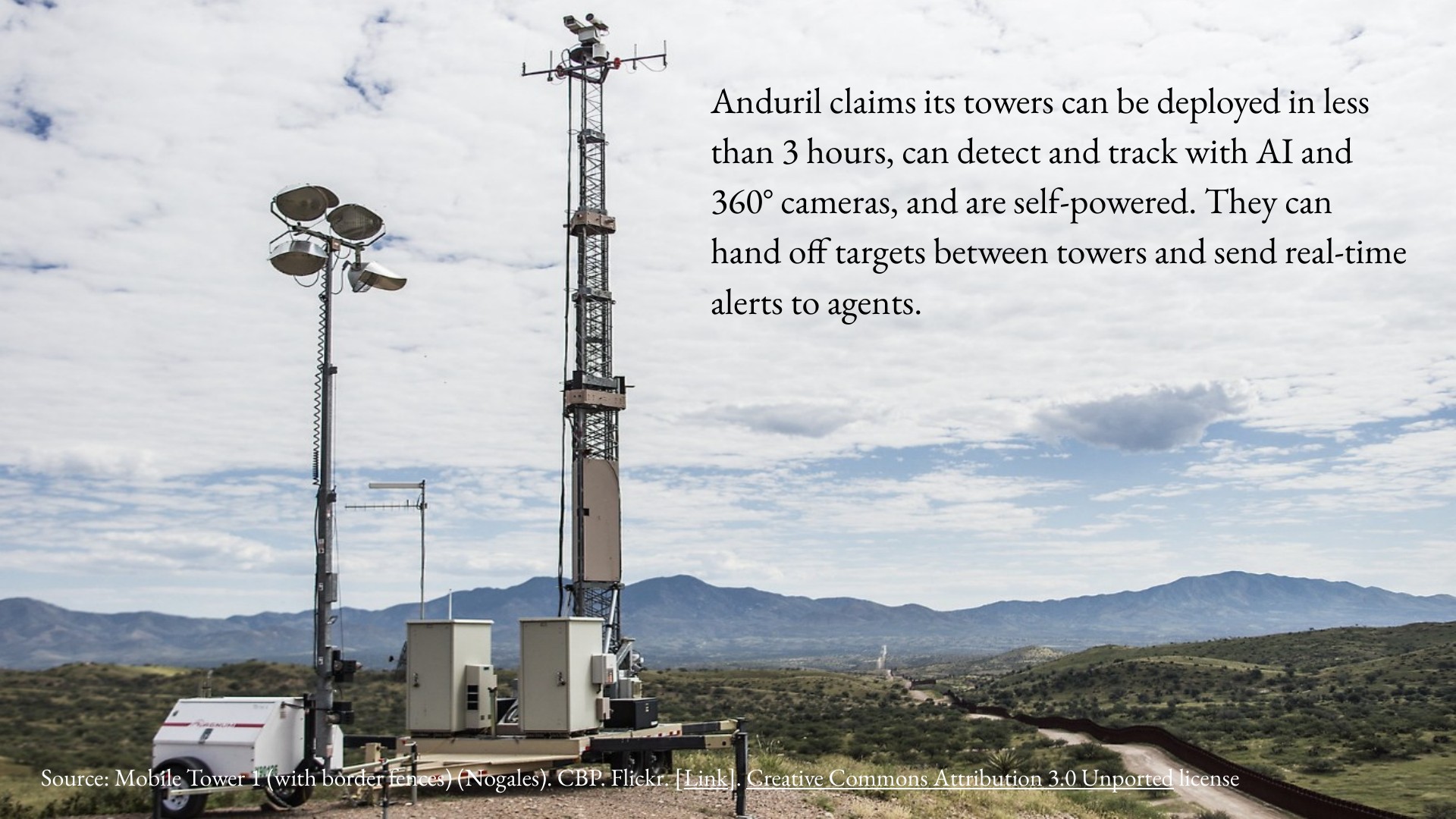
Photo of two mobile surveillance towers on wheeled trailers, fitted with cameras and floodlights, beside the border fence on a ridge in Nogales under a cloudy sky. Overlaid text:
Text:
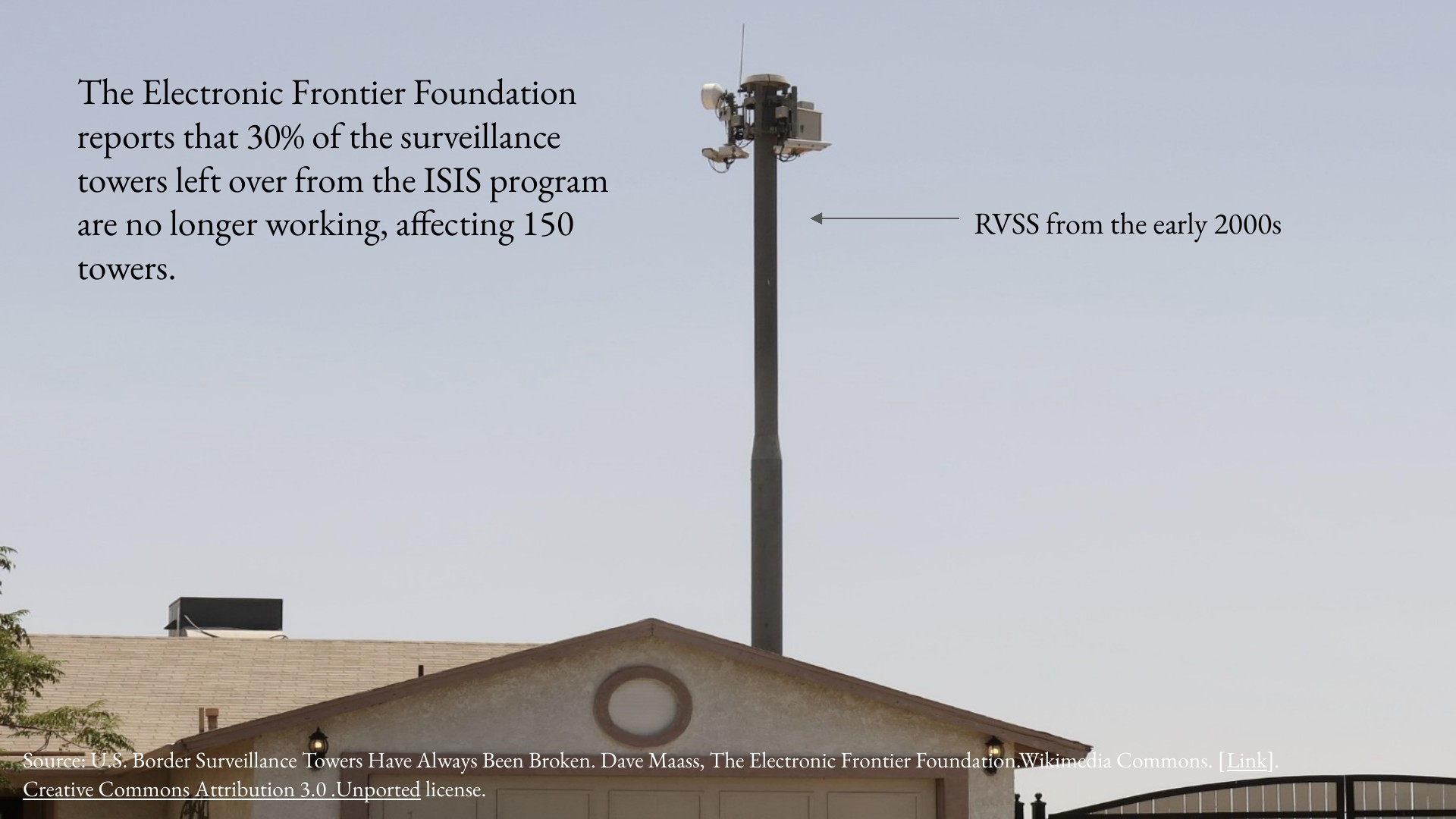
Photo of an older surveillance pole with a camera on top rising above a building's roof, with an arrow labeling it
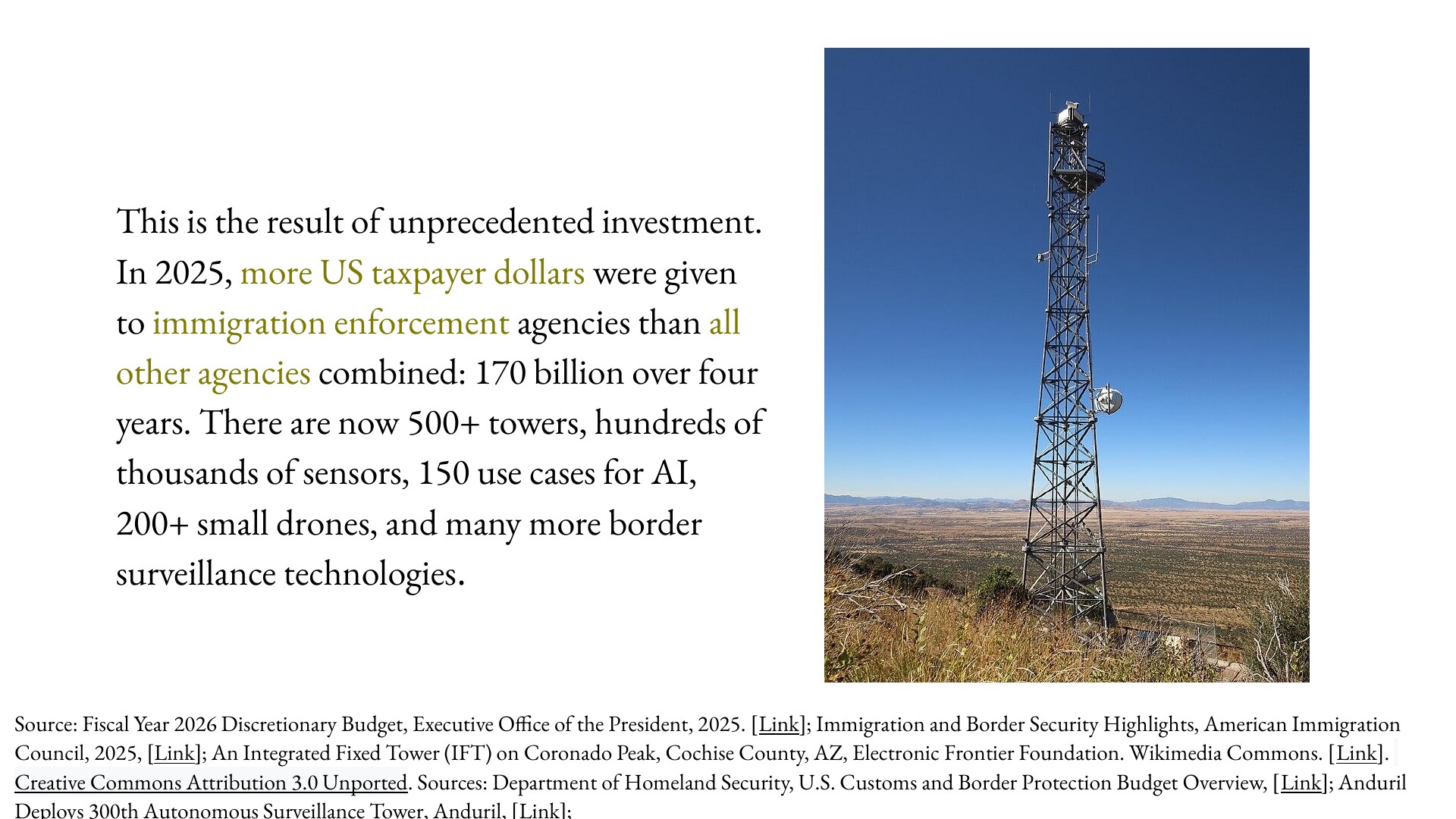
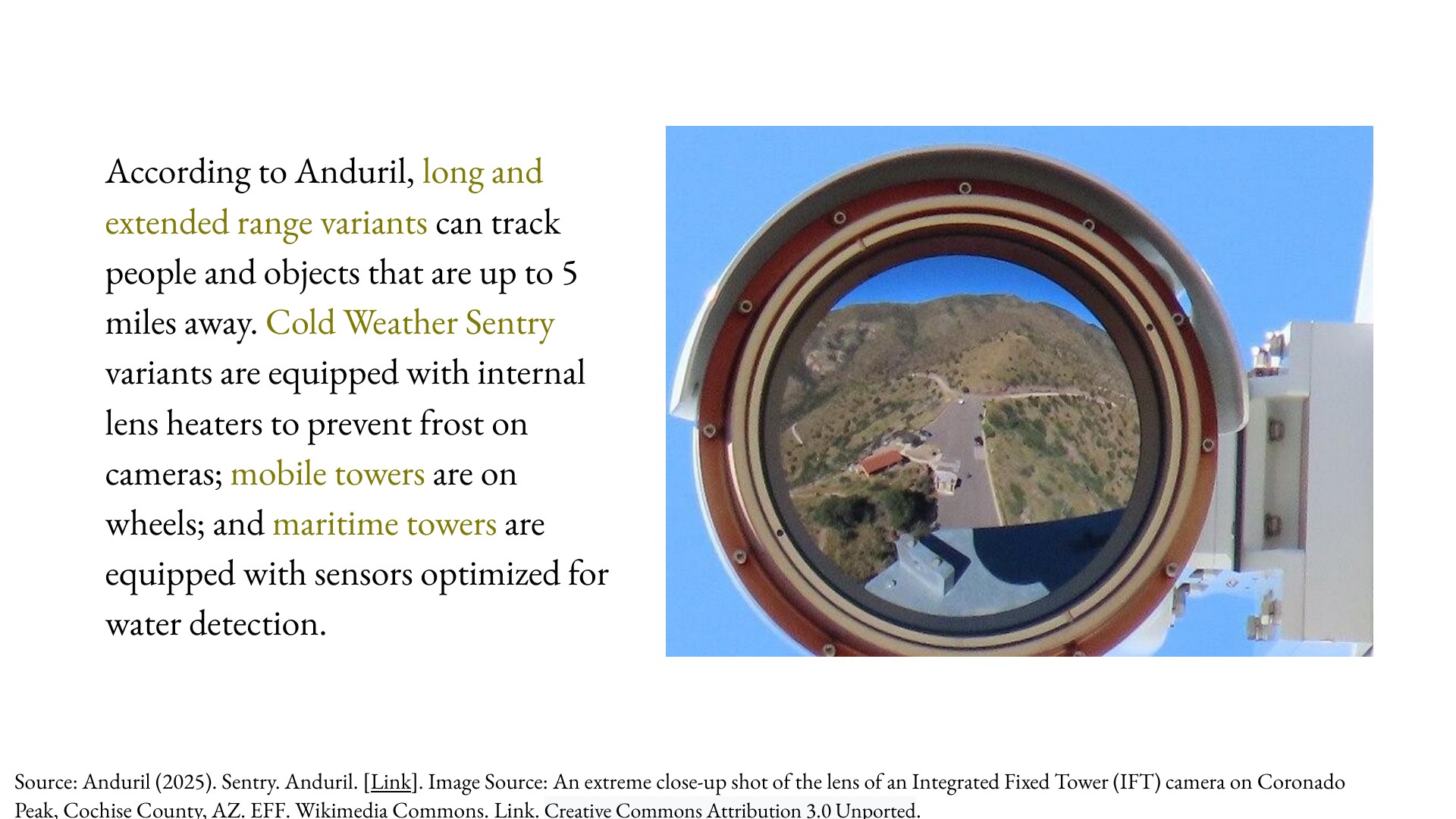
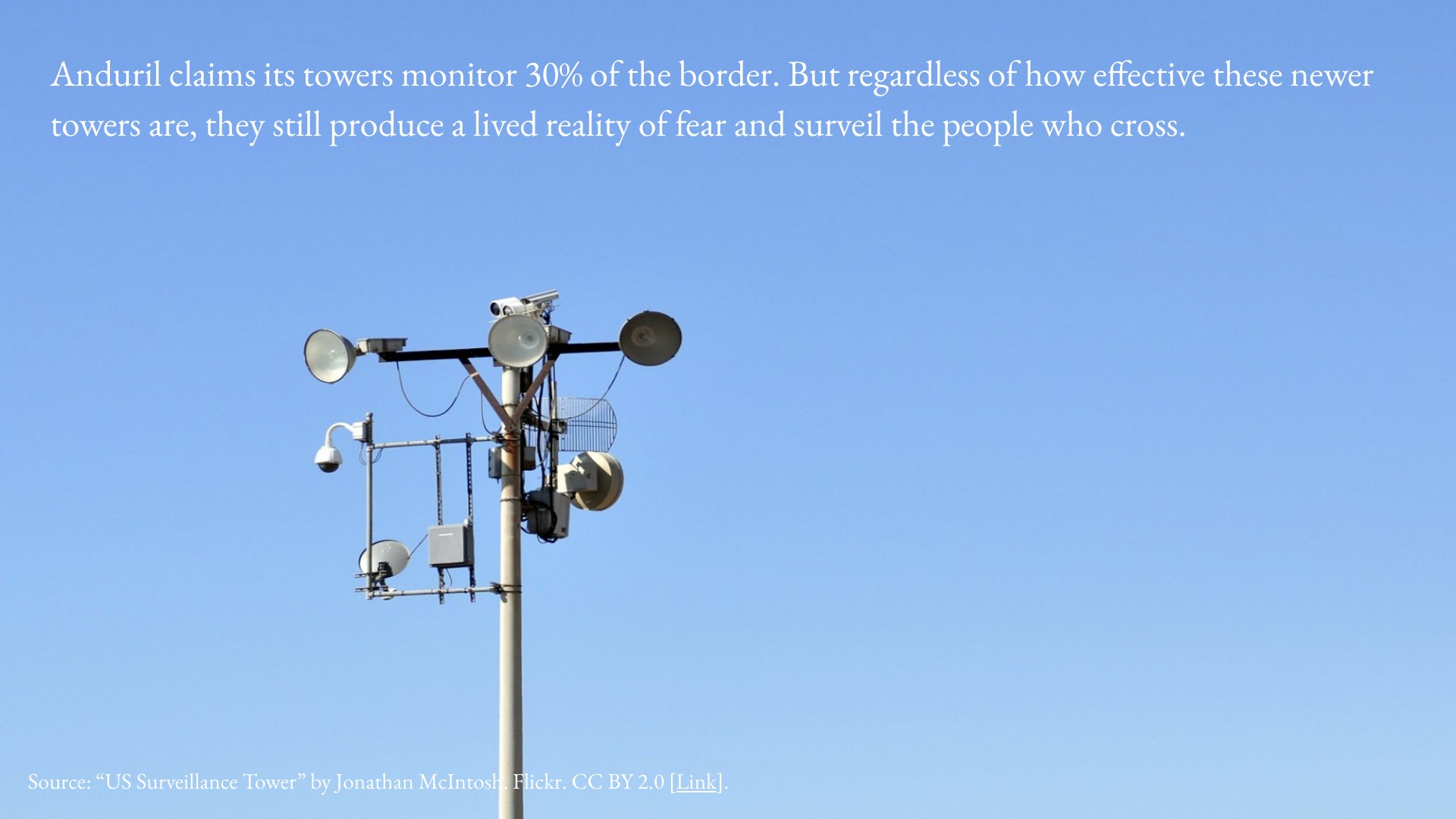
Photo looking up at a surveillance tower topped with cameras, floodlights, and antennas against a bright blue sky. Overlaid text:
Text:
Section title on a solid olive-green background:
Text:
Text:
Text:
Text:
Text:
Text:
Text:
Section title on a solid olive-green background:
Text:
Text:
Text:
Text:
Text:
Text:
Section title on a solid olive-green background:
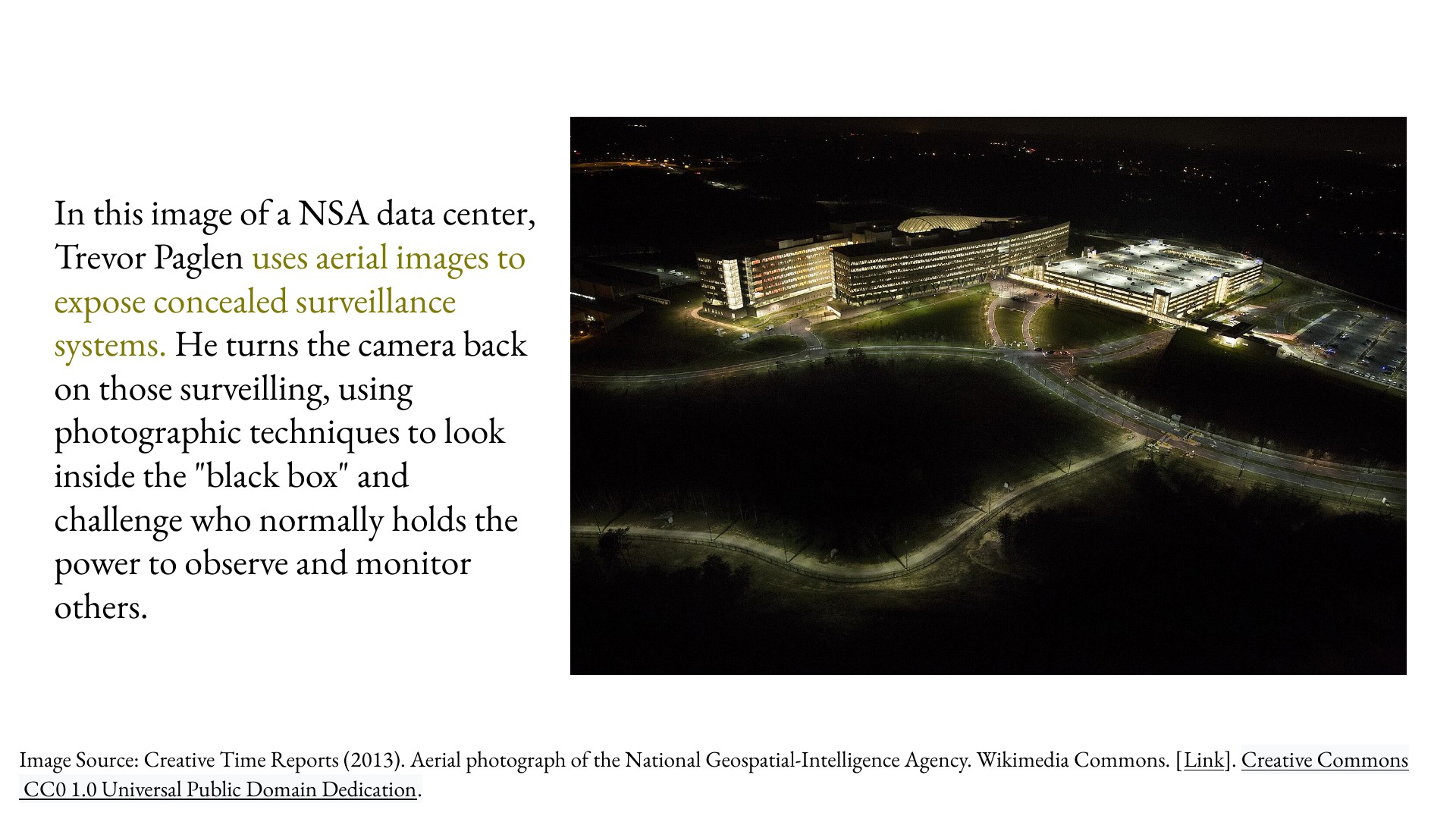
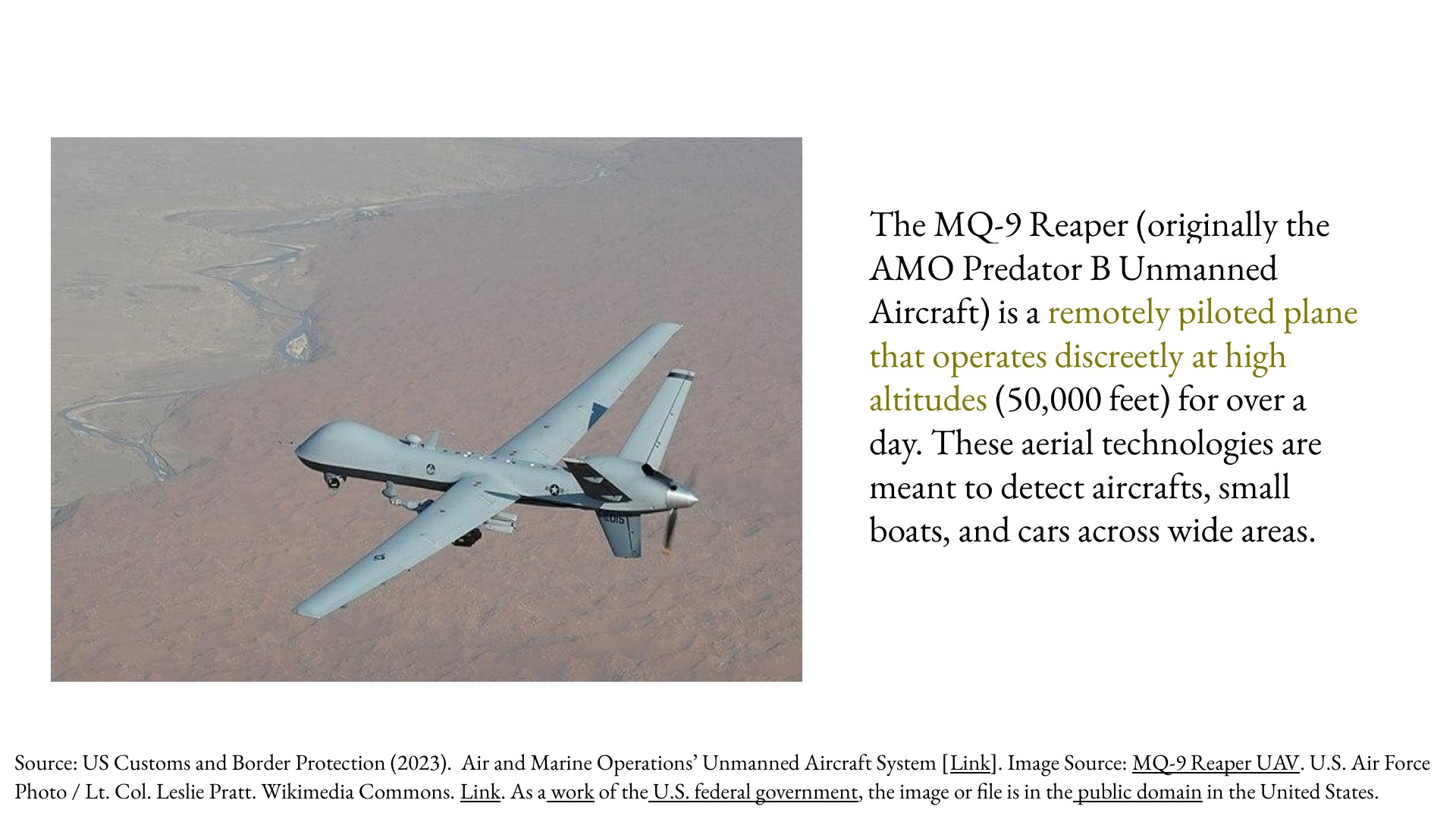
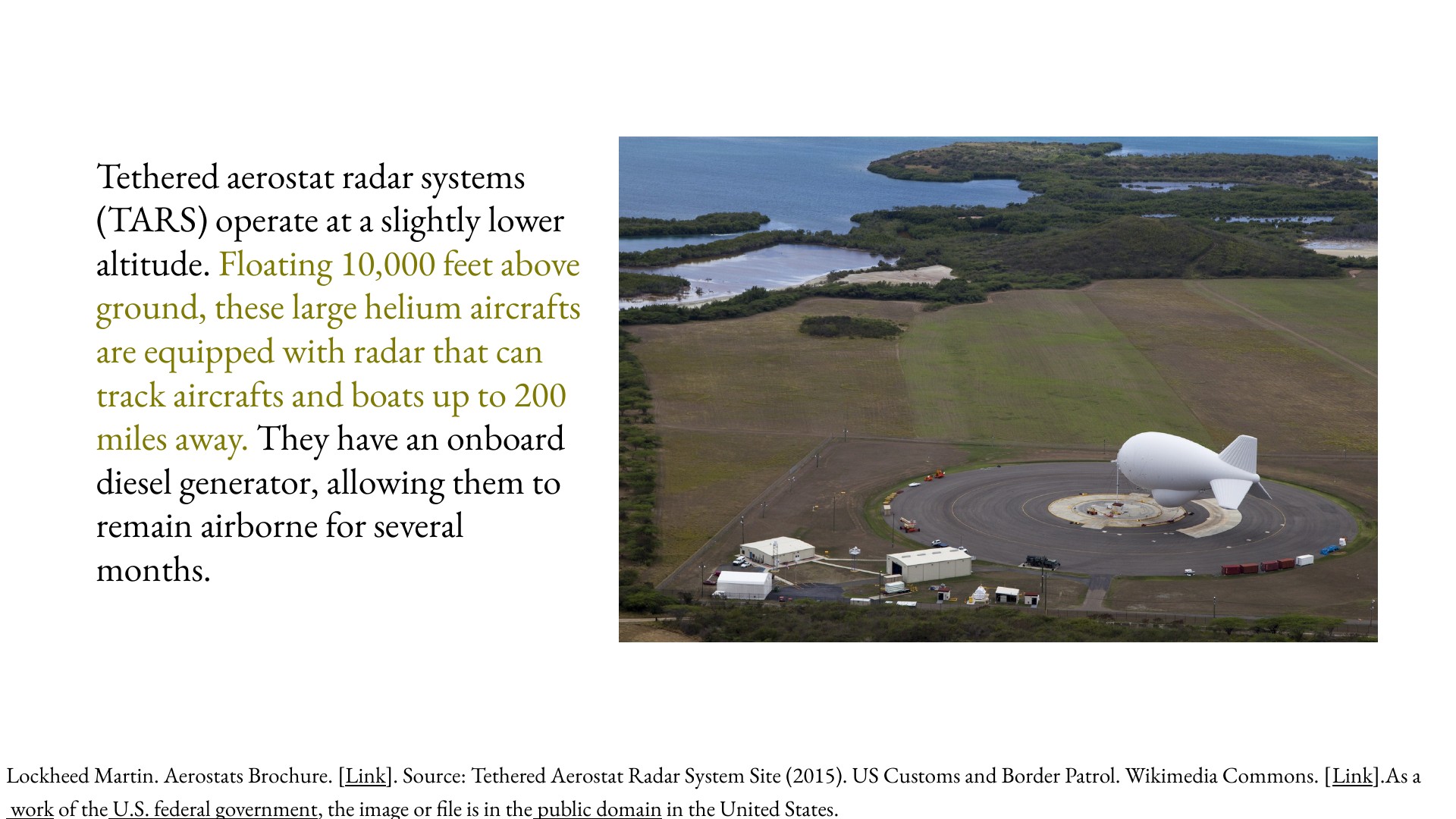
Text:
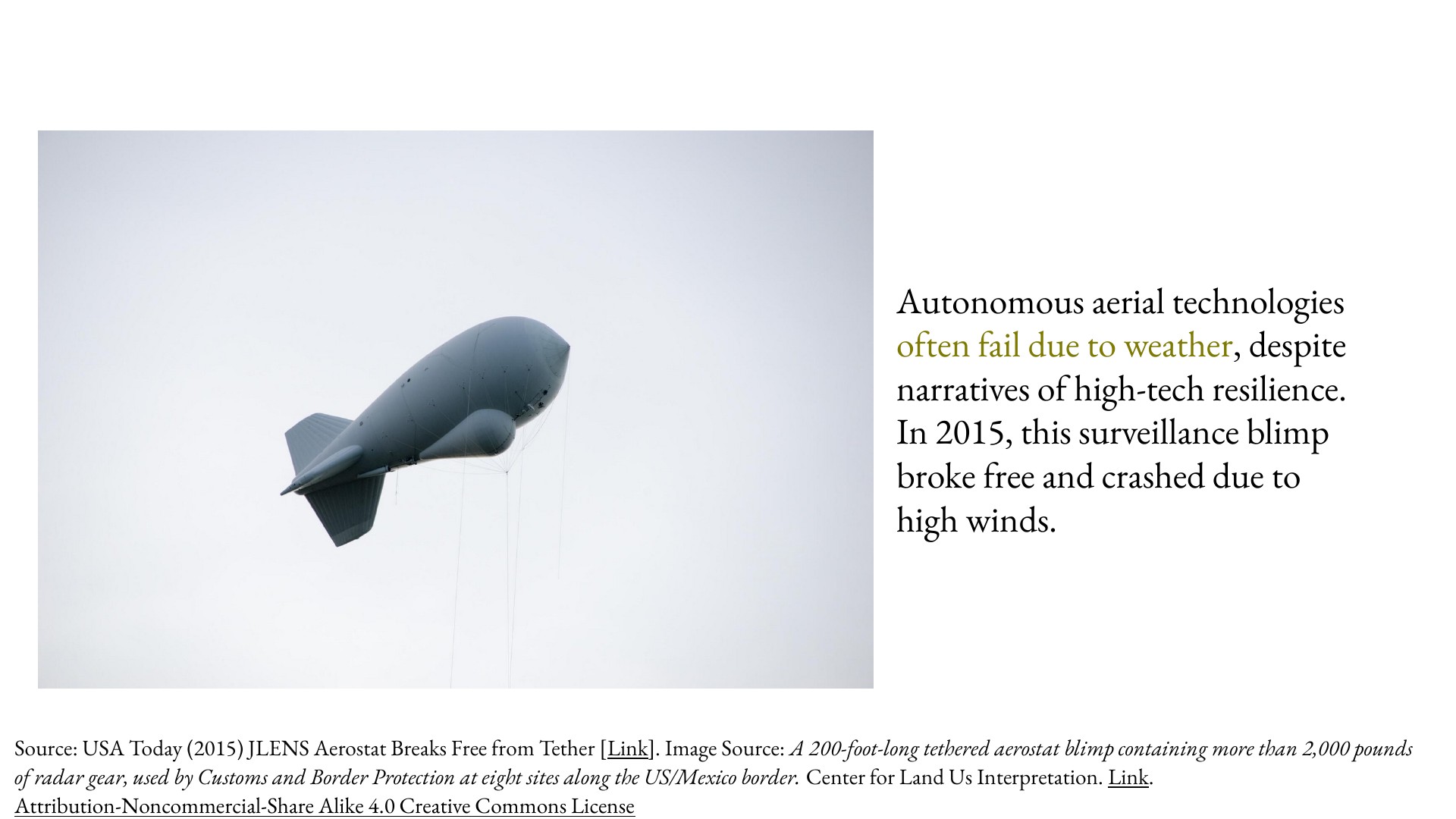
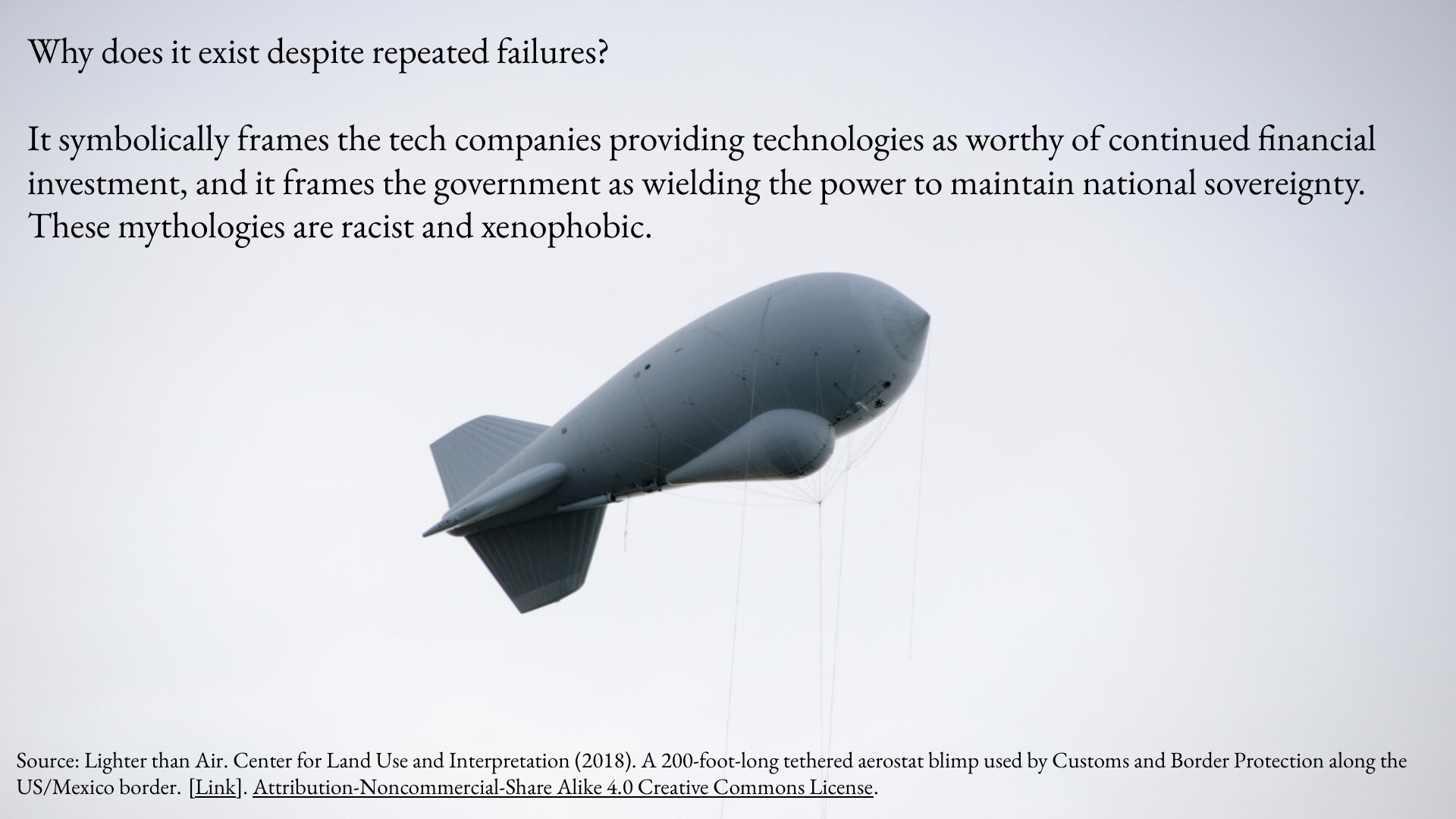
Photo of a gray surveillance blimp against a pale sky. Text:
Text:

Crosscurrents at the US and China Digital Border | Download PDF
By Isadora Bratton-Benfield, Chuyue (Martina) Wu, Xuewei (Sylvia) Luo

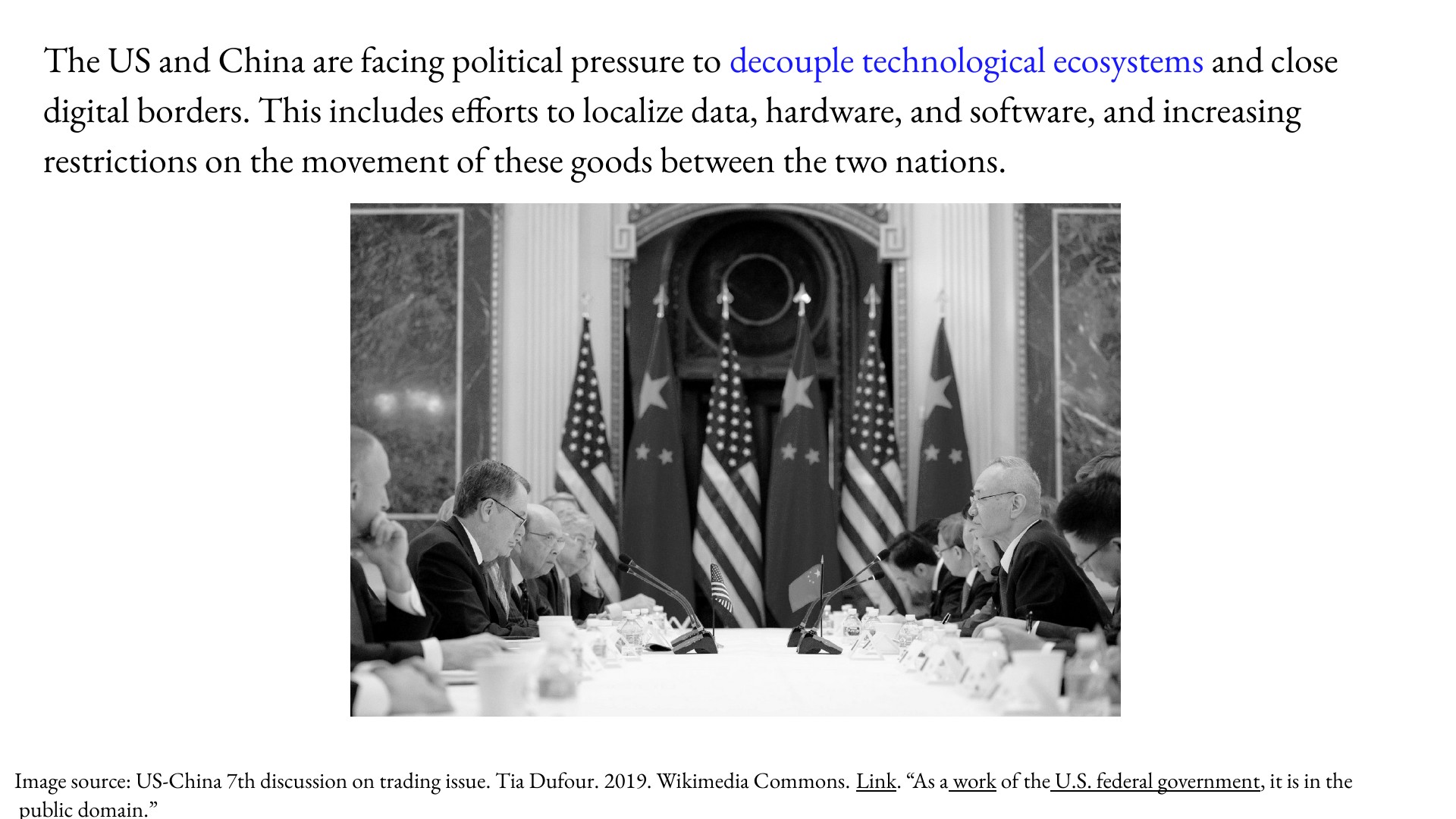
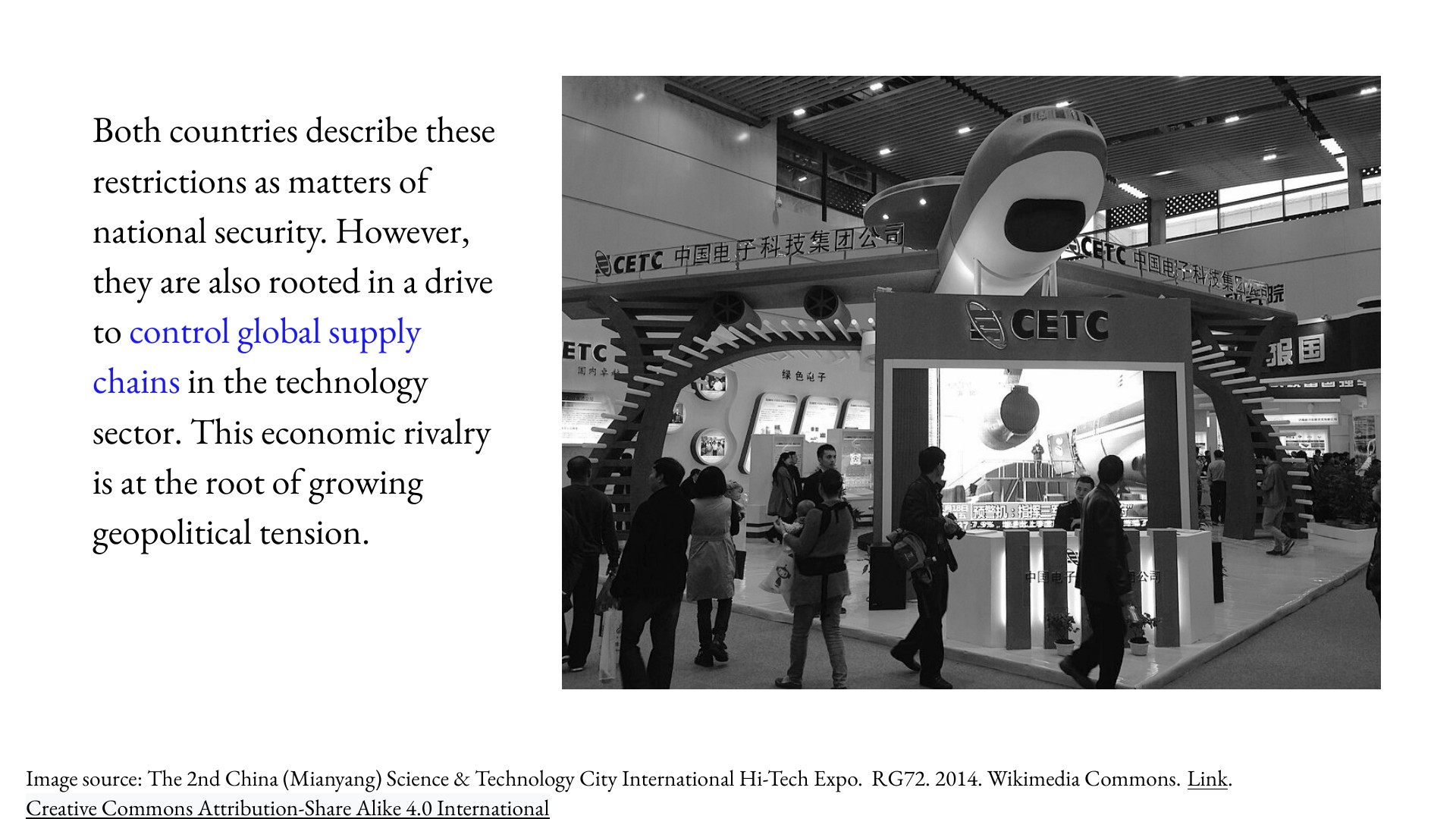
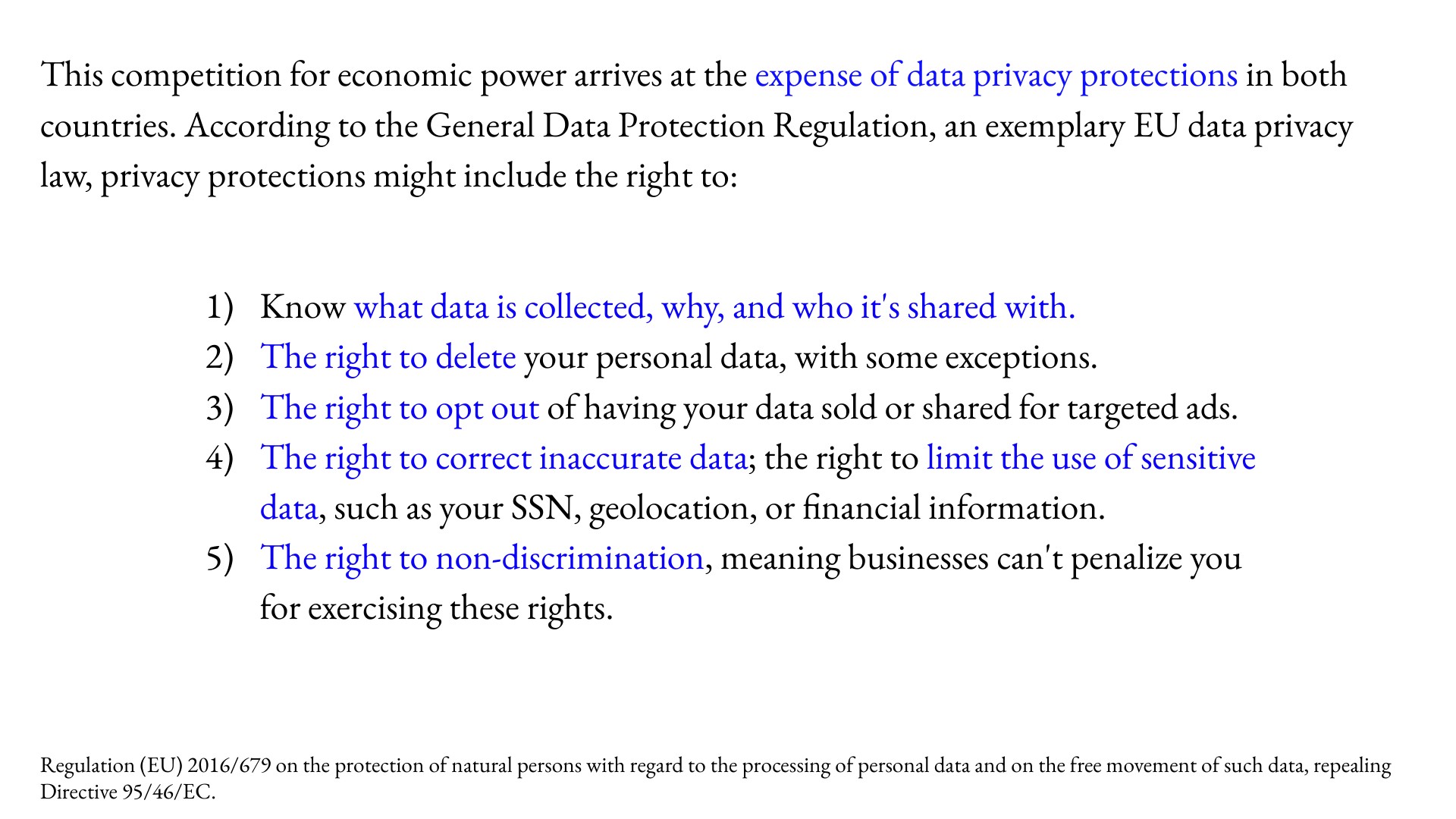
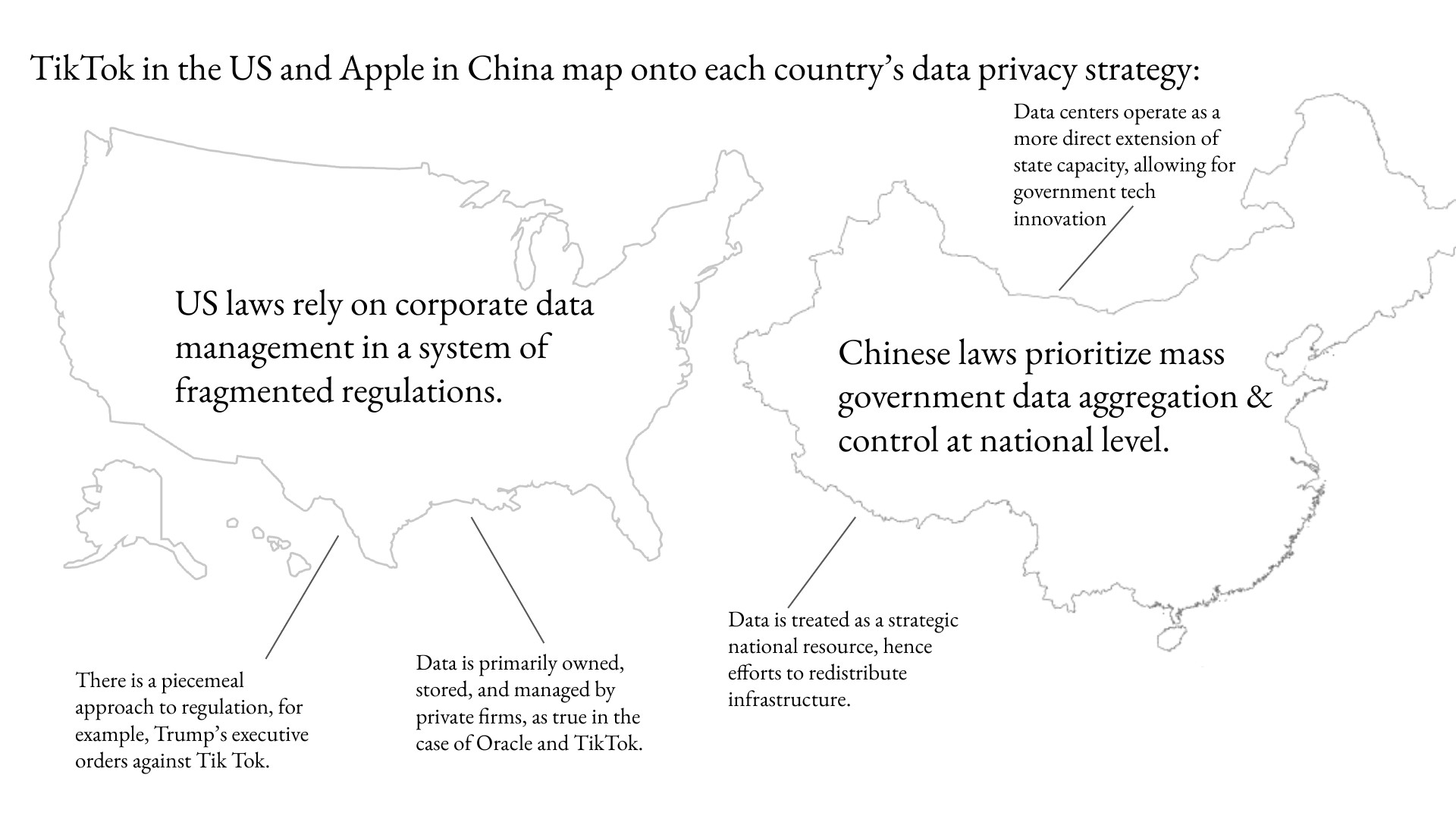
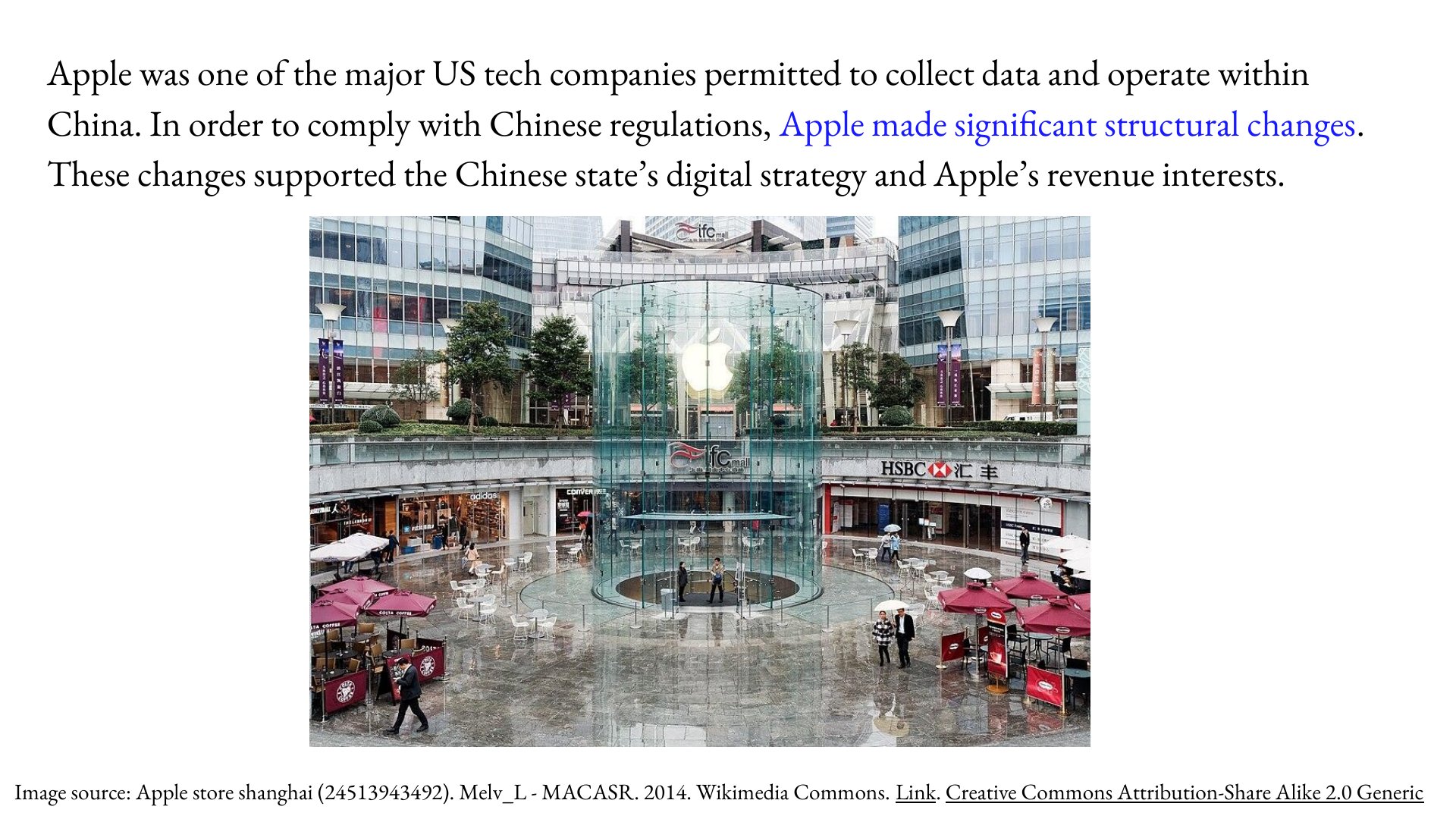
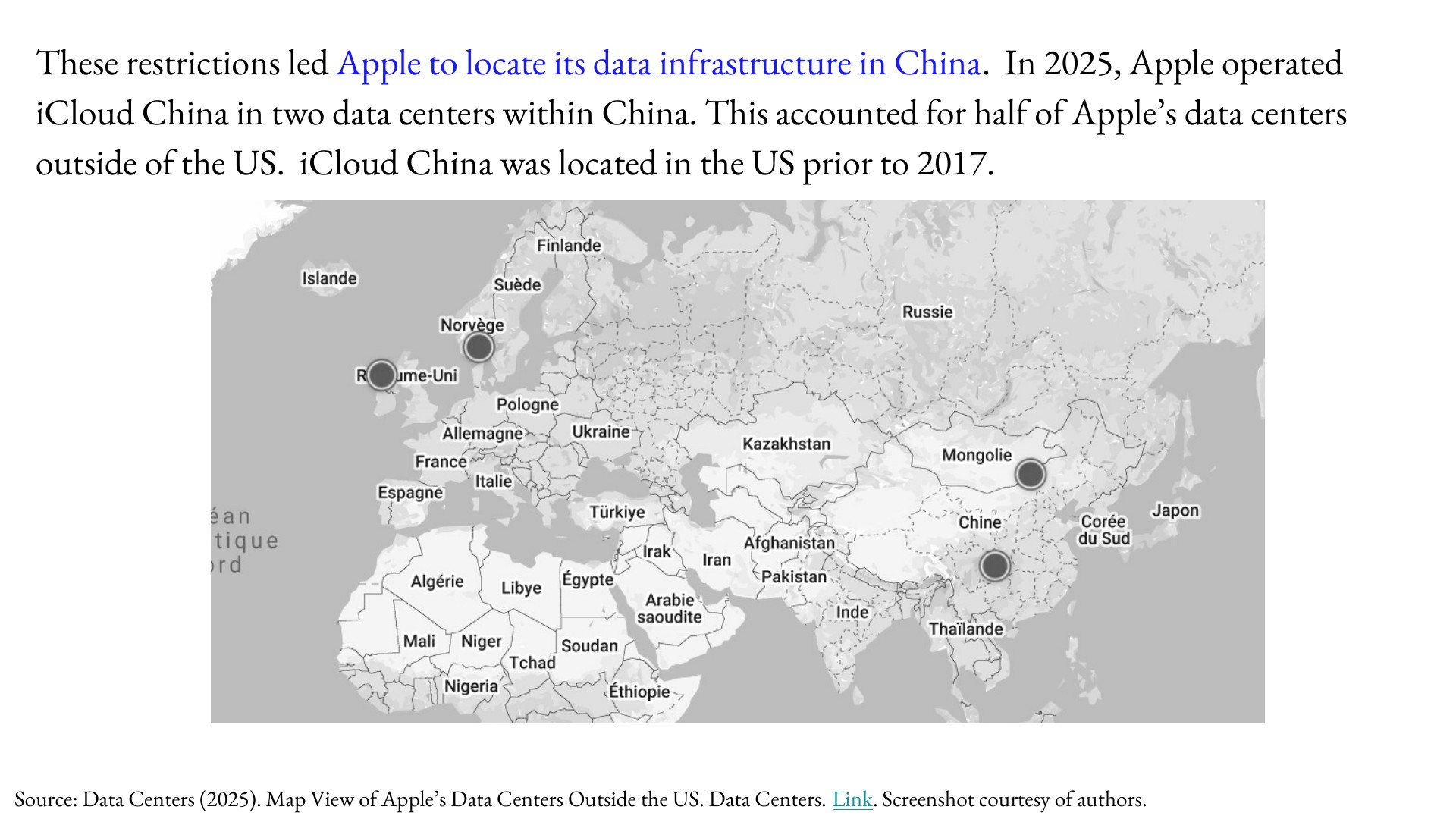
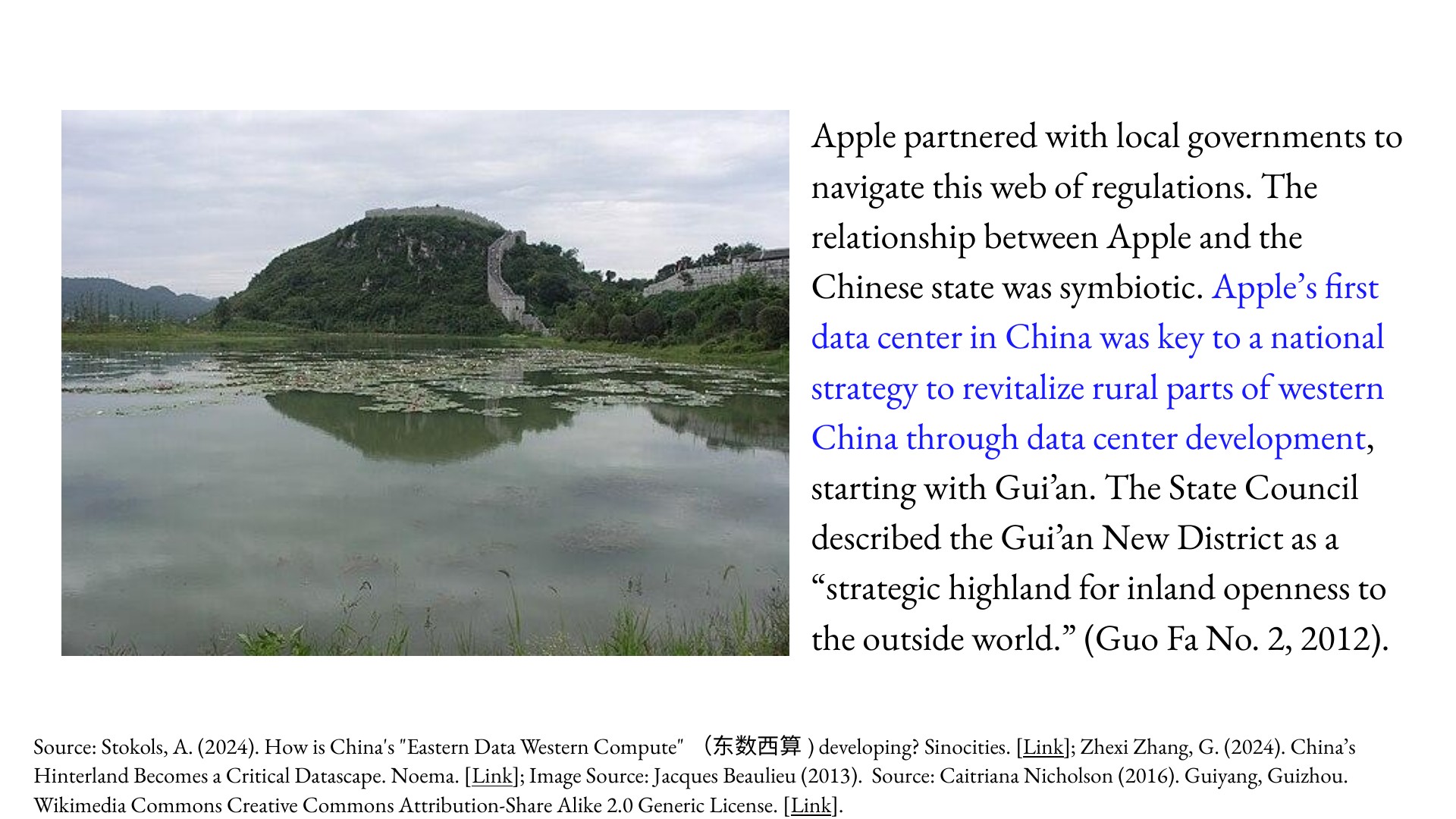
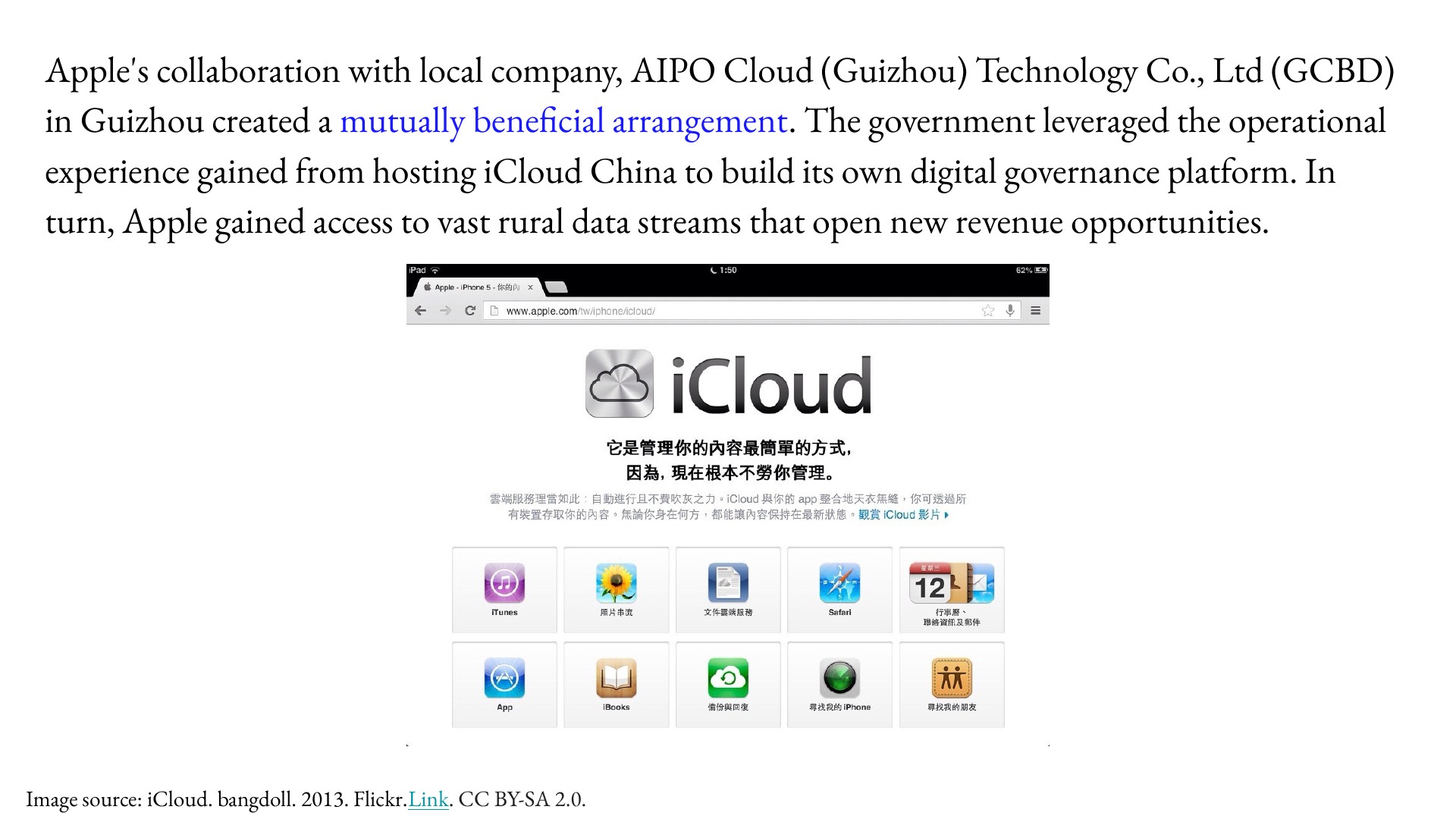
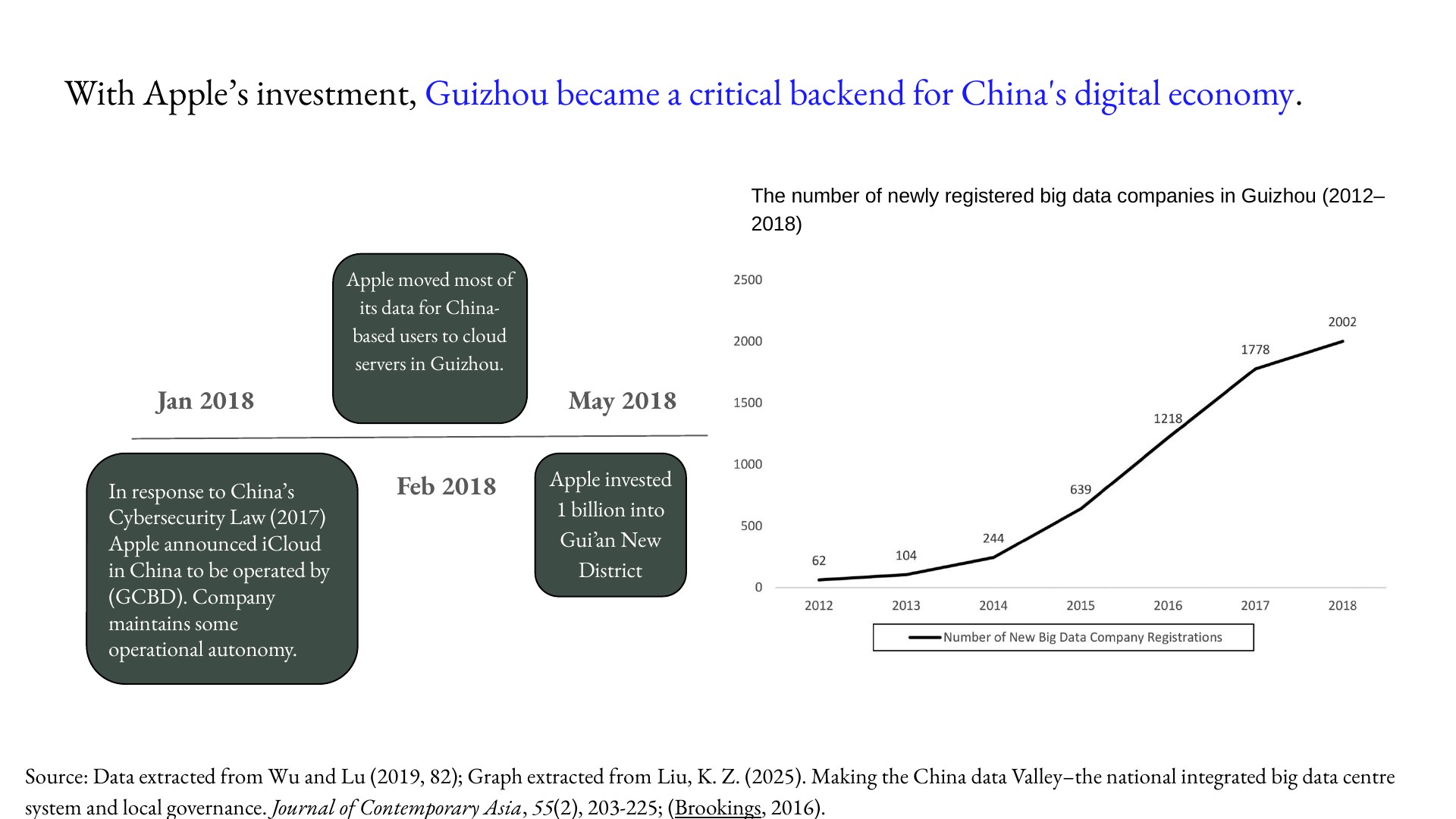
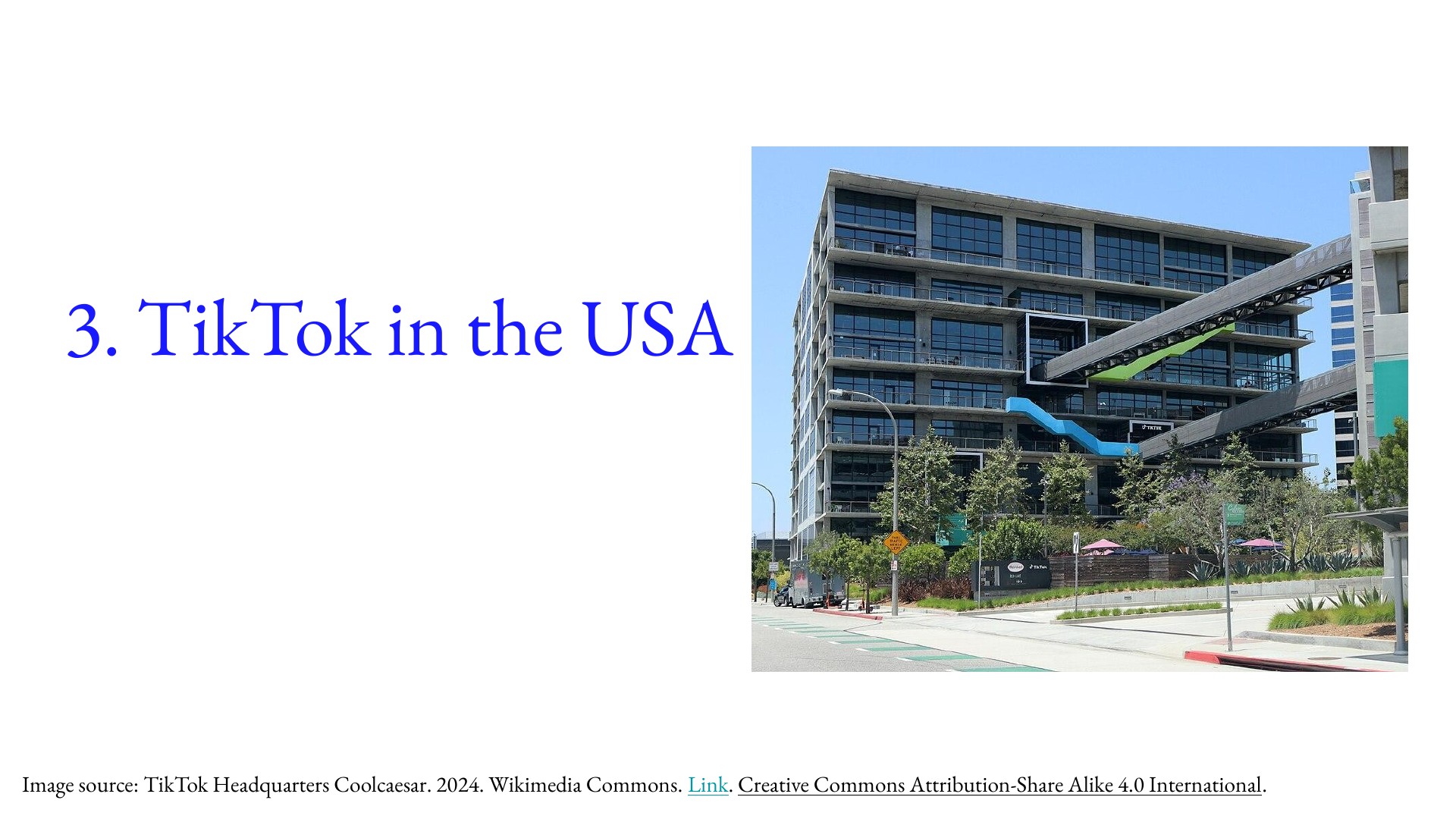
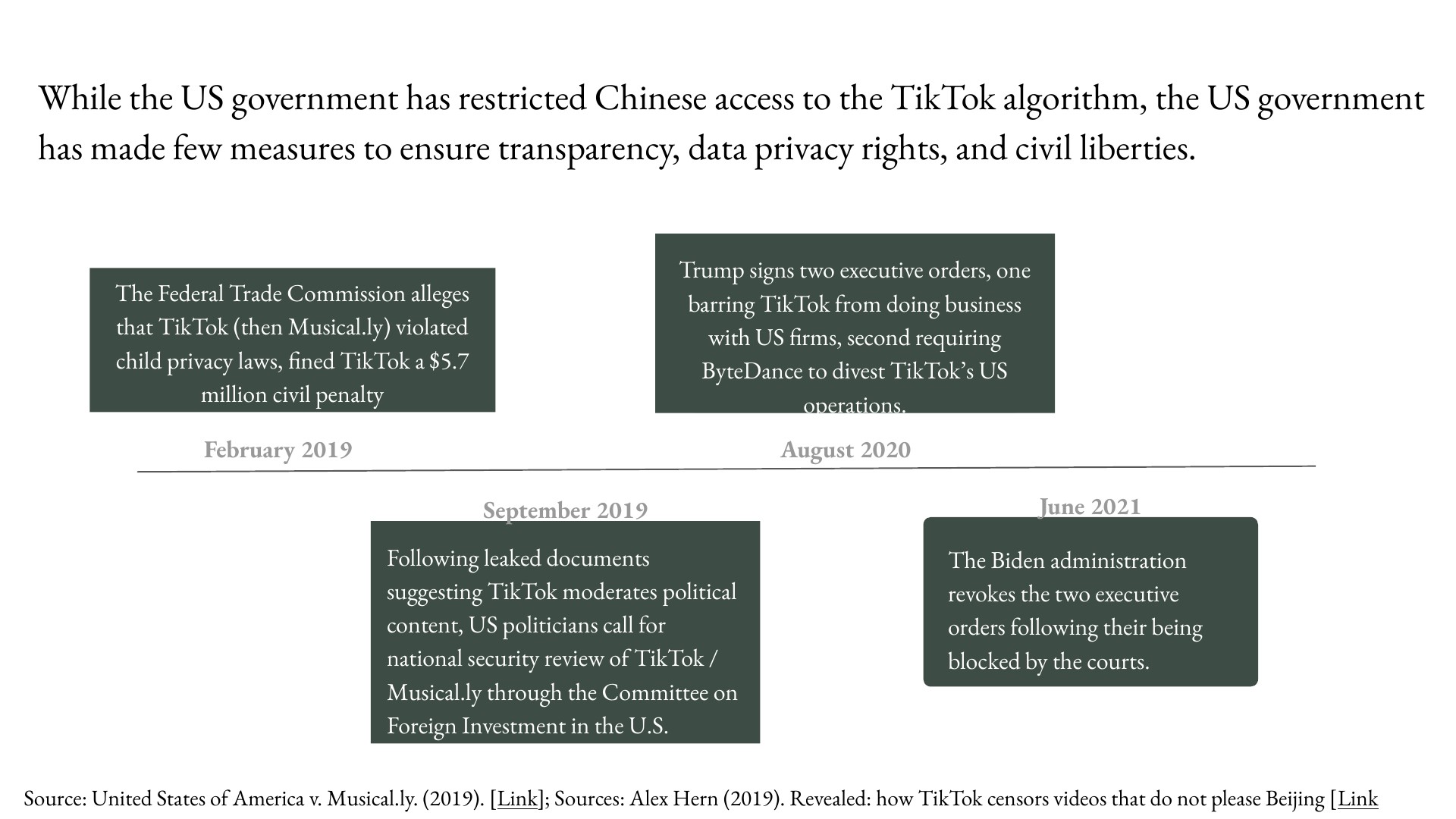
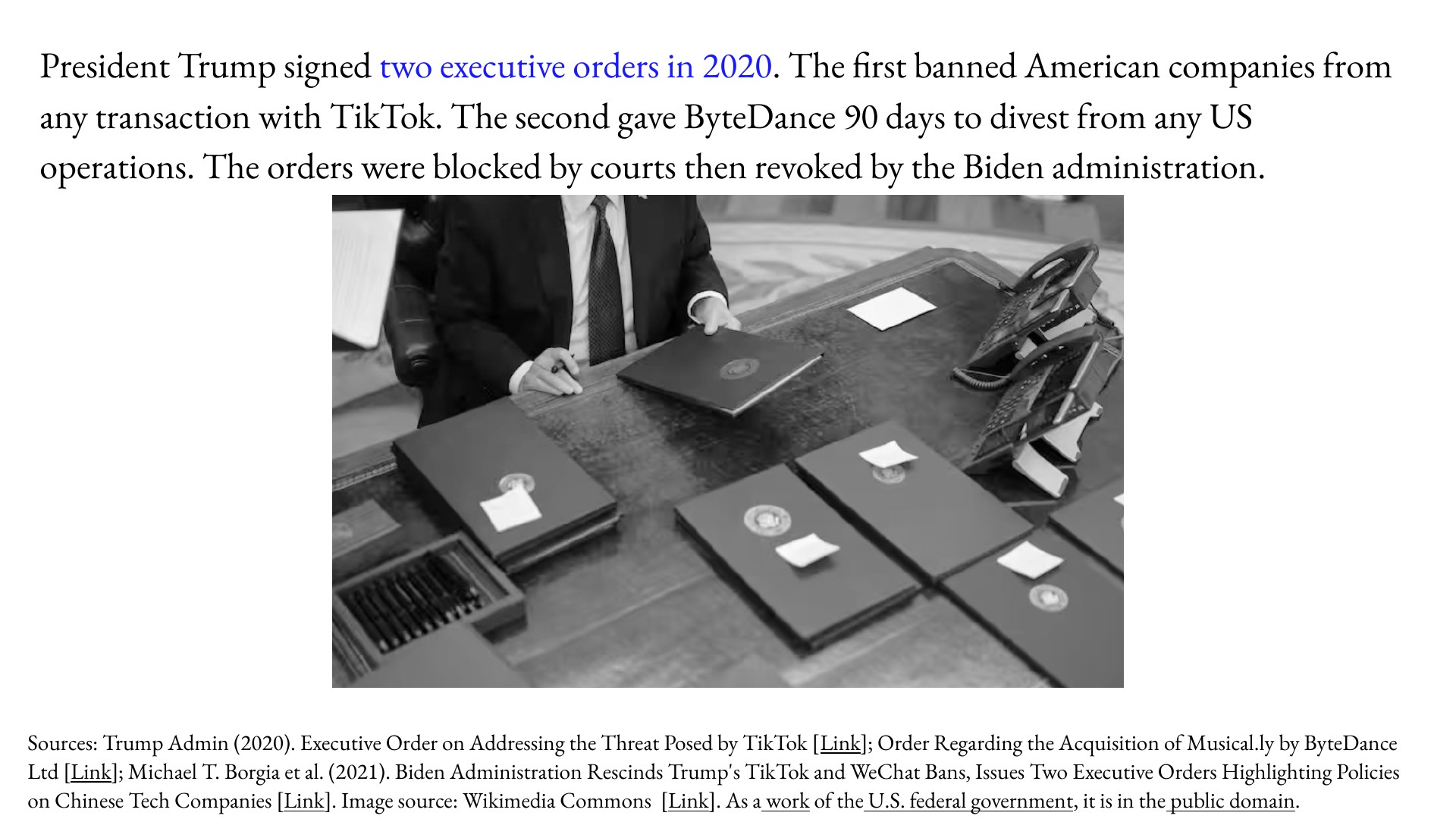
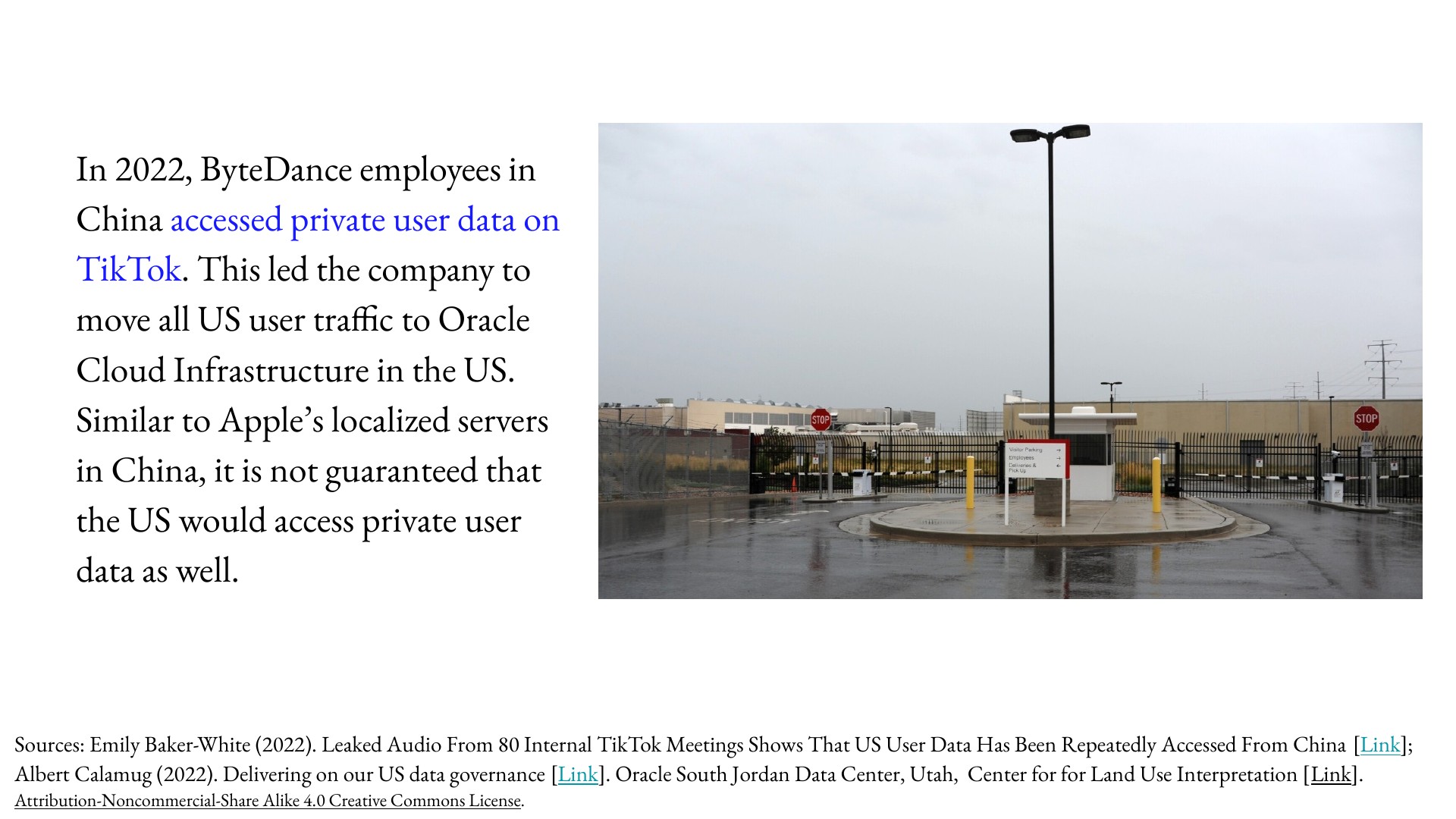
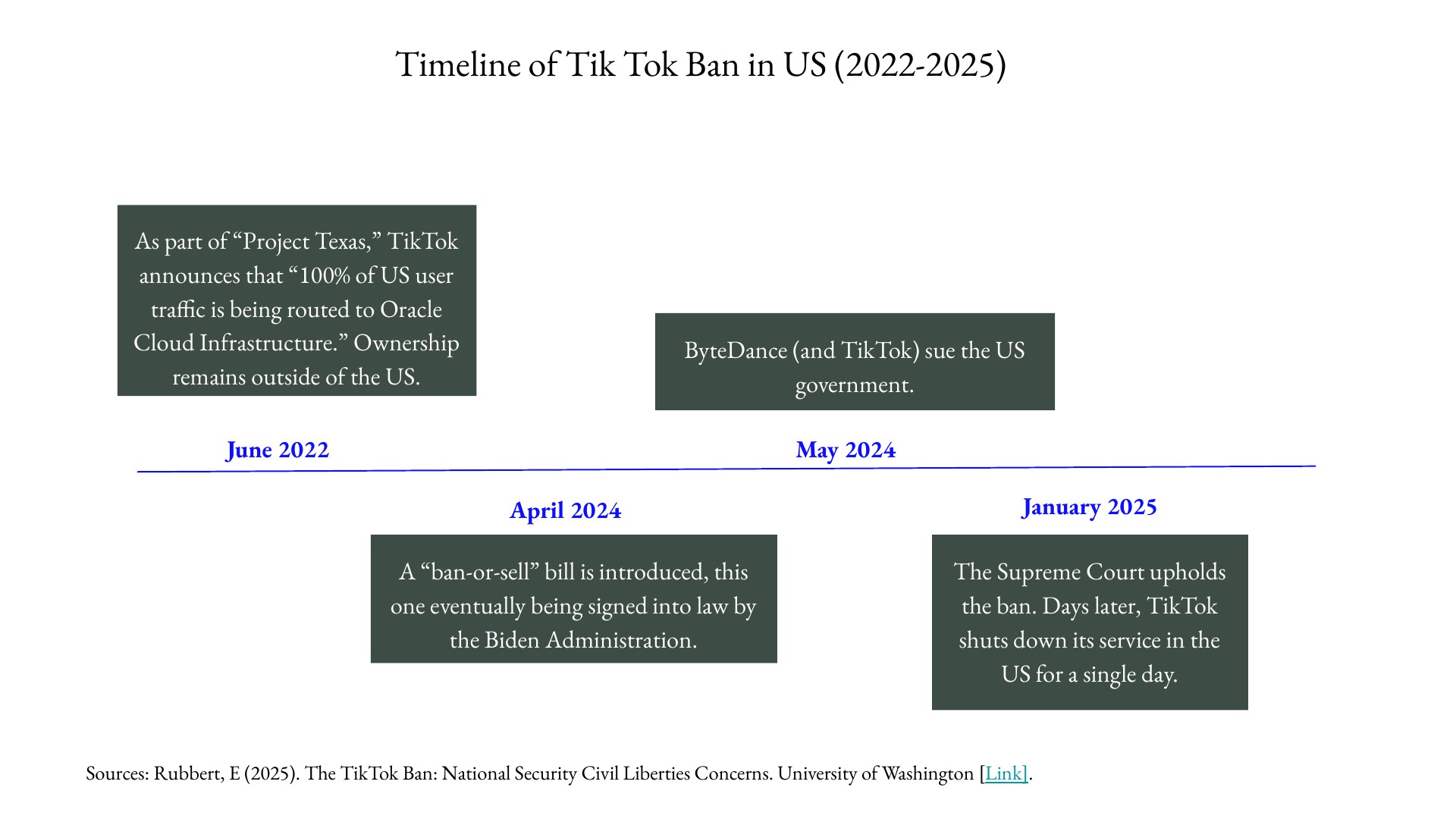
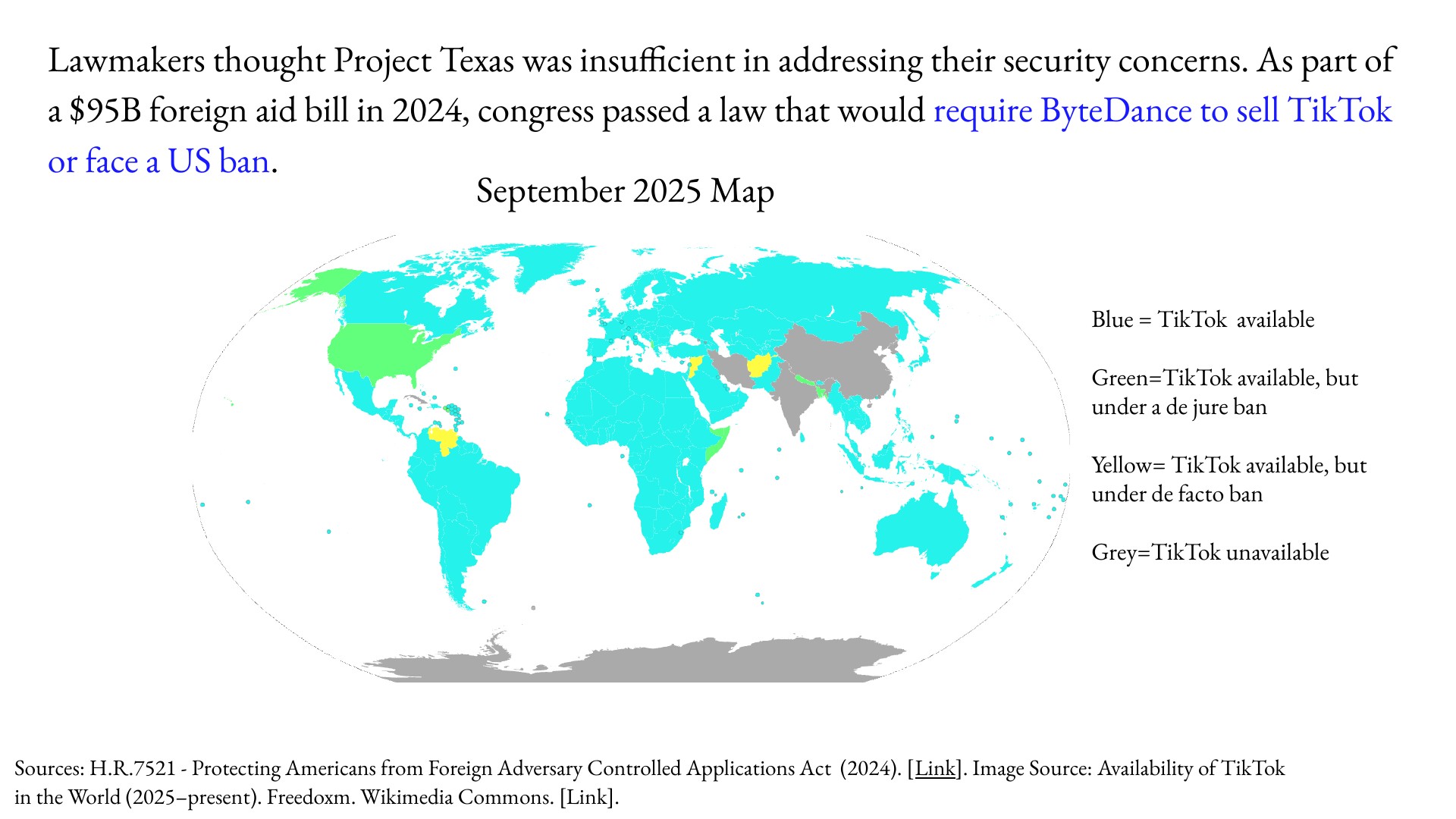
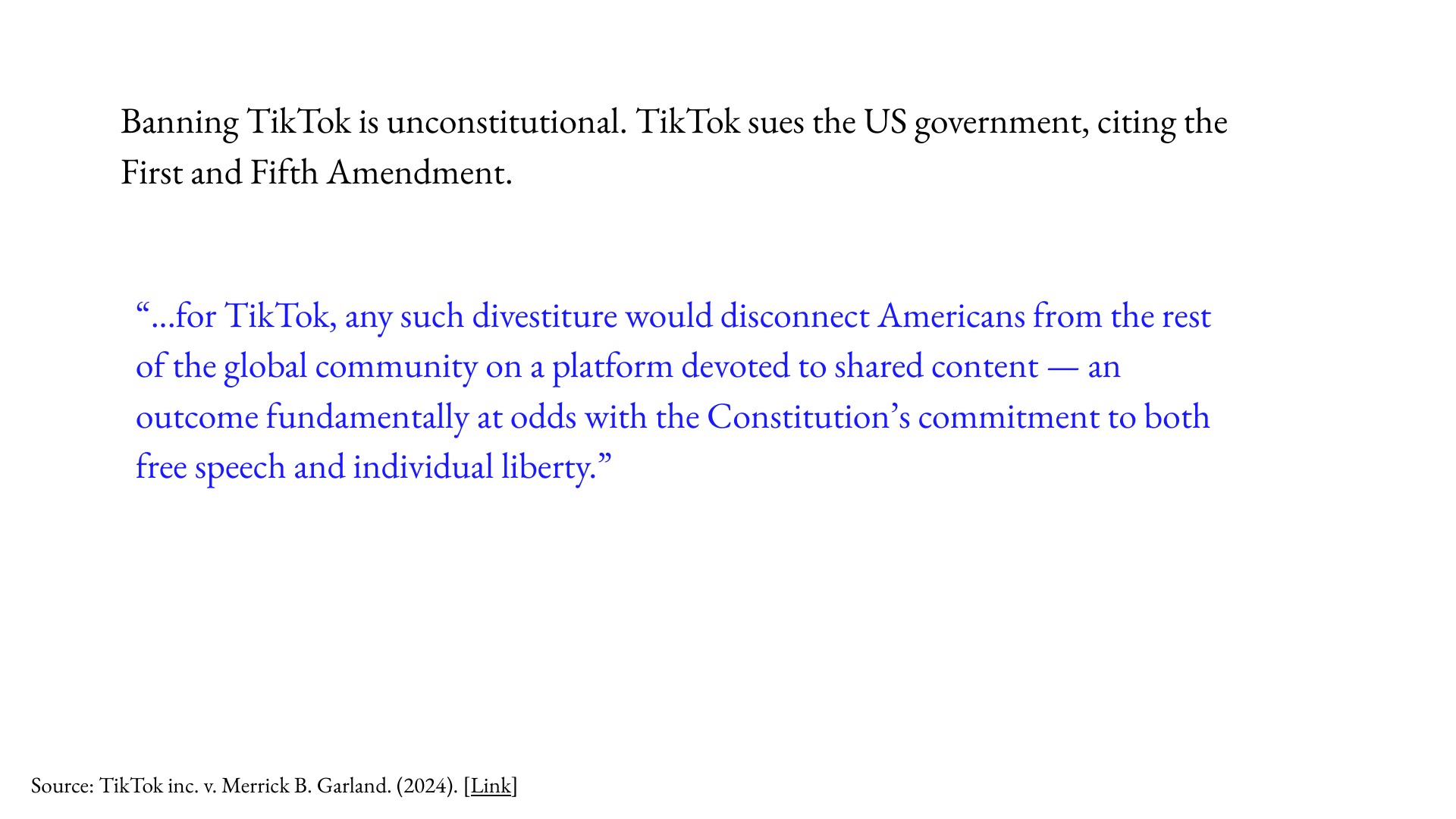
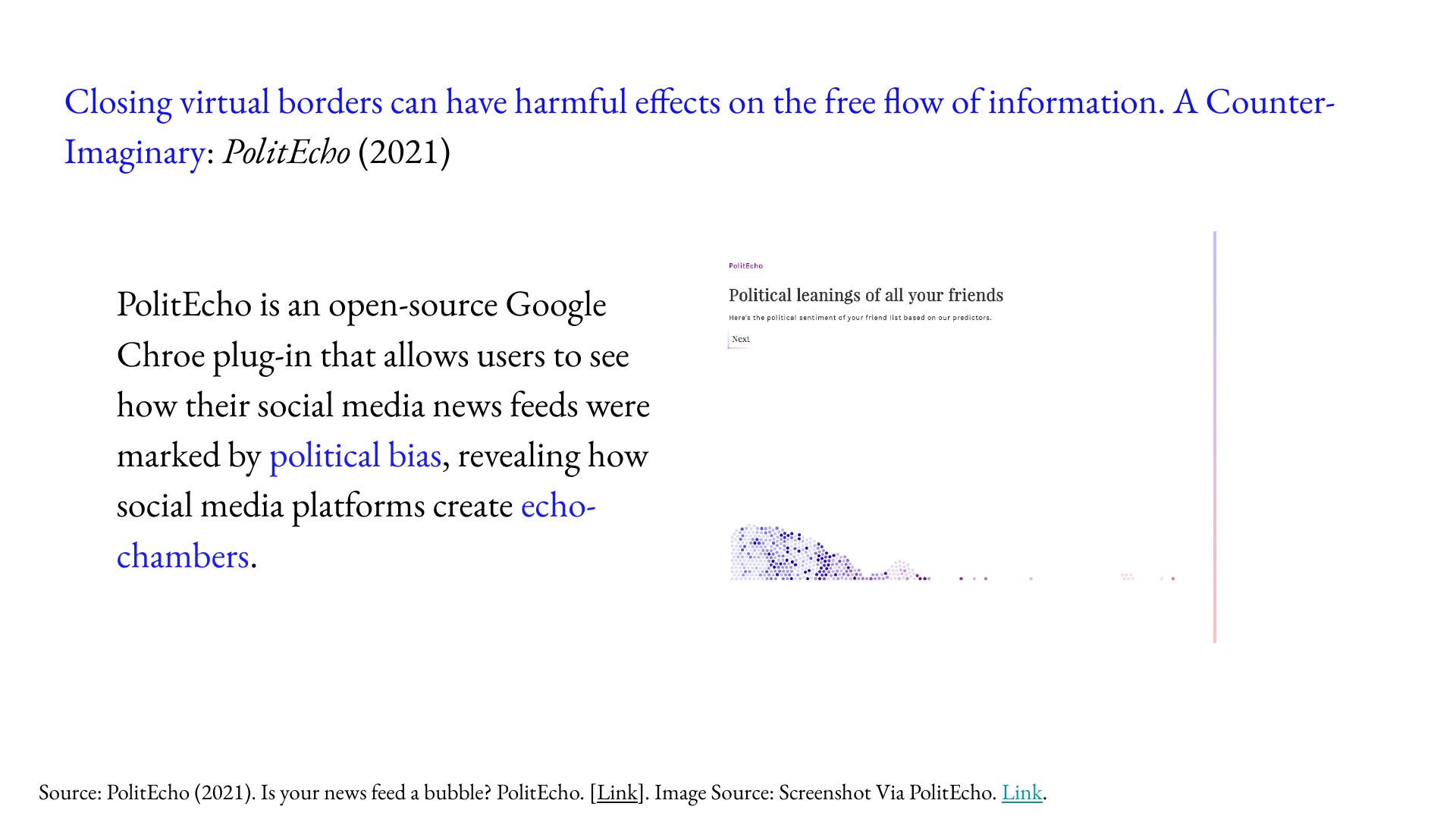
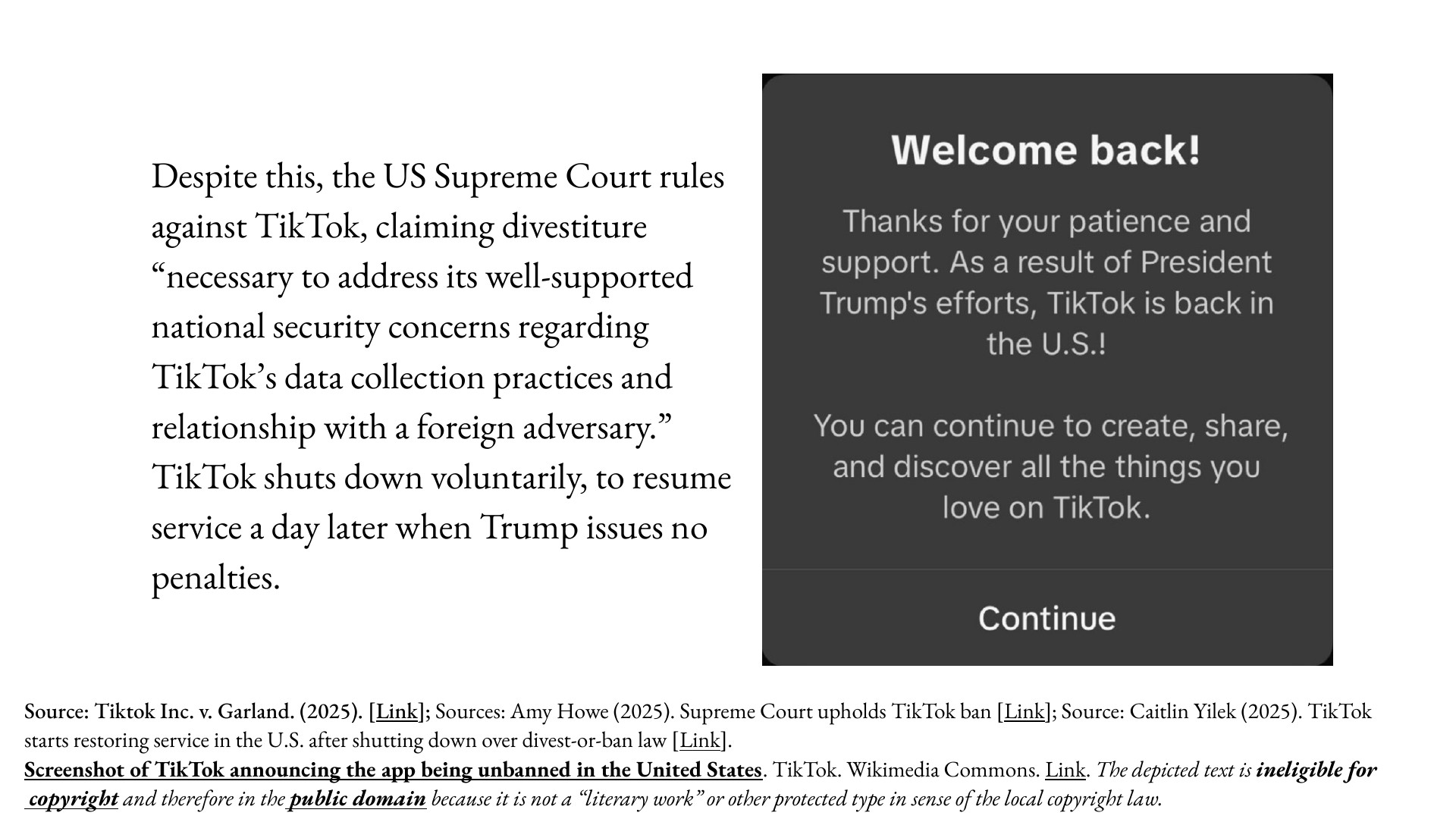
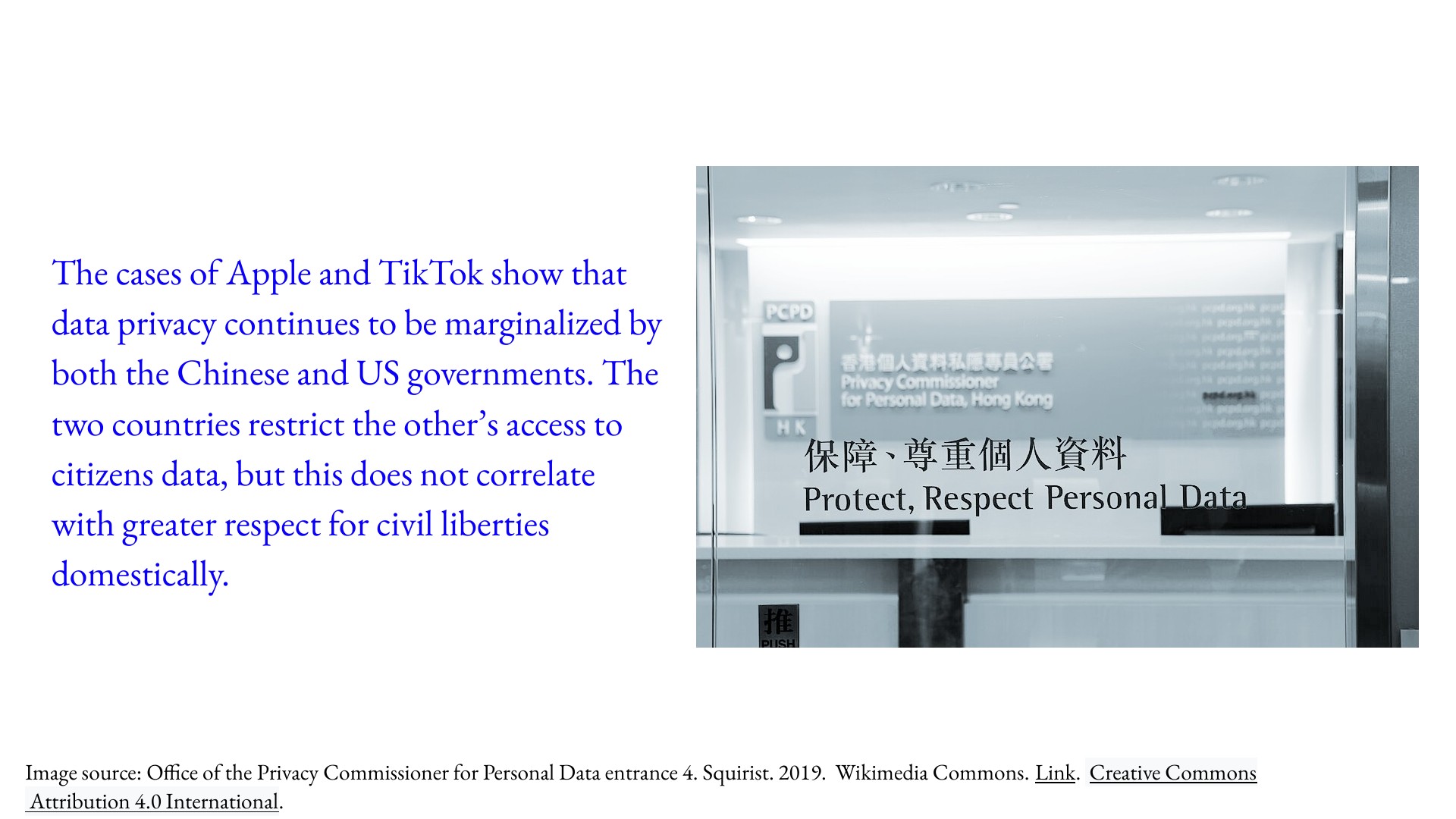
The researchers track the shifting fields of US-China tech regulation and perform a case study of how each country’s technology industries continue to be enmeshed. They explore how digital infrastructure owned by Apple continues to operate in China and digital infrastructure owned by TikTok continues to operate in the US. This work thus complicates conventional notions of digital sovereignty, referring broadly to control over the movement and use of data, by detailing the overlap of two nation’s technology industries. It also documents the emerging political debates concerning the free flow of data across borders, including how local communities have responded to the presence of Apple and TikTok digital infrastructure. 
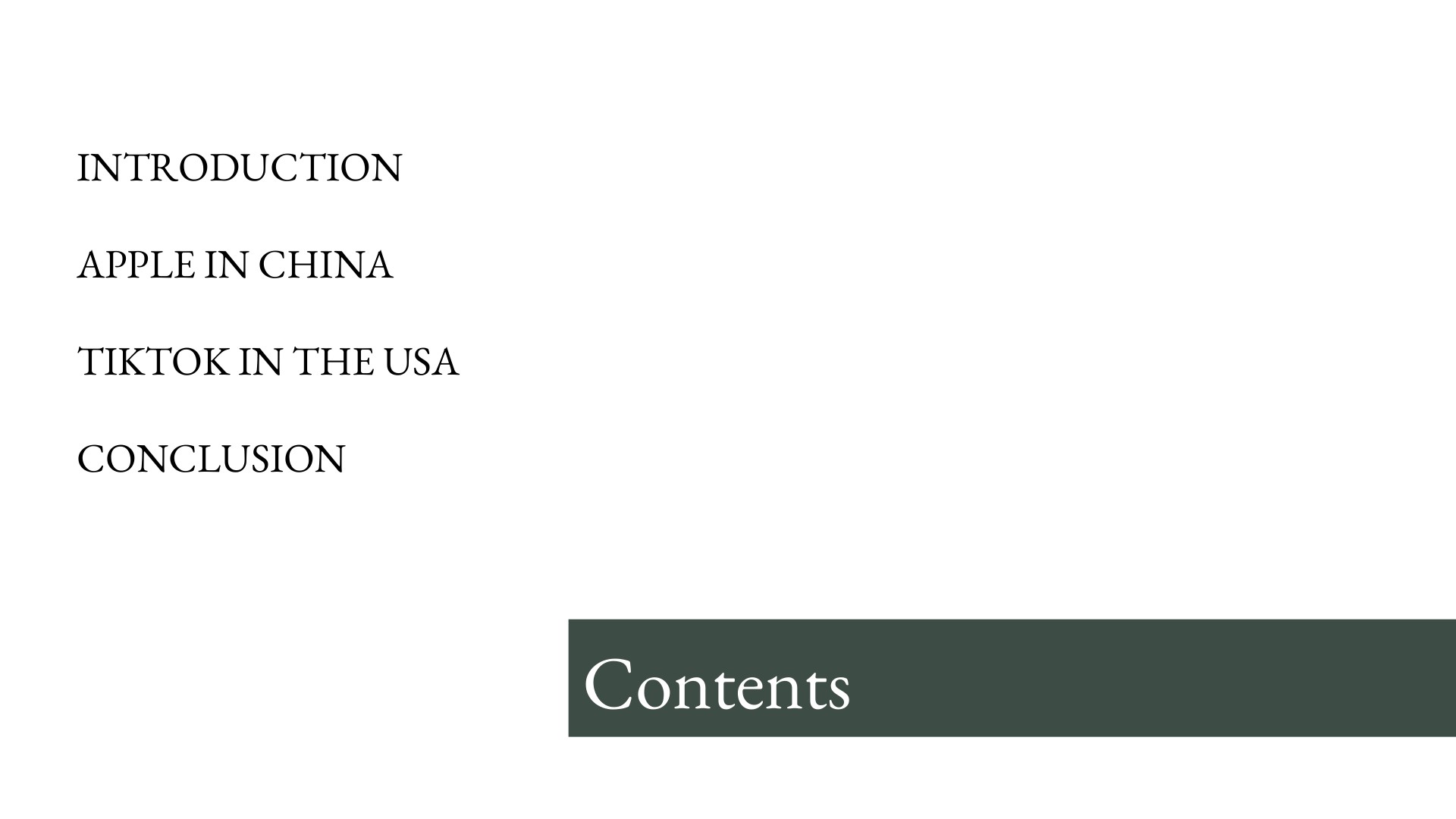
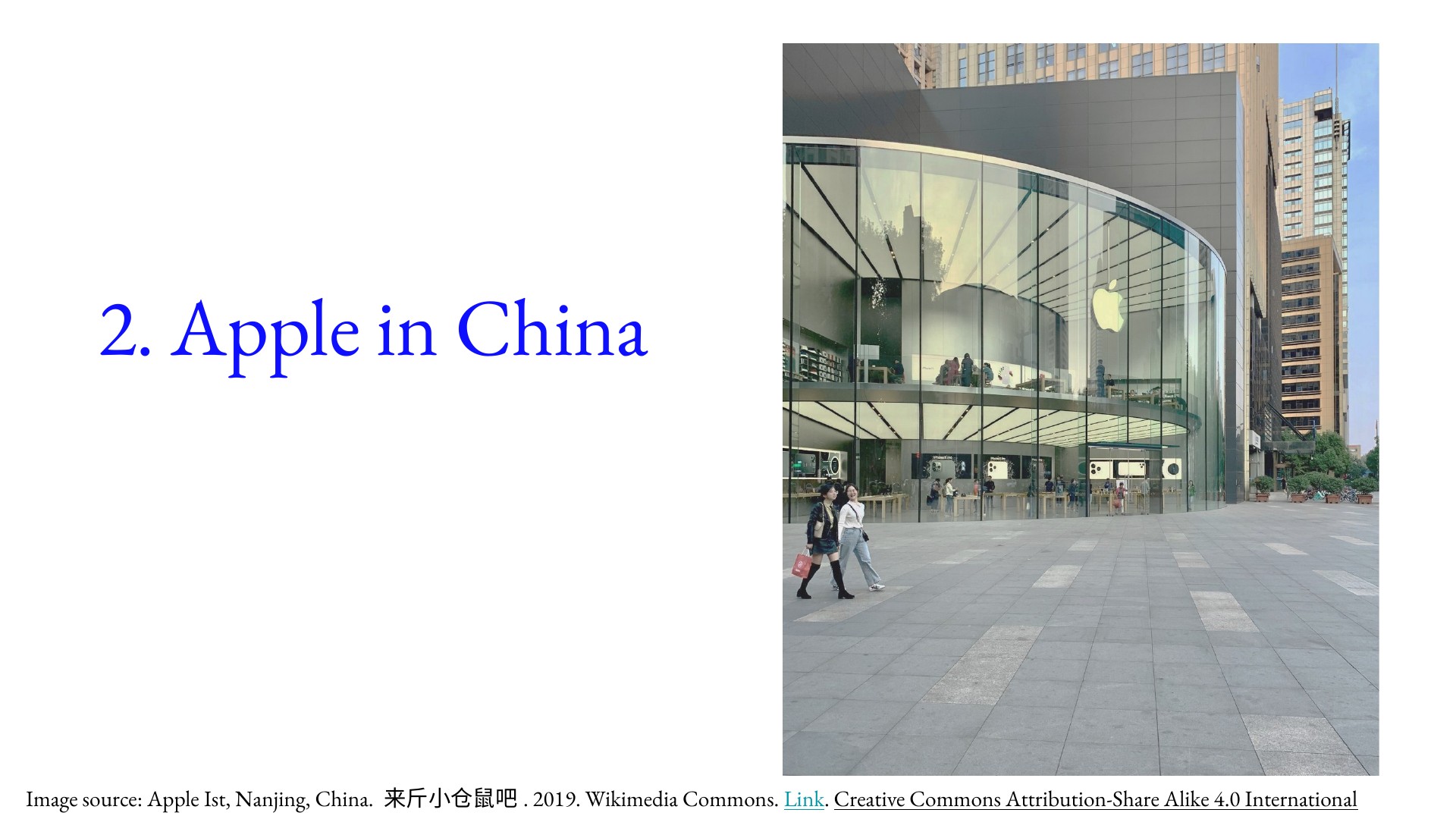
Table of contents: Introduction; Apple in China; TikTok in the USA; Conclusion. A dark green label at the lower right reads
Text:
Text:
Text:
Text:
Text:
Section title
Text:
Text:
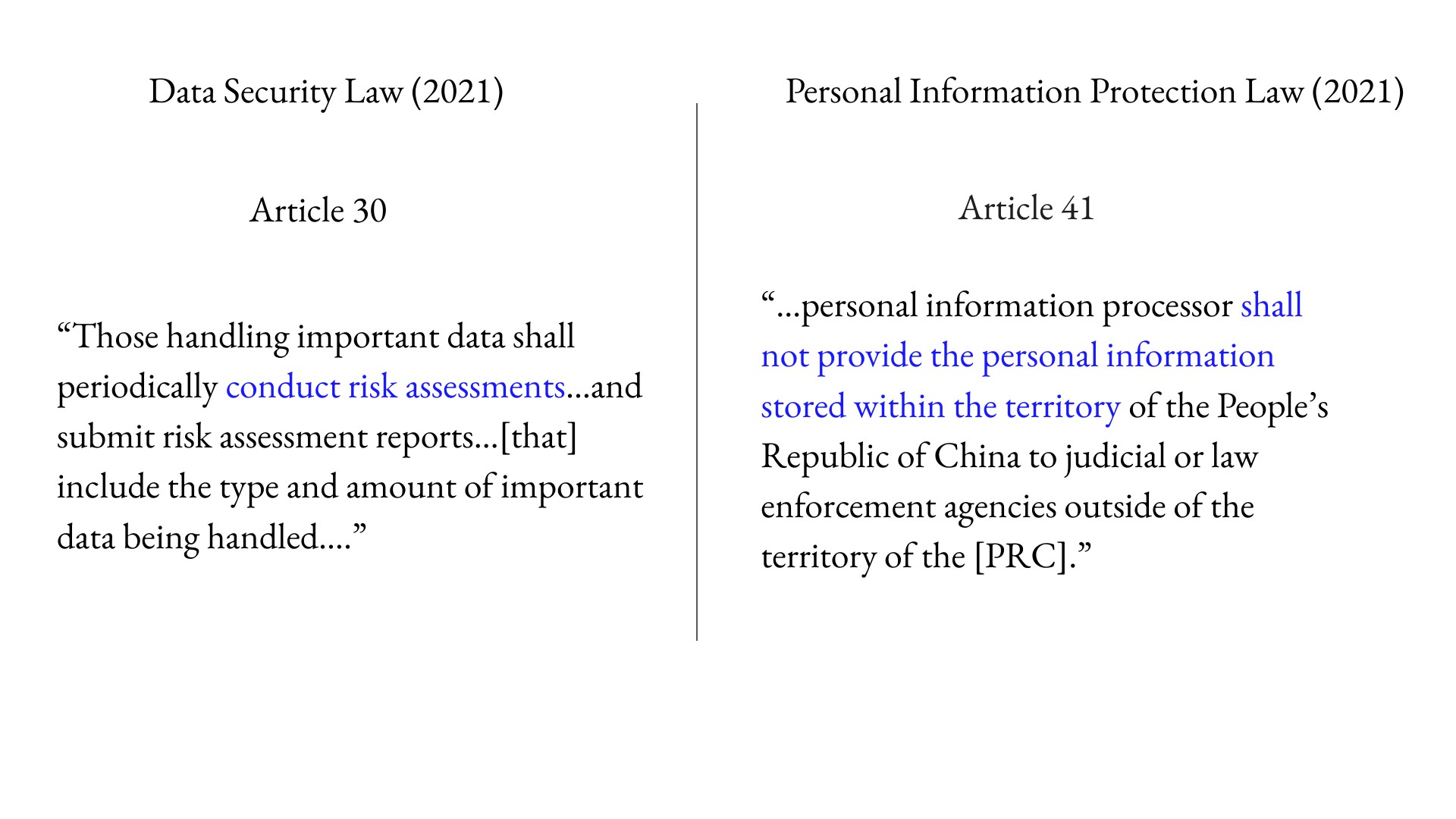
Two columns of legal quotes. Data Security Law (2021), Article 30:
Text:
Text:
Text:
Text:
Text:
Text:
Text:
Heading:
Text:
Text:
Section title
Heading:
Text:
Text:
Text:
Text:
Timeline titled
Text:
Text:
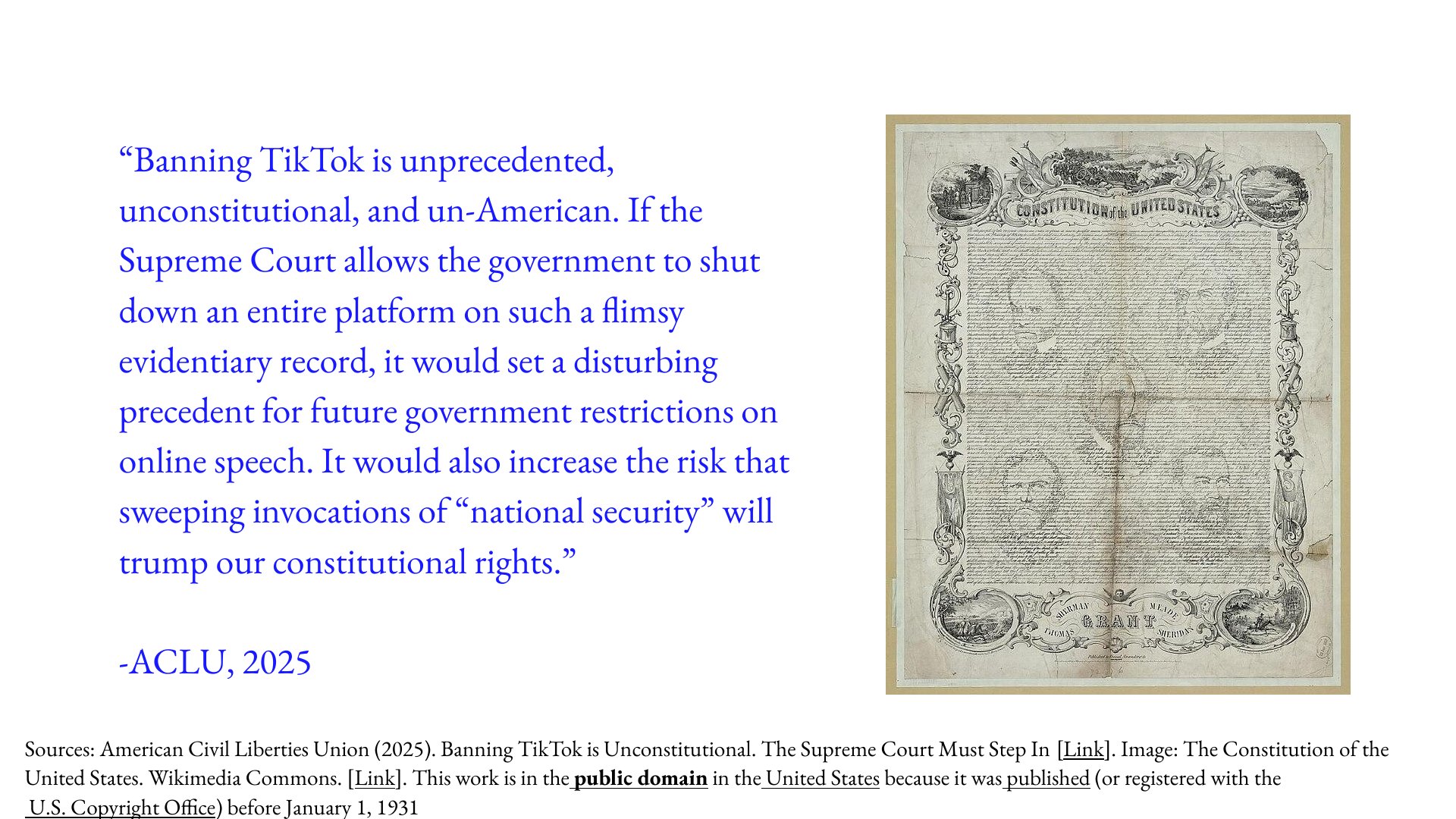
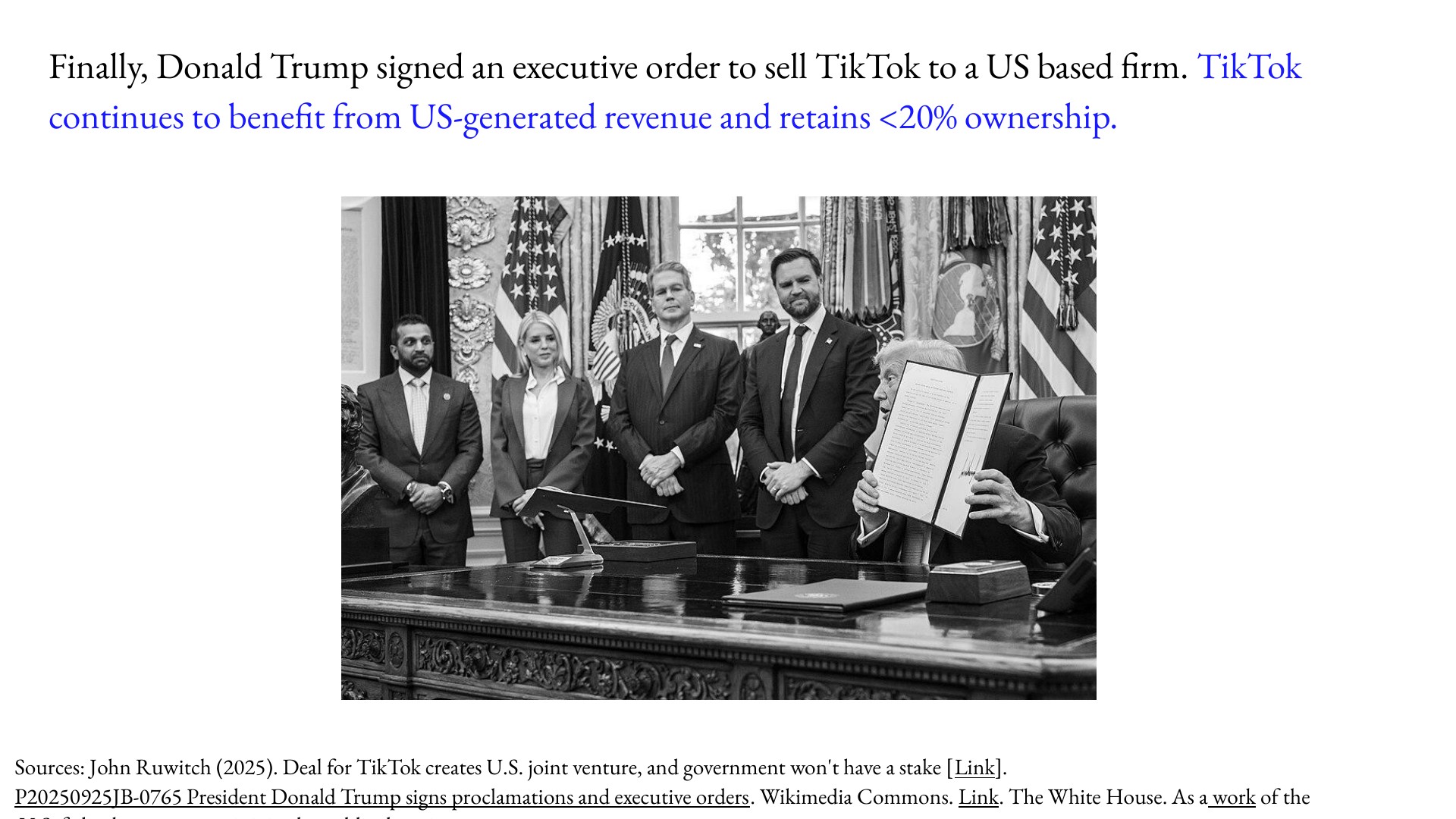
Quote from the ACLU, 2025:
Heading:
Heading:
Text:
Text:
Text:
Section title
Text:

Isadora Bratton-Benfield is an artist, researcher, and PhD student in the Department of Film & Media at the University of California, Berkeley. Her work traces the histories of digital infrastructure and industrial sites, framing them as designed environments that sit within shifting fields of political contestation. She examines how these infrastructures mediate between local conditions and global flows, with particular attention to moments of transformation and rupture. Her interests also include twentieth-century media theory, the philosophy of technology, and Marxist political theory. Her writing has appeared in the Journal of Visual Culture. She holds an MSc in Media, Communication, and Development from the London School of Economics and Political Science.
.
Xuewei (Sylvia) Luo is a third-year undergraduate student at UC Berkeley from Beijing, majoring in History of Art. She is interested in tech law and entertainment law, with a focus on soft IP litigation. She joined the GDI research team as an Undergraduate Research Apprentice through URAP in Fall 2025, where she contributed to research on US-China digital borders. She will continue her work with GDI as a Summer Research Fellow, supporting the development of GDI Summer Certificate course materials.

Martina Wu is a freshman at UC Berkeley from Shanghai and an intended double major in Global Studies and Data Science (emphasis in Data Arts and Humanities). Having joined the Global Digital Infrastructures team through URAP Fall 2025, she helped produce research on China-US Digital Borders and is currently working on developing materials for GDI Summer Certificate courses.
Related Topics